Key takeaways
- Our fixed fee is £339 per pack of up to three conditions, with no VAT to add.
- The council's fee is £89GOV.UK, Fees for planning applications in England from 1 April 2026 for householder development and £309GOV.UK, Fees for planning applications in England from 1 April 2026 otherwise.
- The council must reply within 8 weeks, or any longer period agreed in writingGOV.UK planning practice guidance, Use of planning conditions, or longer if you agree in writing.
- Starting early has a cost: development carried out without complying with a pre-commencement condition would be unlawfulGOV.UK planning practice guidance, Use of planning conditions.
- Not every condition is lawful: only where the condition is so fundamental that the whole permission would otherwise be refusedGOV.UK planning practice guidance, Use of planning conditions.
What discharging conditions costs
Our fee is £339 for a pack of up to three conditions. For that we read the decision notice, work out what each condition needs, prepare the drawings or details that satisfy it, and submit the application to the council. Our discharge of planning conditions page explains the process.
The council's fee is separate. The national scale is £89GOV.UK, Fees for planning applications in England from 1 April 2026 for householder development and £309GOV.UK, Fees for planning applications in England from 1 April 2026 in any other case. These are small compared with the cost of enforcement action, which is what a missed condition can lead to.
What a condition is, and why it matters
A planning permission often comes with conditions: materials to be approved, a drainage scheme, a tree protection plan, a construction method. Some can be satisfied during the build. Others, called pre-commencement conditions, must be cleared before any work starts.
That last group matters most. The government guidance is blunt: development carried out without complying with a pre-commencement condition would be unlawfulGOV.UK planning practice guidance, Use of planning conditions. A start that looks harmless, such as clearing the site, can still count. It is better to read the decision notice before the builder is booked.
How long the council takes
Once the application is valid the council must respond to a request to discharge a condition: 8 weeks, or any longer period agreed in writingGOV.UK planning practice guidance, Use of planning conditions. That is the formal limit, but it is the clock that matters when a builder is waiting. Plan for it, and apply as soon as the permission is granted rather than when the scaffolding arrives.
The quality of the submission decides whether you hear back once or three times. A clear drawing, a sample, a specification or a method statement that answers the wording of the condition is usually accepted; a vague one is returned with questions.
When a condition itself is wrong
Occasionally the problem is the condition. Pre-commencement conditions are only justified in limited cases: only where the condition is so fundamental that the whole permission would otherwise be refusedGOV.UK planning practice guidance, Use of planning conditions. If a condition is badly drafted or unnecessary, the right route may be an application to vary it, not to discharge it. That is a different fee and a different process, and we explain it when we read your notice.
For changes to the permitted scheme itself, see our planning amendment page. For the original application, see planning drawings.
Sorting conditions before the builder starts
Send us the decision notice as soon as it arrives. We sort the conditions into those to clear before starting, those to clear before occupation, and those that apply during the work, and tell you the order to deal with them.
If the council asks for changes to a submission, we revise it as part of the same pack.
The figures, with sources
- Council fee to discharge conditions, householder development
- £89GOV.UK, Fees for planning applications in England from 1 April 2026Checked 25 October 2026
- Council fee to discharge conditions, any other case
- £309GOV.UK, Fees for planning applications in England from 1 April 2026Checked 25 October 2026
- Time for the council to decide a request to discharge a condition
- 8 weeks, or any longer period agreed in writingGOV.UK planning practice guidance, Use of planning conditionsChecked 25 October 2026
- Starting before a pre-commencement condition is met
- development carried out without complying with a pre-commencement condition would be unlawfulGOV.UK planning practice guidance, Use of planning conditionsChecked 25 October 2026
- When a pre-commencement condition is justified
- only where the condition is so fundamental that the whole permission would otherwise be refusedGOV.UK planning practice guidance, Use of planning conditionsChecked 25 October 2026
Questions
What if I have more than three conditions?
The quoted fee is for a pack of up to three. If your permission has more, we quote the additional packs after reading the notice.
Can I start work while the council considers the application?
Not on anything a pre-commencement condition covers. Starting without compliance would be unlawful and could lead to enforcement action. We tell you which work is safe to start.
What if the council does not reply in time?
The time limit can be extended by agreement in writing. Tell us if you hear nothing and we chase it, and explain the options.
Is this the same as changing the permission?
No. Discharging clears a condition as written. Changing the permission, such as varying a condition, is a different application with a different fee.
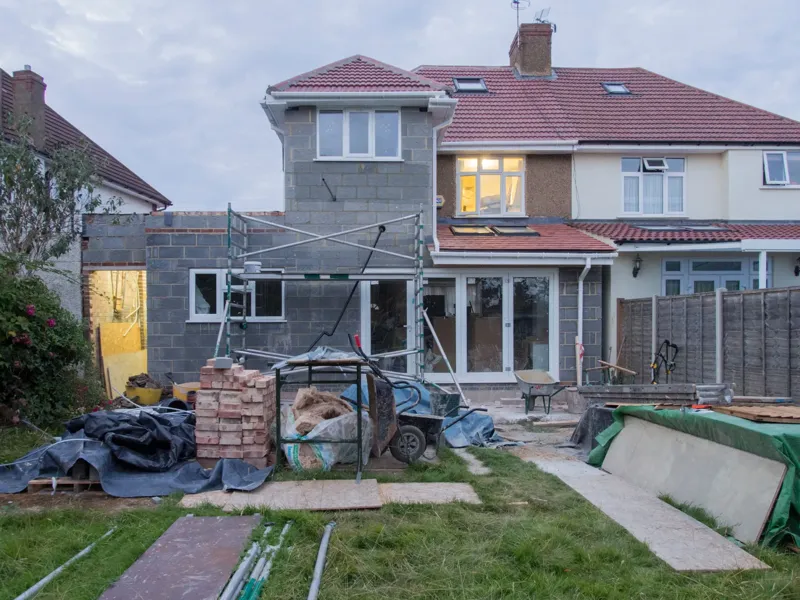
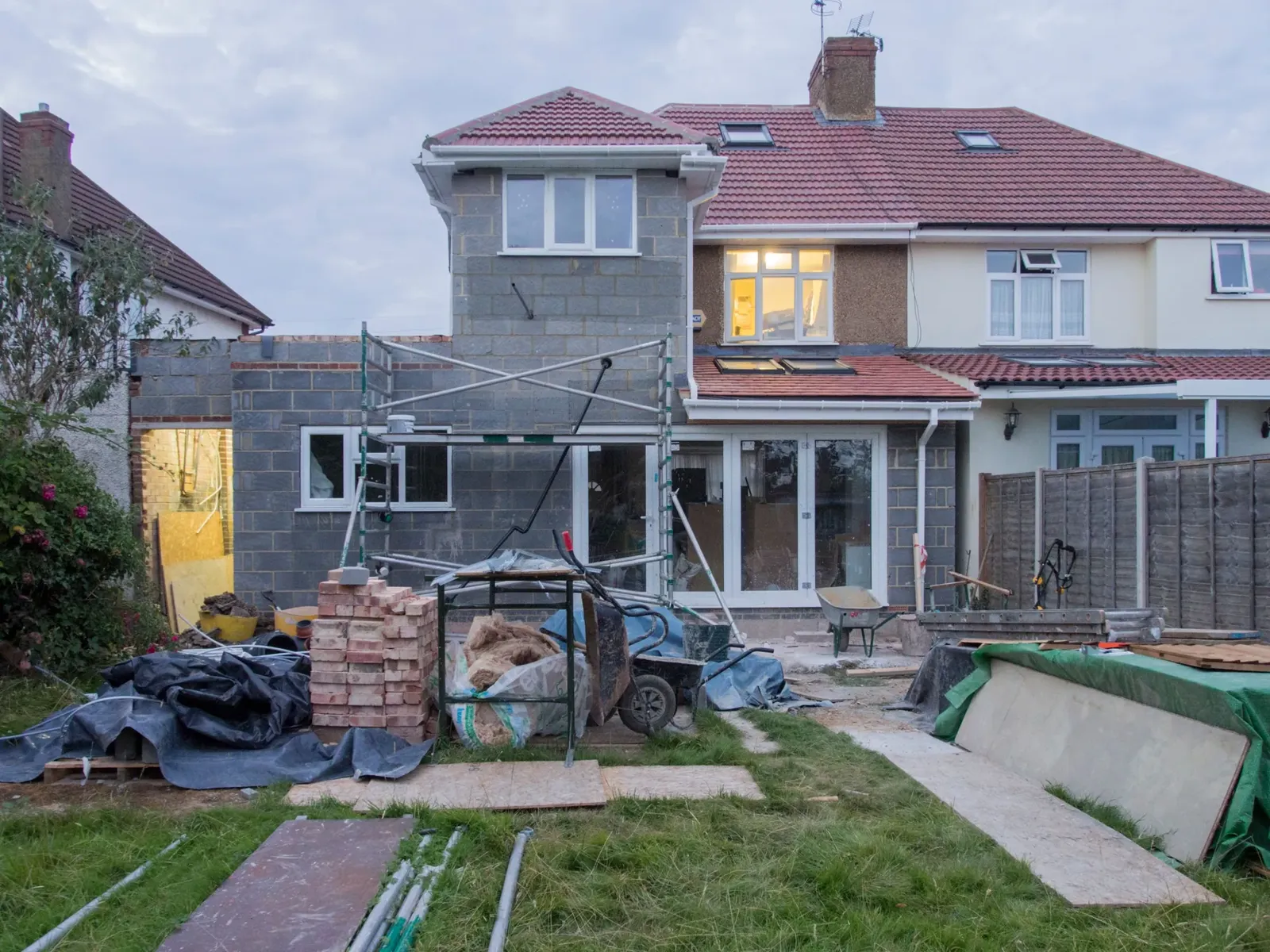
Header photo: The back of a semi-detached house with a single-storey rear extension being built in grey blockwork, scaffolding and bricks on the lawn by Brett Jordan, Pexels License.