
Planning
Planning appeals in London
If the council has refused your planning application you can appeal to the Planning Inspectorate, and a householder appeal must be made within 12 weeks of the decision notice. We read the refusal, judge whether it can be answered and prepare the statement and drawings, on a fixed quote after a free constraints check.
Fixed quote after a free constraints check
- MCIAT chartered
- £2m PI insured
- LABC Partnered
- Fixed fees, VAT included
Request a fixed quote
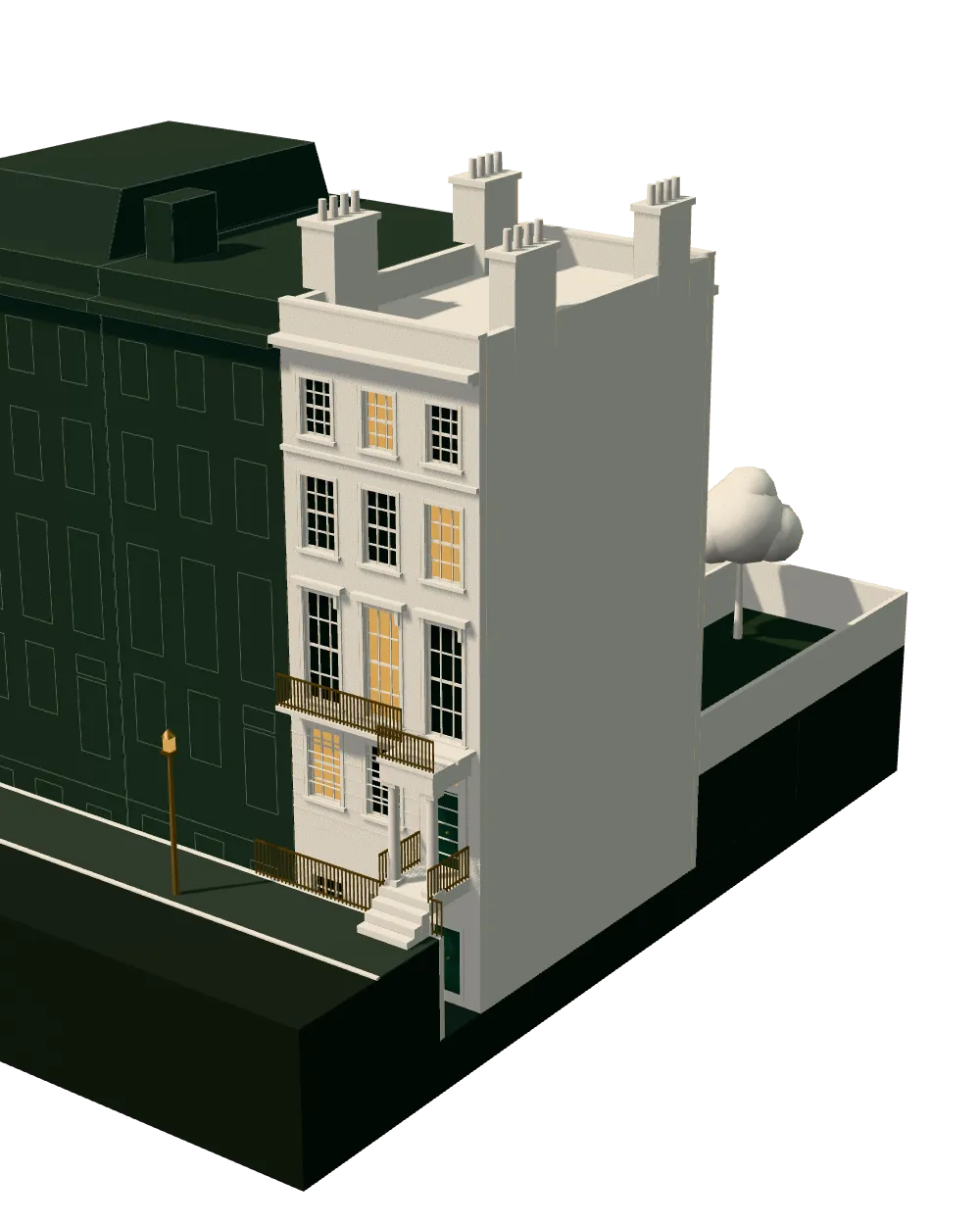
How we work on planning appeals
Seven steps from first call to approval.
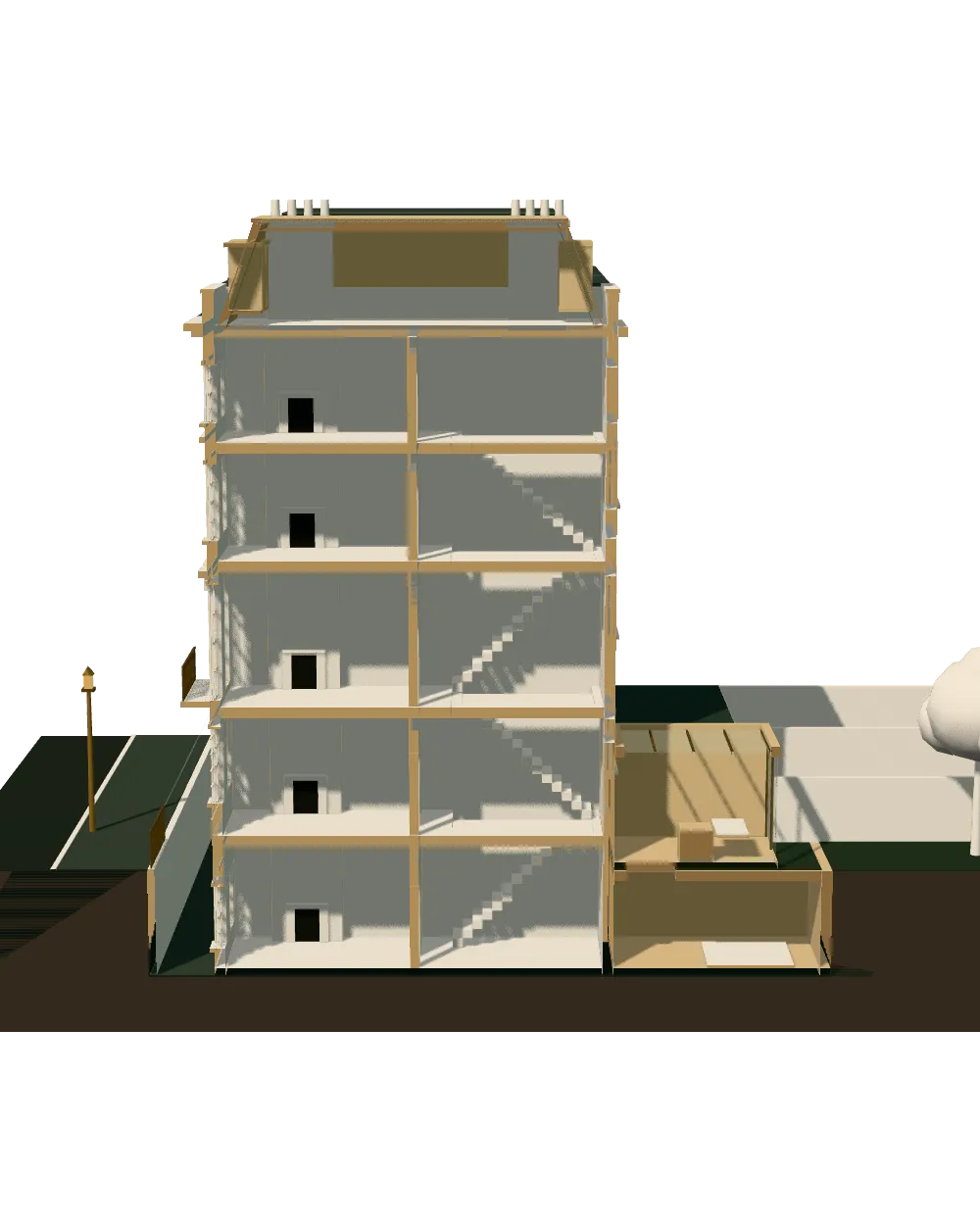
Enquiry and constraints check
We check the property against conservation areas, listed status, Article 4 directions, tree preservation orders, flood zone and planning history. We choose the right route and send a fixed quote.
Measured survey
We survey the house on one datum: rooms, levels, boundaries, drains, trees and the neighbours' windows that the 45° and 25° tests depend on.
Design options
We model the house in Revit and show you options in 3D and plan, with the planning strategy and the precedents in your street.
Design frozen
You choose an option in writing. Nothing changes after this without your say.
Independent check
A second chartered technologist checks every sheet against the council's validation checklist and the policy. A senior review signs it off before anything is submitted.
Submission
We prepare the forms, certificates, fee and documents and submit through the Planning Portal.
Officer liaison
We answer the planning officer and make any amendments within five working days, at no charge until approval.
Free redraws until approval. Every drawing set is checked independently, and the checker is never the person who drew it.
Request a fixed quote
First step after a refusal: read the reasons
The decision notice lists reasons for refusal. An appeal has to answer those reasons, not the council's whole file, so we begin by setting each reason beside the officer's report and the policy it cites.
Three outcomes are realistic. The reasons may be fixable with changed drawings, in which case a revised application is often faster. They may rest on a judgement call where policy is arguable, which is what an appeal is for. Or they may be sound, and then we say so and spare you the cost.
We never promise a result, because an independent inspector decides. What we offer is an honest read of the case and a clear presentation of it.
Time limits that cannot be stretched
A householder appeal must be made within 12 weeks of the date on the decision notice. Other planning appeals have 6 months from the decision notice (or expiry of the decision period). Both come from the Development Management Procedure Order 2015.
The clock runs from the date on the notice and not from the day you open the envelope, so send us the refusal the day it arrives. If the deadline is close, we put the grounds of appeal and the plans the inspector needs first.
A late appeal is normally not accepted, so do not wait for a quieter month.
How long an appeal takes
The Planning Inspectorate publishes its own timings. For householder appeals decided by written representations, its latest statistics show a median of 11.6 weeks. Across all written-representation appeals the twelve-month median was 18 weeks.
Those are national medians for appeals that have finished, not a forecast for yours. Site visits, hearings and complex cases run longer, and the Inspectorate's workload shifts from month to month.
Plan in months. Do not commit to building work on the assumption of a quick answer.
What the success rates mean, and do not mean
In the latest quarter published, the Inspectorate allowed 31 per cent of section 78 planning appeals, and 29 per cent of those decided by written representations.
Those rates cover every kind of appeal in England, from garden buildings to housing estates. They say nothing about your house and are neither a promise nor a prediction. What they do show is that most appeals are dismissed, which is why the decision to appeal should rest on the specific reasons given.
Where a reason is narrow, such as one overbearing elevation, a design change often achieves more than an argument.
The bundle we prepare
Householder cases normally run by written representations. We write the statement of case, answering each refusal reason in turn against the development plan, and we prepare the drawings the inspector will use.
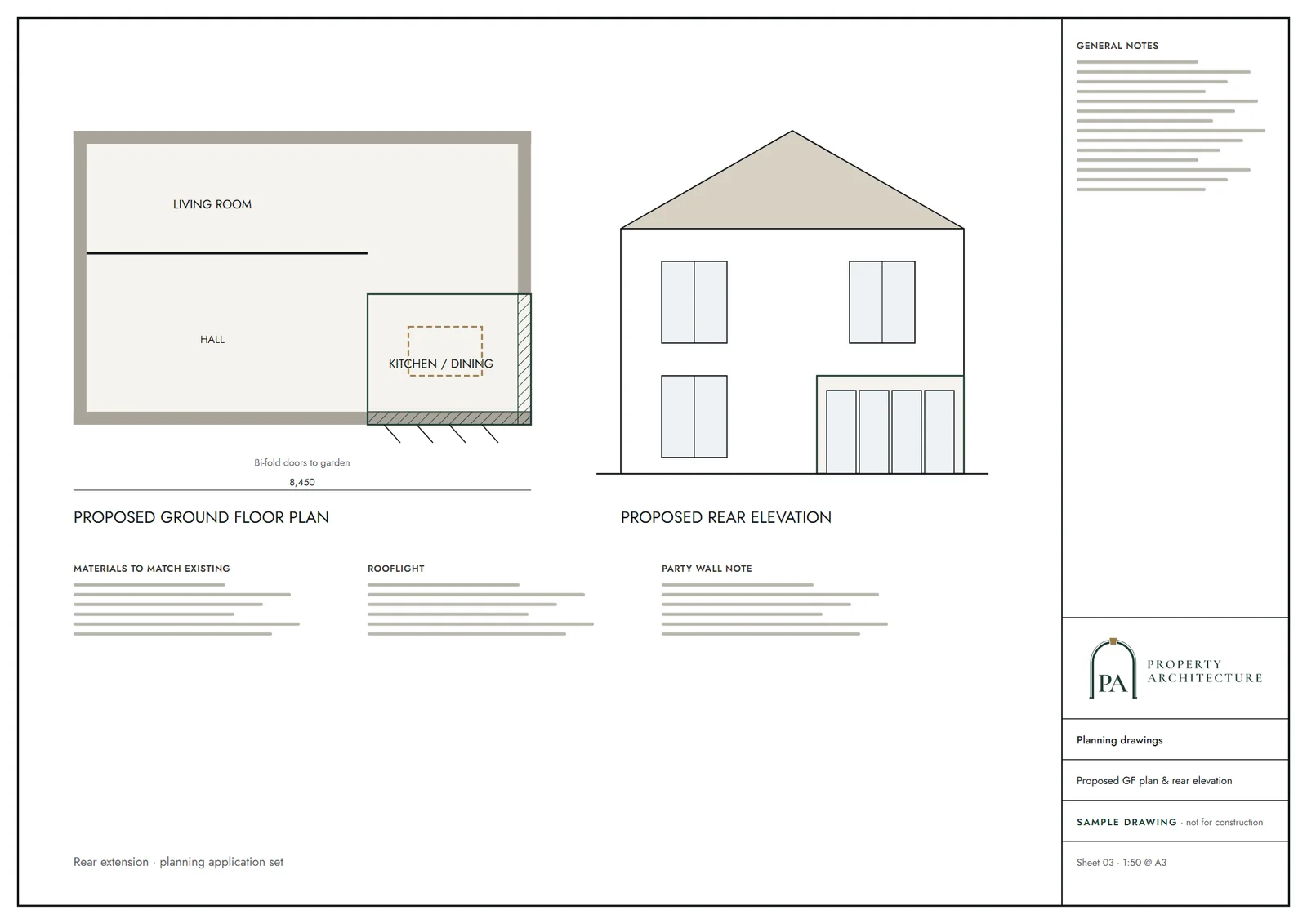
The drawings are usually the council set, corrected where the refusal exposed a weakness. Where the dispute is about height, outlook or daylight we add sections and 3D views, since the relationship is easier to judge in section than in words.
Someone outside the drafting team reads the whole bundle, and every sheet comes from one model so they agree. The method is described on our planning drawings page.
Where the officer's report helps
The delegated or committee report explains a refusal in full: the policies applied, what neighbours said and where the case turned. An appeal succeeds or fails on whether those reasons stand when someone independent reads them cold.
We check three things. Does the reason cite a policy that covers the proposal? Did the officer measure something the drawings show differently? Were similar houses nearby treated differently? Decisions on the same street or terrace carry weight with an inspector, and our constraints check already looks for them.
If the report contains a plain factual error, such as the wrong depth or a window that is not there, a short covering note and a corrected sheet may do more than a full appeal.
Appeal, reapply or choose another route
A revised application can be quicker and cheaper when the refusal is about detail. An appeal suits a case where the council appears to have misread its own policy. Sometimes the answer is another route altogether, such as a Lawful Development Certificate for work that never needed permission, or prior approval for a deeper rear extension.
We set the options out in writing with a fixed quote for each, and you decide. If the building work is already finished, see retrospective planning applications. To see how a particular council's decisions have gone, start from architectural drawings by area.
The national rules in figures
| Measure | Value | Period | Source |
|---|---|---|---|
| DMPO 2015 art 37(2)(a): householder appeal, from the date of the decision notice | 12 weeks | — | legislation.gov.uk |
| DMPO 2015 art 37(2)(d) | 6 months from the decision notice (or expiry of the decision period) | — | legislation.gov.uk |
| Annex B, householder appeals (written representations), decisions in June 2026; 351 decisions | 11.6 weeks | — | gov.uk |
| Section 6: median for written representations, 12 months to June 2026 | 18 weeks | — | gov.uk |
| Section 1.1: allowed rate for s78 planning appeals, Apr-Jun 2026 | 31 % | — | gov.uk |
| Table B: written representations allowed rate, Apr-Jun 2026 | 29 % | — | gov.uk |
A blank value means the figure has not been published, not that there are none. Check your own address with the council.
Which application your project needs
The usual route for a house; flats and listed buildings follow other rules.
- A · Lawful Development Certificate decision
- 8 weeks
- B · Prior approval decision
- 42 days
- C · Householder decision
- 8 weeks
What you receive
Where we prepare planning appeals
London
- Planning appeals in Barking and Dagenham
- Planning appeals in Barnet
- Planning appeals in Bexley
- Planning appeals in Brent
- Planning appeals in Bromley
- Planning appeals in Camden
- Planning appeals in City of London
- Planning appeals in Westminster
- Planning appeals in Croydon
- Planning appeals in Ealing
- Planning appeals in Enfield
- Planning appeals in Greenwich
- Planning appeals in Hackney
- Planning appeals in Hammersmith & Fulham
- Planning appeals in Haringey
- Planning appeals in Harrow
- Planning appeals in Havering
- Planning appeals in Hillingdon
- Planning appeals in Hounslow
- Planning appeals in Islington
- Planning appeals in Kensington and Chelsea
- Planning appeals in Kingston upon Thames
- Planning appeals in Lambeth
- Planning appeals in Lewisham
- Planning appeals in Merton
- Planning appeals in Newham
- Planning appeals in Redbridge
- Planning appeals in Richmond upon Thames
- Planning appeals in Southwark
- Planning appeals in Sutton
- Planning appeals in Tower Hamlets
- Planning appeals in Waltham Forest
- Planning appeals in Wandsworth
Questions
How long do I have to appeal a householder refusal?
12 weeks from the date of the decision notice. For other planning appeals the limit is 6 months from the decision notice (or expiry of the decision period).
How long does a householder appeal take?
The Planning Inspectorate's latest median for householder appeals decided by written representations is 11.6 weeks. It is a national median and not a forecast for your case.
What proportion of planning appeals succeed?
The Inspectorate allowed 31 per cent of section 78 appeals in the latest quarter published. The figure covers all development types and says nothing about one case.
Is it better to appeal or reapply?
It depends on the reasons for refusal. Narrow, fixable reasons often suit a revised application, while reasons that misread policy may suit an appeal. We give you both options with fixed quotes.
Do you charge for appeals by the hour?
No. The quote is fixed once the free constraints check is done, so you know the cost before you commit.
Sources and dates
- legislation.gov.uk, retrieved
- gov.uk, retrieved
- legislation.gov.uk, retrieved
- legislation.gov.uk, retrieved
- legislation.gov.uk, retrieved
- Contains public sector information licensed under the Open Government Licence v3.0.
- Contains OS data © Crown copyright and database right 2026.
- Contains HM Land Registry data © Crown copyright and database right 2026. This data is licensed under the Open Government Licence v3.0.
- Contains Historic England data © Historic England 2026. Contains Ordnance Survey data © Crown copyright and database right 2026.

Tell us about your property.
We check the constraints, then send a fixed fee. Messages before 3pm get a reply the same working day.