
Planning
Retrospective planning applications in London
A retrospective planning application asks the council to grant permission for work that has already been built. The law allows it, and the council must judge it as if it were new. We draw the as-built house, test it against policy and prepare the application. Fixed quote after a free constraints check. The householder council fee is £548.
Fixed quote after a free constraints check
- MCIAT chartered
- £2m PI insured
- LABC Partnered
- Fixed fees, VAT included
Request a fixed quote

Regularising work that is already built
Owners reach us for several reasons. A builder went beyond the approved drawings. A previous owner extended without permission and the problem surfaced in a sale. Or a project looked like permitted development and turned out not to be.
Planning law gives a way out. Permission may be granted for development already carried out, or for work done without complying with a condition. The application is judged on its merits, with the same policy tests as a proposal that has not been built.
Being built is not a reason to refuse, and it is not a reason to approve. The question stays the same: is the building acceptable here?
Photographs, dated invoices and the builder's contract help show when the work was done, and they often settle arguments about timing. Keep them with the survey.
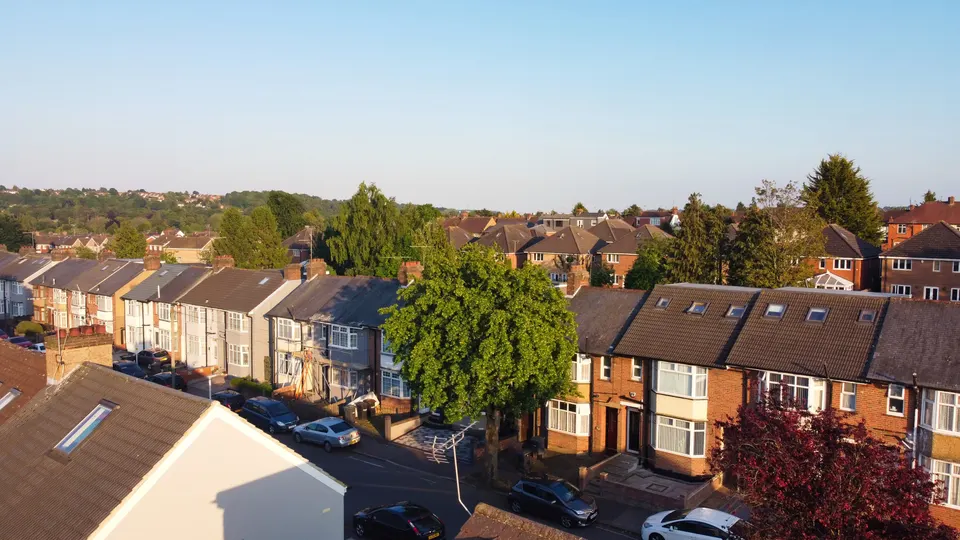
How the enforcement time limit works
Councils cannot act for ever. Since changes made by the Levelling-up and Regeneration Act 2023, the time limit for enforcement against most unauthorised building works is 10 years from substantial completion.
That does not mean you should wait. A council that has opened a file can move quickly, and a buyer's solicitor will usually ask for evidence either way. Delay also makes it harder to evidence what was built and when.
If your work is older than the limit, a Lawful Development Certificate may be the better answer than a planning application. The Lawful Development Certificate page explains how proof of lawfulness is drawn up.
What the council can do once enforcement has started
The council has the power to decline to determine a retrospective application that covers matters already set out in an enforcement notice issued before the application. So acting before a notice arrives keeps every option open.
National policy also treats deliberate breaches seriously. Evidence that unauthorised development was intentional should be given substantial weight. We say this plainly to owners at the start, because an honest account of how the work happened is part of a credible application.
If the council refuses, an appeal is still open: you have 12 weeks from the date on the decision notice to lodge a householder appeal. Our planning appeals service picks up from there.
What drawings a retrospective application needs
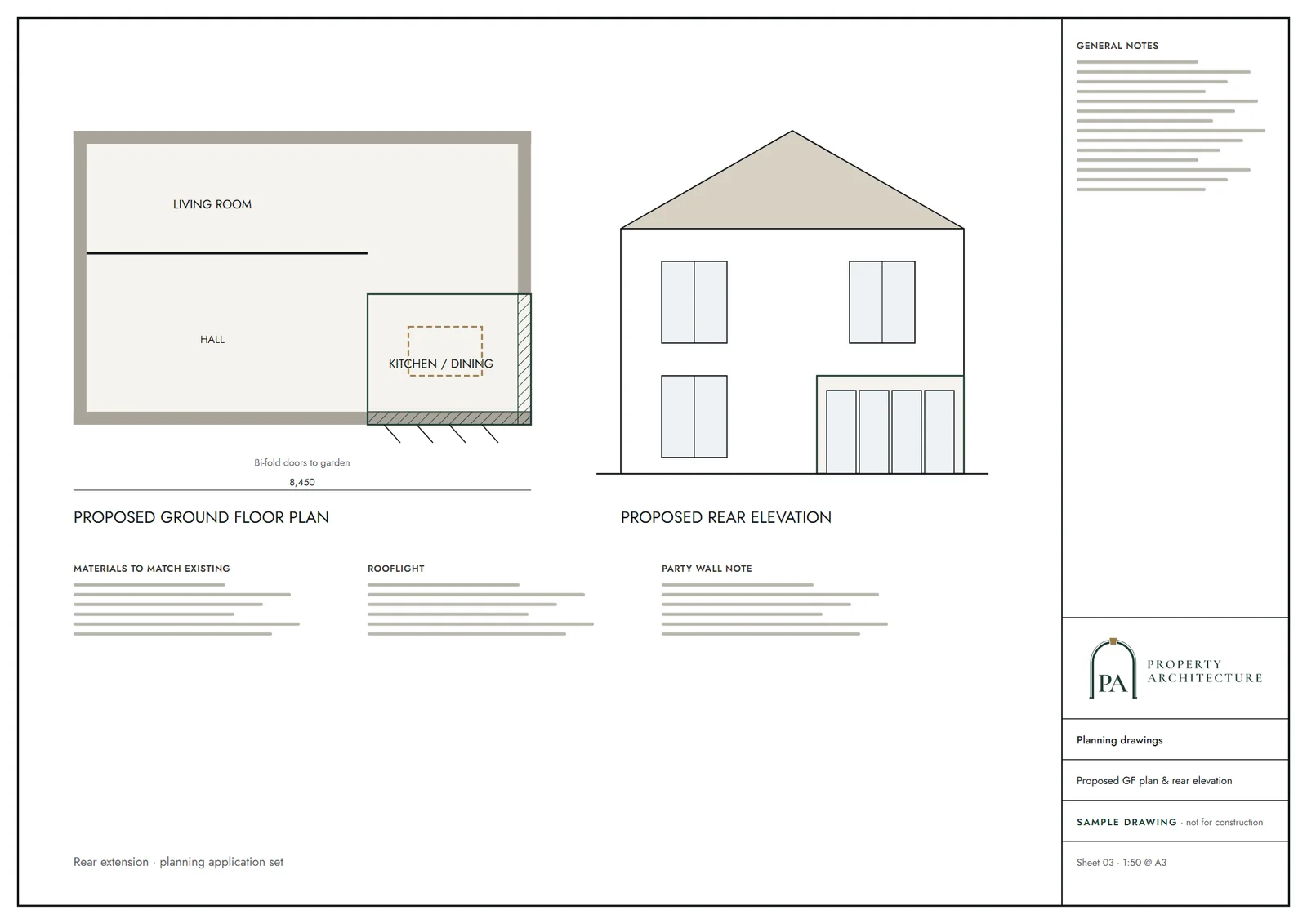
A retrospective application needs the same drawings as a normal one, with one difference: they show the building as it really is. A measured survey is therefore the first step. We record the extension, the roof, the windows, the levels and the boundary.
Drawing from the survey, rather than from the builder's sketches, matters because officers visit. If the drawings disagree with what they see on site, the application loses credibility and the council may open an investigation into the discrepancy itself.
We then prepare existing, as-built and, where the council is likely to ask for changes, proposed amended drawings. Our measured building survey work supplies the base.
Officers often ask how the work differs from any earlier approval, so we add a one-page schedule of differences to the set, listing each change against the approved drawings.
Fee and decision period
The council's householder fee is £548 for alterations or extensions to a single dwelling in the current table. That goes to the council, on top of our own charge, and the exact sum is confirmed from the live fee table in your quote.
The council has 8 weeks to decide a non-major application unless you agree an extension. That is a statutory period, not a promise about any one decision.
Our own price is fixed once the free check of constraints is done. It depends on the size of the work and whether amendments are likely.
Making the building acceptable
Sometimes the honest advice is that part of the work will not be accepted as built. A rear dormer may be too large, or a side extension too close to the boundary. In that case we propose the smallest change that answers the council's concern, and draw it as an amendment so you can see the cost of the fix against the cost of refusal.
A building that has been completed also needs Building Regulations sign-off. Where that was never obtained, our building regulations drawings team assembles the paperwork for regularising it. Should the planning officer ask for amendments, we redraw free of charge.
Honesty helps here. A covering letter that says plainly what was built, when and why, reads better to an officer than a defence that the drawings later contradict.
The national rules in figures
| Measure | Value | Period | Source |
|---|---|---|---|
| TCPA 1990 s73A(1)-(2) | Planning permission may be granted for development already carried out without permission or without complying with a condition | — | legislation.gov.uk |
| TCPA 1990 s171B(1)-(3) as substituted by LURA 2023 s115, in force 25 Apr 2024 | 10 years | — | legislation.gov.uk |
| TCPA 1990 s70C | LPA may decline to determine an application covering matters in an enforcement notice issued before the application | — | legislation.gov.uk |
| NPPF Aug 2026, policy DM8(2) | Evidence that unauthorised development was intentional should be given substantial weight | — | gov.uk |
| Householder: alterations/extensions to a single dwellinghouse, from 1 Apr 2026 | 548 GBP | — | ribblevalley.gov.uk |
| DMPO 2015 art 34(2)(b): non-major development | 8 weeks | — | legislation.gov.uk |
| DMPO 2015 art 37(2)(a): householder appeal, from the date of the decision notice | 12 weeks | — | legislation.gov.uk |
A blank value means the figure has not been published, not that there are none. Check your own address with the council.
Which application your project needs
The usual route for a house; flats and listed buildings follow other rules.
- A · Lawful Development Certificate decision
- 8 weeks
- B · Prior approval decision
- 42 days
- C · Householder decision
- 8 weeks
What you receive

Questions
Can I get planning permission for something I have already built?
Yes. Planning law allows permission to be granted for development already carried out. The council judges it on its merits against the same policies as a new proposal. The outcome is the council's to decide.
How long can the council wait before taking enforcement action?
The time limit for most unauthorised building works is 10 years from substantial completion, following changes made by the Levelling-up and Regeneration Act 2023.
How much does a retrospective application cost?
The council's householder fee is £548, which goes to the council. Our own fee is set once the free constraints check is done.
Does the council treat deliberate breaches differently?
National policy says evidence that unauthorised development was intentional should be given substantial weight. We tell owners this at the start and prepare an honest, factual account.
What if the council refuses?
You have 12 weeks from the decision notice to lodge a householder appeal. We can prepare the appeal or a revised application.
Sources and dates
- legislation.gov.uk, retrieved
- legislation.gov.uk, retrieved
- legislation.gov.uk, retrieved
- gov.uk, retrieved
- ribblevalley.gov.uk, retrieved
- legislation.gov.uk, retrieved
- legislation.gov.uk, retrieved
- legislation.gov.uk, retrieved
- legislation.gov.uk, retrieved
- Contains public sector information licensed under the Open Government Licence v3.0.
- Contains OS data © Crown copyright and database right 2026.
- Contains HM Land Registry data © Crown copyright and database right 2026. This data is licensed under the Open Government Licence v3.0.
- Contains Historic England data © Historic England 2026. Contains Ordnance Survey data © Crown copyright and database right 2026.

Tell us about your property.
We check the constraints, then send a fixed fee. Messages before 3pm get a reply the same working day.