Key takeaways
- Our fixed fee is £289, with no VAT to add.
- A non-material change costs the council £46GOV.UK, Fees for planning applications in England from 1 April 2026 for a householder permission and £309GOV.UK, Fees for planning applications in England from 1 April 2026 in any other case.
- Varying a condition costs £89GOV.UK, Fees for planning applications in England from 1 April 2026 for a householder permission and £608GOV.UK, Fees for planning applications in England from 1 April 2026 otherwise.
- Nobody can say in advance what counts as non-material: there is no statutory definition, and a change non-material in one context may be material in anotherGOV.UK planning practice guidance, Flexible options for planning permissions.
- A non-material application is decided in 28 daysGOV.UK planning practice guidance, Flexible options for planning permissions, which is quicker than a new application.
What an amendment costs
Our fee is £289. For that we compare the approved drawings with the change you want, advise which route fits, draw the change, and submit the application. Our planning amendment page explains the choice. The council's fee depends on that choice.
The least expensive route is a non-material amendment: £46GOV.UK, Fees for planning applications in England from 1 April 2026 for a householder permission, or £309GOV.UK, Fees for planning applications in England from 1 April 2026 for any other. Varying a condition, if that is what the change needs, is £89GOV.UK, Fees for planning applications in England from 1 April 2026 for a householder permission and £608GOV.UK, Fees for planning applications in England from 1 April 2026 for any other. A completely new application is dearer again: £548GOV.UK, Fees for planning applications in England from 1 April 2026 for a house extension.
Which route fits your change
A non-material amendment fits a small change: a window moved a little, a materials swap, a slightly different roof detail. A variation of a condition fits when the change needs the conditions to be altered. A new application fits when the change is so large that the scheme is no longer the one approved.
The hard edge is in the middle. The government guidance says: there is no statutory definition, and a change non-material in one context may be material in anotherGOV.UK planning practice guidance, Flexible options for planning permissions. A change that is trivial on a large scheme can be significant on a small house, so the officer decides in context. We draw the change and compare it with the approved drawings so the application makes the case.
How long it takes
A non-material application is the fastest route: 28 daysGOV.UK planning practice guidance, Flexible options for planning permissions, or longer if agreed in writing. That is far quicker than a new application, which gives the council eight weeks.
The sooner the change is raised, the better. A builder who proceeds on a change that is not authorised is building outside the permission, and our retrospective planning application page shows what that costs to put right.
The risk of calling a change non-material
If the council decides a change is material, it will not grant the amendment, and the next step is a variation or a new application. That adds time. We tell you if we think the officer is likely to take that view, and propose a small adjustment to the design when one would bring the change within the non-material route.
It is cheaper to ask first than to build and apply afterwards.
What to send us
The decision notice, the approved drawings and a note or sketch of the change are enough to start. If the change is already built, tell us, so we can advise on the right route. For a new design, our planning drawings are the starting point.
The figures, with sources
- Council fee, non-material change, householder development
- £46GOV.UK, Fees for planning applications in England from 1 April 2026Checked 25 October 2026
- Council fee, non-material change, any other case
- £309GOV.UK, Fees for planning applications in England from 1 April 2026Checked 25 October 2026
- Council fee, removal or variation of a condition, householder
- £89GOV.UK, Fees for planning applications in England from 1 April 2026Checked 25 October 2026
- Council fee, removal or variation of a condition, any other case
- £608GOV.UK, Fees for planning applications in England from 1 April 2026Checked 25 October 2026
- National planning fee, extension or alteration of a single house
- £548GOV.UK, Fees for planning applications in England from 1 April 2026Checked 25 October 2026
- What counts as non-material
- there is no statutory definition, and a change non-material in one context may be material in anotherGOV.UK planning practice guidance, Flexible options for planning permissionsChecked 25 October 2026
- Time to determine a non-material amendment application
- 28 daysGOV.UK planning practice guidance, Flexible options for planning permissionsChecked 25 October 2026
Questions
Can I just build the change and apply later?
It is risky. A change outside the permission is unauthorised until the council agrees. Ask first, because it costs less and removes the risk.
Who decides whether a change is non-material?
The council, in the context of the whole scheme. There is no fixed definition, so we advise on the likely view and help you make the case.
What if the council says the change is material?
The next step is a variation of the permission or a new application. We explain both, with the fees, before you choose.
Does the price include the council's fee?
No. The council's fee is paid to the council. Ours is £289, with no VAT to add.
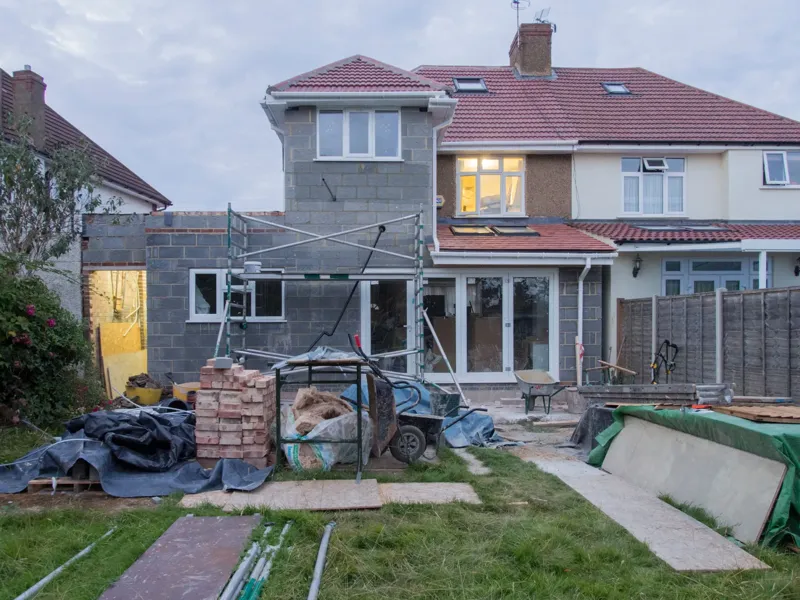
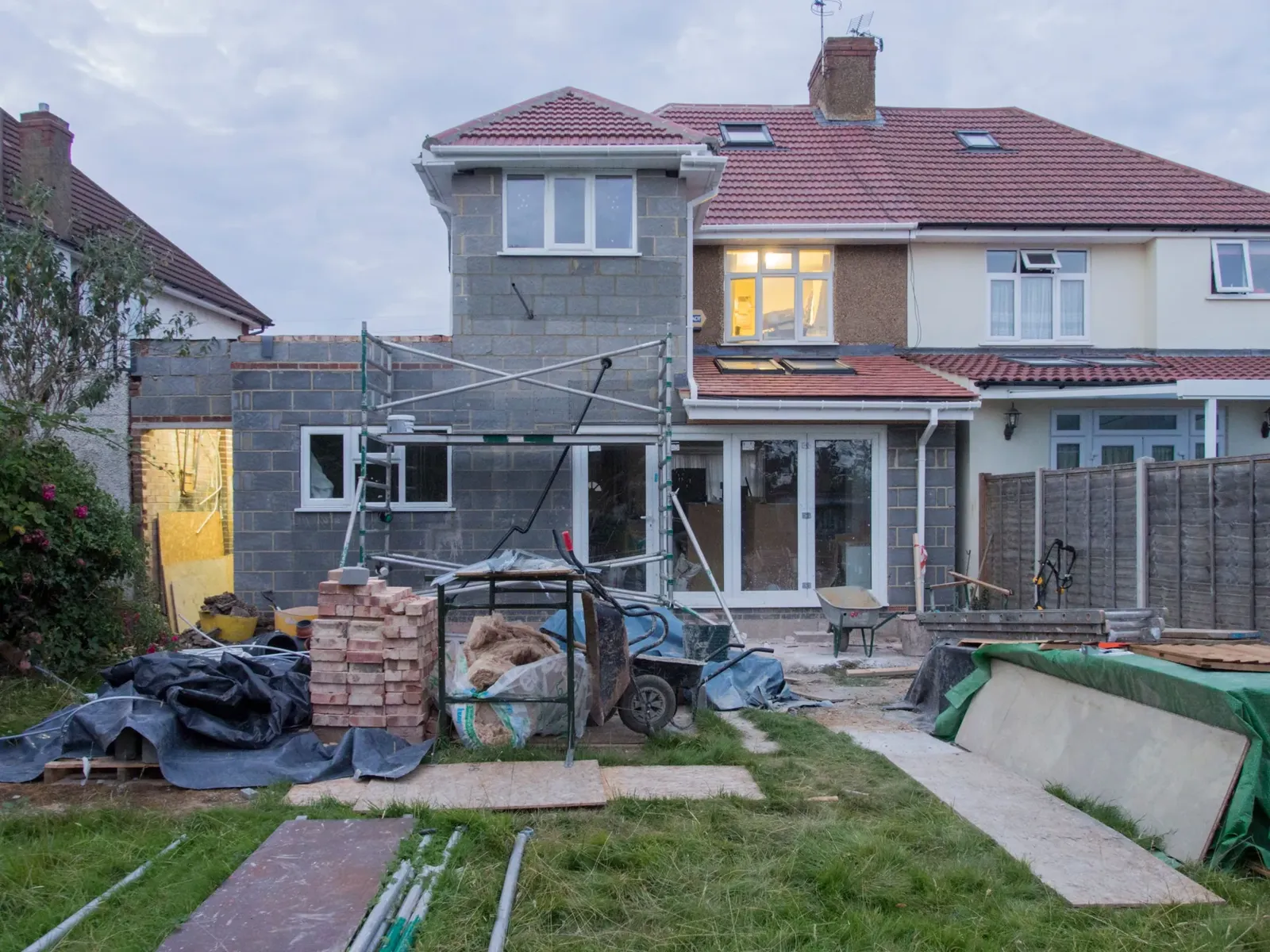
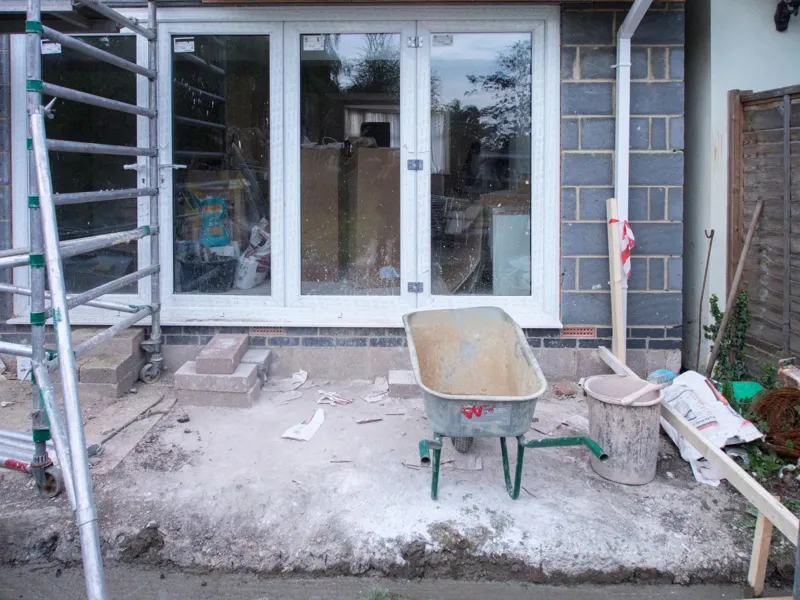
Header photo: The back of a semi-detached house with a new blockwork extension rising beside the original first-floor windows by Brett Jordan, Pexels License.