Key takeaways
- Our fixed fee for a preliminary bat roost assessment is £495, with no VAT to add.
- It must be done by an expert: you'll need an expert to do a bat surveyGOV.UK, Bats: protection and licences.
- A preliminary assessment can be done at any time: any time of yearGOV.UK, Protected species and development: advice for local planning authorities.
- Follow-up surveys have seasons: May to AugustGOV.UK, Protected species and development: advice for local planning authorities, and November to mid-MarchGOV.UK, Protected species and development: advice for local planning authorities.
- Damaging a roost is an offence: damaging or destroying a breeding site or resting place of a European protected species is an offenceConservation of Habitats and Species Regulations 2017, regulation 43.
What the first survey costs
Our fee is £495 for the preliminary assessment. An ecologist inspects the building and its surroundings for signs of bats and for features they could use, then reports whether further surveys are needed. The result goes to the council with your planning application. See our bat survey page for the full description.
It is a preliminary step, not the whole job. If the ecologist finds no evidence and little potential, that is often the end of it. If there is potential, further surveys follow, and they are priced separately because they depend on what is found.
Why the law matters to a roof project
Bats have strong legal protection. all bat species, their breeding sites and resting places are fully protected by lawGOV.UK, Bats: protection and licences. It is an offence to damage a roost deliberately or otherwise: damaging or destroying a breeding site or resting place of a European protected species is an offenceConservation of Habitats and Species Regulations 2017, regulation 43. A loft conversion lifts tiles, opens the ridge and works in the roof void, which is where roosts are.
That is also why councils ask for a survey with certain applications. A building with the right features, or a large garden, is a trigger: buildings with features suitable for bats, or large gardens in suburban and rural areasGOV.UK, Protected species and development: advice for local planning authorities. Our constraints check, from £19, flags whether your council is likely to ask.
When surveys can be done
A preliminary assessment can be done at any time. Further surveys depend on the season: May to AugustGOV.UK, Protected species and development: advice for local planning authorities, and November to mid-MarchGOV.UK, Protected species and development: advice for local planning authorities. Missing the season does not cancel the requirement; it delays the survey until the next one.
If a project is in the planning stage in autumn, ask for the assessment early. A finding of potential in November can mean waiting until May to complete the work needed for the application, and that adds months.
What the result means
There are three outcomes. No evidence and low potential: you proceed. Evidence or potential: further surveys during the season, then a mitigation plan. Roosts that cannot be avoided: if you cannot avoid harming bats or their habitats, you can apply for a mitigation licence from Natural EnglandGOV.UK, Bats: protection and licences. The licence is an additional step, with its own cost, and the ecologist advises on it.
The strongest protection for your project is the early look. A design that keeps a roost, or works around it, is cheaper than one that needs a licence.
How it fits with the drawings
The survey result goes into the application alongside the drawings. Our loft conversion drawings and planning drawings are prepared to match, and any measures the ecologist recommends, such as a bat box or a particular tile, are drawn in.
If the council asks for more detail, we coordinate the response with the ecologist.
The figures, with sources
- Legal protection of bats
- all bat species, their breeding sites and resting places are fully protected by lawGOV.UK, Bats: protection and licencesChecked 25 October 2026
- Who can survey
- you'll need an expert to do a bat surveyGOV.UK, Bats: protection and licencesChecked 25 October 2026
- Mitigation licence
- if you cannot avoid harming bats or their habitats, you can apply for a mitigation licence from Natural EnglandGOV.UK, Bats: protection and licencesChecked 25 October 2026
- Timing of a preliminary roost assessment
- any time of yearGOV.UK, Protected species and development: advice for local planning authoritiesChecked 25 October 2026
- Season for summer roost surveys
- May to AugustGOV.UK, Protected species and development: advice for local planning authoritiesChecked 25 October 2026
- Season for hibernation roost surveys
- November to mid-MarchGOV.UK, Protected species and development: advice for local planning authoritiesChecked 25 October 2026
- Habitats where bats should be looked for
- buildings with features suitable for bats, or large gardens in suburban and rural areasGOV.UK, Protected species and development: advice for local planning authoritiesChecked 25 October 2026
- Offence of damaging a roost
- damaging or destroying a breeding site or resting place of a European protected species is an offenceConservation of Habitats and Species Regulations 2017, regulation 43Checked 25 October 2026
Questions
Do I need a bat survey for every loft conversion?
Not always. It depends on the building and your council. We check at the constraints check and tell you before you pay.
Can I do the survey myself?
No. The government guidance says you need an expert to do a bat survey, and a council will only accept a report from a qualified ecologist.
What if bats are found?
The first step is to see if the work can avoid them. If not, a mitigation licence from Natural England may be possible. The ecologist advises, and we adjust the drawings.
Does the fee cover follow-up surveys?
No. The quoted fee is for the preliminary assessment. Follow-up surveys depend on what is found and are quoted separately.
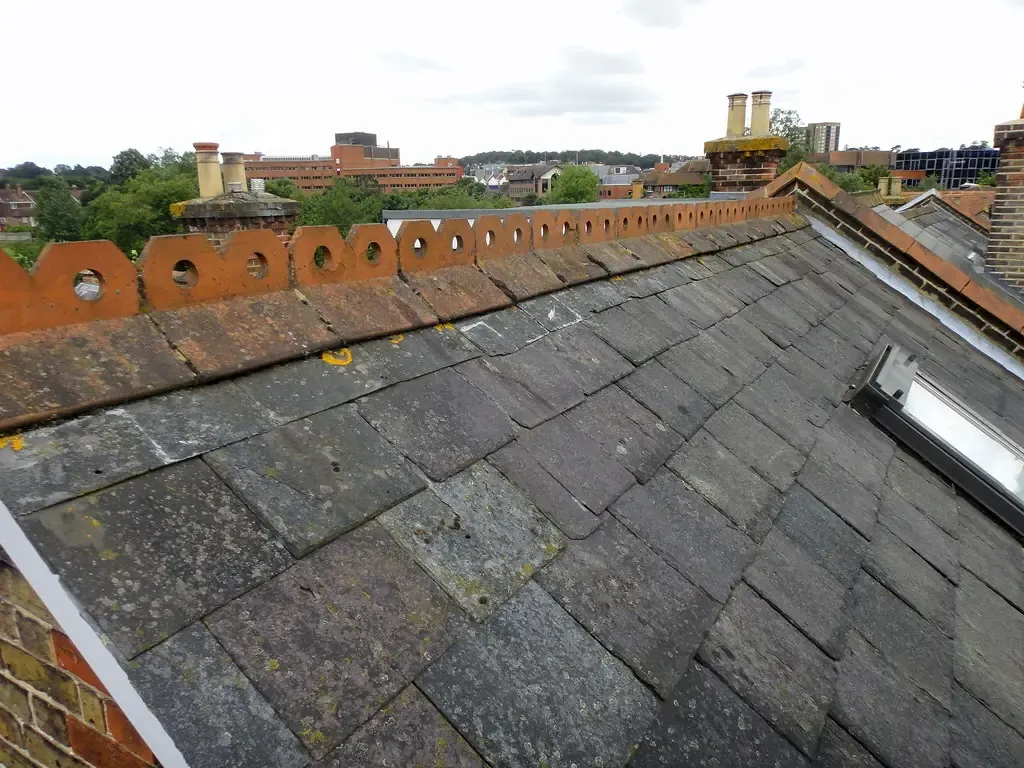
Header photo: A slate roof pitch with a rooflight set into it, seen from the roof of a house being renovated by Gareth1953 All Right Now, CC BY 2.0.