
Havering, London
Planning appeals in Havering
Planning appeals in Havering start with the refusal notice. Green Belt covers 53 per cent of Havering, more than half the borough, and it can be the deciding reason when a house extension is refused. A householder appeal must be lodged within 12 weeks of the decision notice. We read your notice, work out whether Green Belt, character or neighbours drove it, and prepare the drawings and statement.
Fixed quote after a free constraints check
- MCIAT chartered
- £2m PI insured
- LABC Partnered
- Fixed fees, VAT included
Request a fixed quote
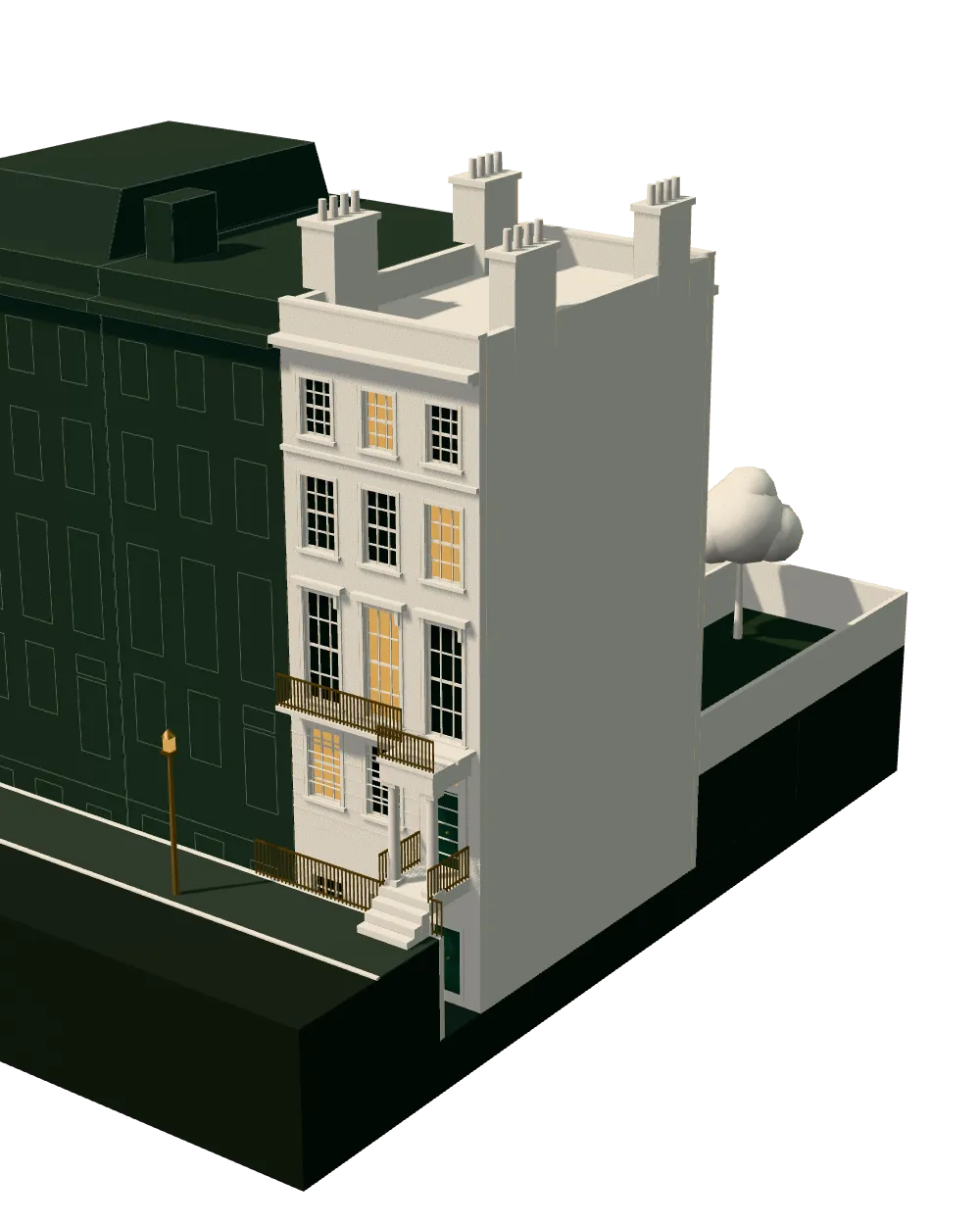
How we work on planning appeals
Seven steps from first call to approval.
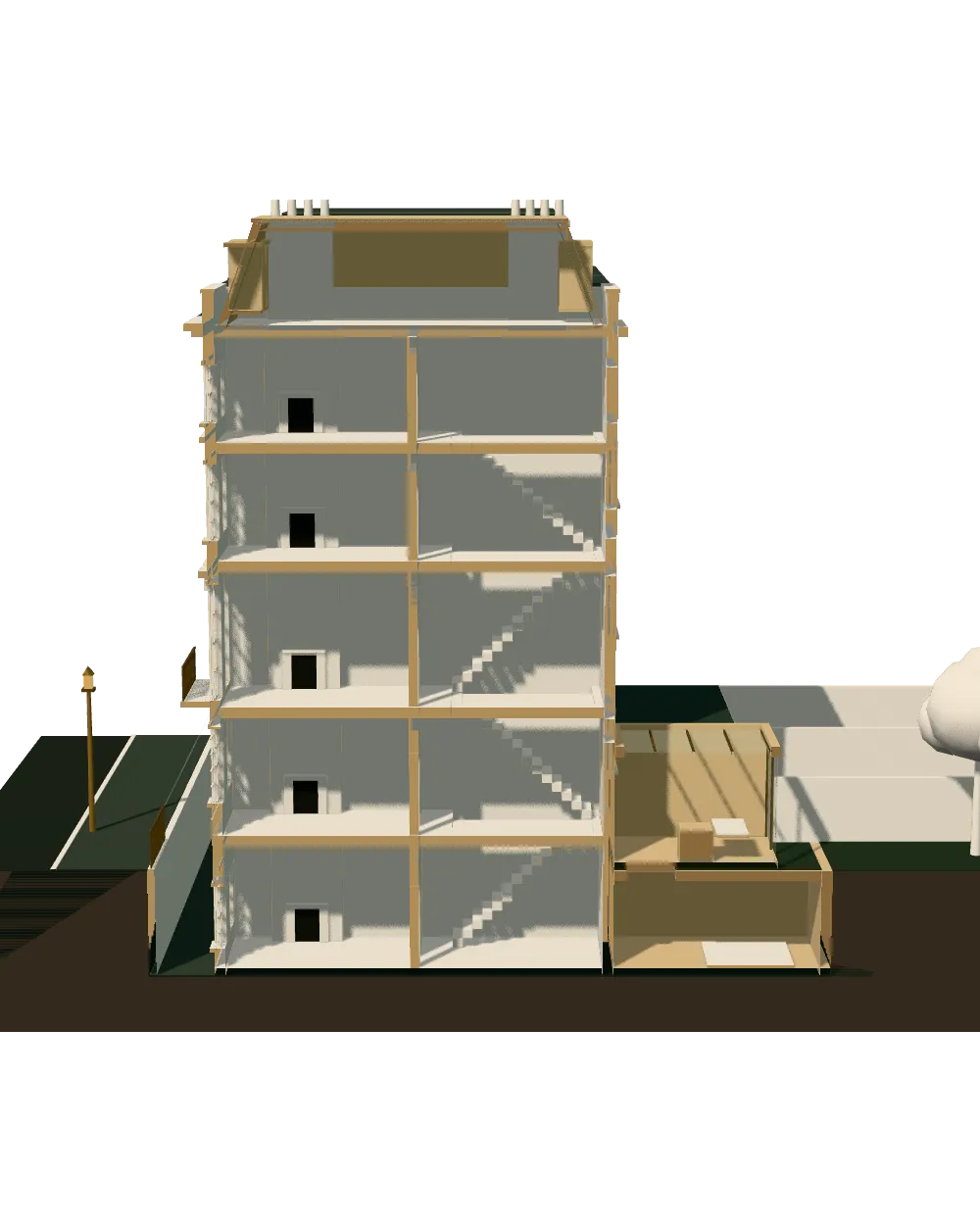
Enquiry and constraints check
We check the property against conservation areas, listed status, Article 4 directions, tree preservation orders, flood zone and planning history. We choose the right route and send a fixed quote.
Measured survey
We survey the house on one datum: rooms, levels, boundaries, drains, trees and the neighbours' windows that the 45° and 25° tests depend on.
Design options
We model the house in Revit and show you options in 3D and plan, with the planning strategy and the precedents in your street.
Design frozen
You choose an option in writing. Nothing changes after this without your say.
Independent check
A second chartered technologist checks every sheet against the council's validation checklist and the policy. A senior review signs it off before anything is submitted.
Submission
We prepare the forms, certificates, fee and documents and submit through the Planning Portal.
Officer liaison
We answer the planning officer and make any amendments within five working days, at no charge until approval.
Free redraws until approval. Every drawing set is checked independently, and the checker is never the person who drew it.
Request a fixed quote
Planning appeals in Havering: a council that decides fast
Havering decided 985 householder applications, and granted 85.9 per cent. It decided 97.8 per cent in time, and 96.4 per cent of the 306 minor applications. Minor applications were granted 64.4 per cent of the time.
A council that decides this quickly leaves little room for a non-determination appeal, so an appeal here almost always starts from a refusal notice. We read it with the officer's report to find where the case turned.
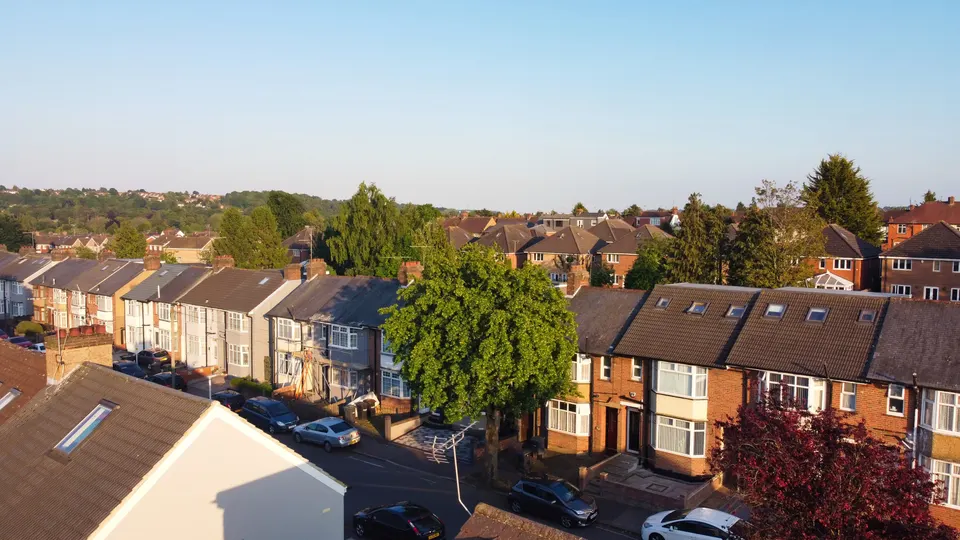
Local figures for Havering
| Measure | Value | Period | Source |
|---|---|---|---|
| Householder decisions | 985 decisions | 1 July 2025 - 30 June 2026 | assets.publishing.service.gov.uk |
| Householder applications granted | 85.9 % | 1 July 2025 - 30 June 2026 | assets.publishing.service.gov.uk |
| Householder applications decided in time | 97.8 % decided within 8 weeks or an agreed extended period | 1 July 2025 - 30 June 2026 | assets.publishing.service.gov.uk |
| Minor application decisions | 306 decisions | 1 July 2025 - 30 June 2026 | assets.publishing.service.gov.uk |
| Minor applications granted | 64.4 % | 1 July 2025 - 30 June 2026 | assets.publishing.service.gov.uk |
| Green Belt share of the council area | 53 % of council area covered by green-belt polygons | — | planning.data.gov.uk |
| Conservation areas | 11 named conservation areas published by the council | — | planning.data.gov.uk |
| Households living in a house | 76.7 % of households living in a house or bungalow (detached, semi-detached or terraced) | Census 2021 | nomisweb.co.uk |
| Owner-occupied households | 69.5 % of households owner-occupied (owned outright or with mortgage/loan) | Census 2021 | nomisweb.co.uk |
| Domestic gardens share of land (GLUD 2005) | 19.5 % of land that is domestic garden (GLUD 2005) | 2005 | data.london.gov.uk |
A blank value means the figure has not been published, not that there are none. Check your own address with the council.
Which application your project needs
The usual route for a house; flats and listed buildings follow other rules.
- A · Lawful Development Certificate decision
- 8 weeks
- B · Prior approval decision
- 42 days
- C · Householder decision
- 8 weeks
The Green Belt question
More than half the borough lies within Green Belt polygons, and the national rule is that extensions to a building in the Green Belt must not be disproportionate to the original. National policy gives no fixed percentage, so inspectors weigh size, form and the effect on openness site by site.
To meet a Green Belt refusal we reconstruct the original building, schedule every later addition by volume, and show the proposal's share on one clear table. We also look at whether the extension replaces something already there, since a replacement of an existing outbuilding or a poor earlier extension can reduce the net effect on openness. A reviewer outside the drafting team checks the arithmetic.
Havering's guidance
Officers apply the Havering Local Plan 2016-2031, the Residential Extensions and Alterations SPD and, where heritage is involved, the Heritage SPD. The borough has 11 conservation areas and 146 list entries, so check your address against the heritage maps.
Where the notice cites the Residential Extensions SPD, we measure the scheme against its tests and show the working. Where it cites the Heritage SPD, we trace the designation on the map and confirm it covers the property.
A borough of houses
76.7 per cent of households live in a house, and 69.5 per cent own their home. Gardens cover 19.5 per cent of the land. Common appeal subjects are side or rear extensions, loft conversions and garden buildings.
The borough also has an Article 4 direction on houses in multiple occupation, which matters if your refusal concerned a shared-house conversion. Such a case is argued on living conditions, parking and the mix of homes in the street, so we collect that evidence before drafting anything.
Getting the Green Belt table right
The table is the heart of a Green Belt appeal in Havering, so it has to survive scrutiny. We start from the earliest reliable record of the house, which may be the council's own planning history, a historic map or the original building control drawings. We then list every addition with its date and volume, mark which were permitted development, and show the proposal last. The figures come from the drawings and carry their working, so an inspector or a council officer can check them quickly.
We also explain the effect on openness in words, because volume is only one factor. A low, well-screened rear extension that sits within the footprint of existing buildings changes the openness of the Green Belt very little, while a tall addition that fills a gap at the side changes it more. Saying so plainly, with a sketch section, is better than leaving the inspector to infer it.
Timing and alternatives
A written-representations householder appeal took a national median of 11.6 weeks, and 31 per cent of section 78 appeals were allowed in the latest quarter. Neither tells you how your case will go.
Havering handled 578 lawful development certificate applications in the latest return. If your work fits permitted limits, a Lawful Development Certificate avoids an appeal; deeper rear extensions can suit prior approval instead. Where the building is already up, see retrospective planning applications.
Our Havering bundle
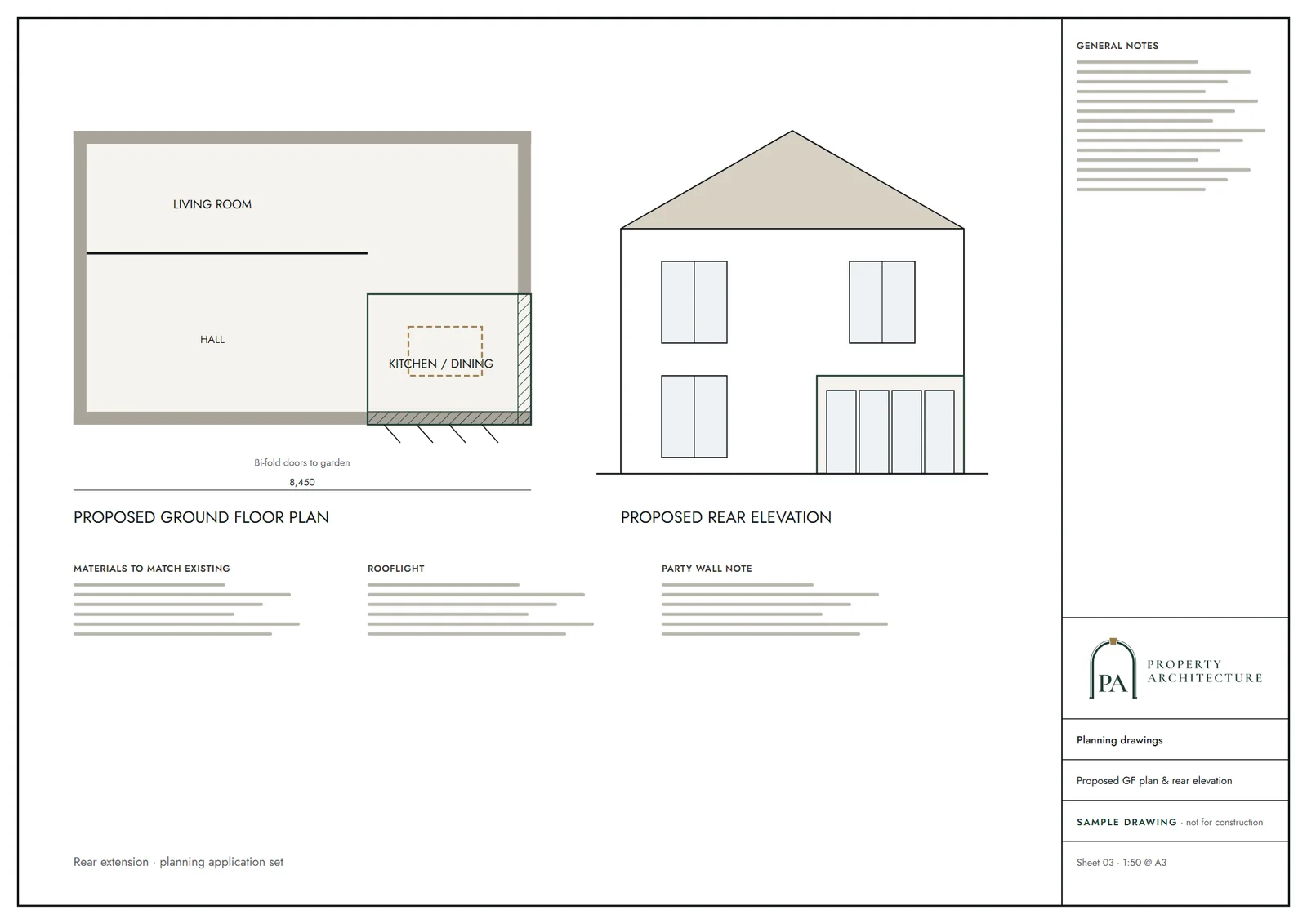
A statement taking each reason in order, drawings from one model, the Green Belt volume table where it applies, and a section or street view where neighbours are the issue. Review by a second person, and a fixed fee after the free constraints check.
Start at planning appeals or see the range of architectural drawings in Havering. We cannot predict an independent inspector's decision.
What you receive
Related pages
Other services in Havering
Questions
How much of Havering is Green Belt?
53 per cent of the council area is covered by green-belt polygons. Check whether your property falls inside before you design.
Does Havering decide applications quickly?
Yes: 97.8 per cent of householder applications were decided in time.
Which Havering guidance matters most?
The Residential Extensions and Alterations SPD for house alterations, and the Heritage SPD where heritage is concerned.
What is the appeal deadline?
12 weeks from the decision notice for a householder case.
Sources and dates
- assets.publishing.service.gov.uk, retrieved
- planning.data.gov.uk, retrieved
- planning.data.gov.uk, retrieved
- nomisweb.co.uk, retrieved
- nomisweb.co.uk, retrieved
- data.london.gov.uk, retrieved
- havering.gov.uk, retrieved
- planning.data.gov.uk, retrieved
- gov.uk, retrieved
- assets.publishing.service.gov.uk, retrieved
- legislation.gov.uk, retrieved
- legislation.gov.uk, retrieved
- legislation.gov.uk, retrieved
- legislation.gov.uk, retrieved
- Contains public sector information licensed under the Open Government Licence v3.0.
- Contains OS data © Crown copyright and database right 2026.
- Contains HM Land Registry data © Crown copyright and database right 2026. This data is licensed under the Open Government Licence v3.0.
- Contains Historic England data © Historic England 2026. Contains Ordnance Survey data © Crown copyright and database right 2026.

Tell us about your property.
We check the constraints, then send a fixed fee. Messages before 3pm get a reply the same working day.