
Richmond upon Thames, London
Planning appeals in Richmond upon Thames
A refusal in Richmond upon Thames is less common than in many boroughs, yet it happens: the council granted 83.3 per cent of its householder decisions in the latest year, which leaves a real minority turned down. A householder appeal must be lodged within 12 weeks of the notice. We read your refusal, say whether it can be answered, and prepare the drawings and statement if it can.
Fixed quote after a free constraints check
- MCIAT chartered
- £2m PI insured
- LABC Partnered
- Fixed fees, VAT included
Request a fixed quote
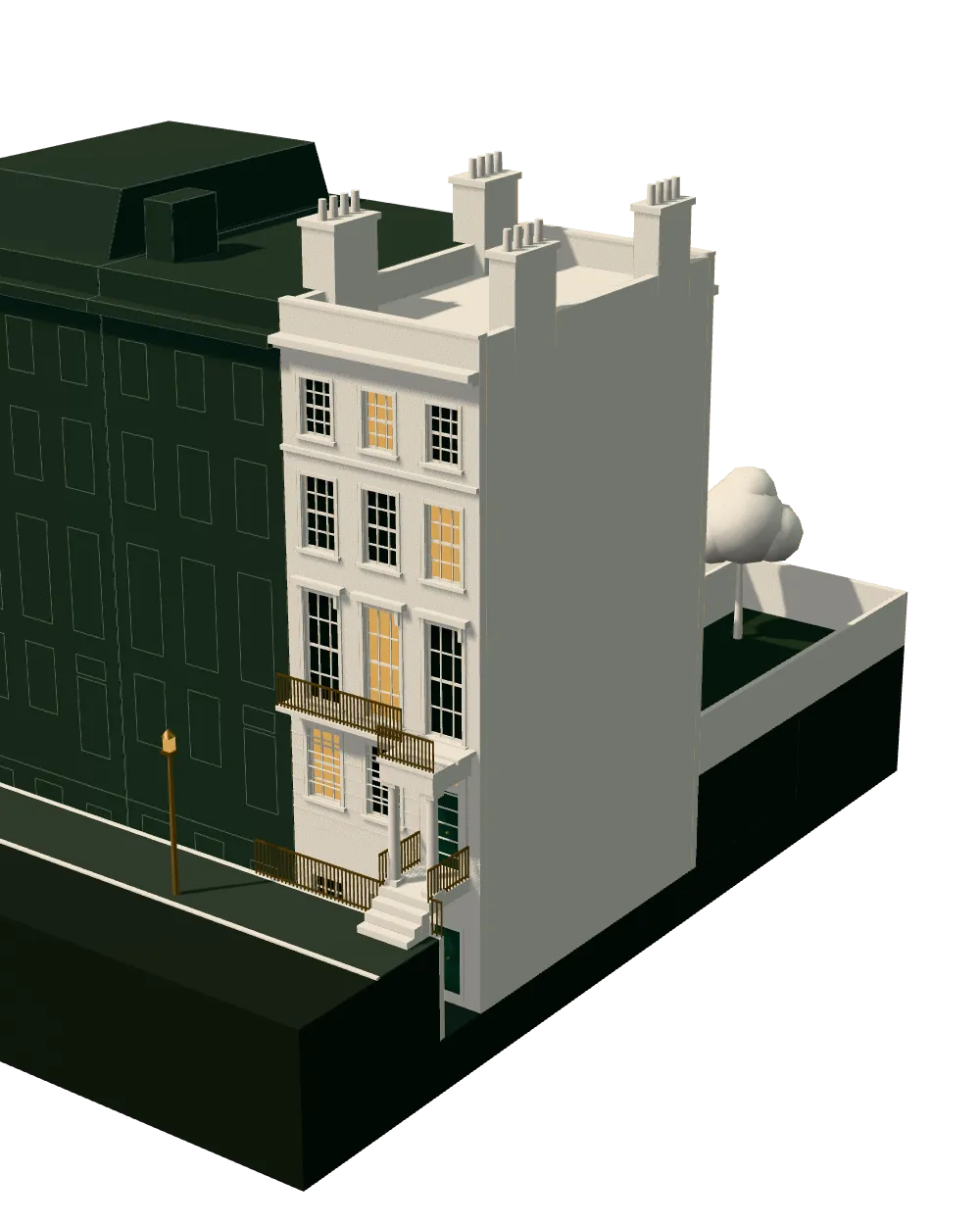
How we work on planning appeals
Seven steps from first call to approval.
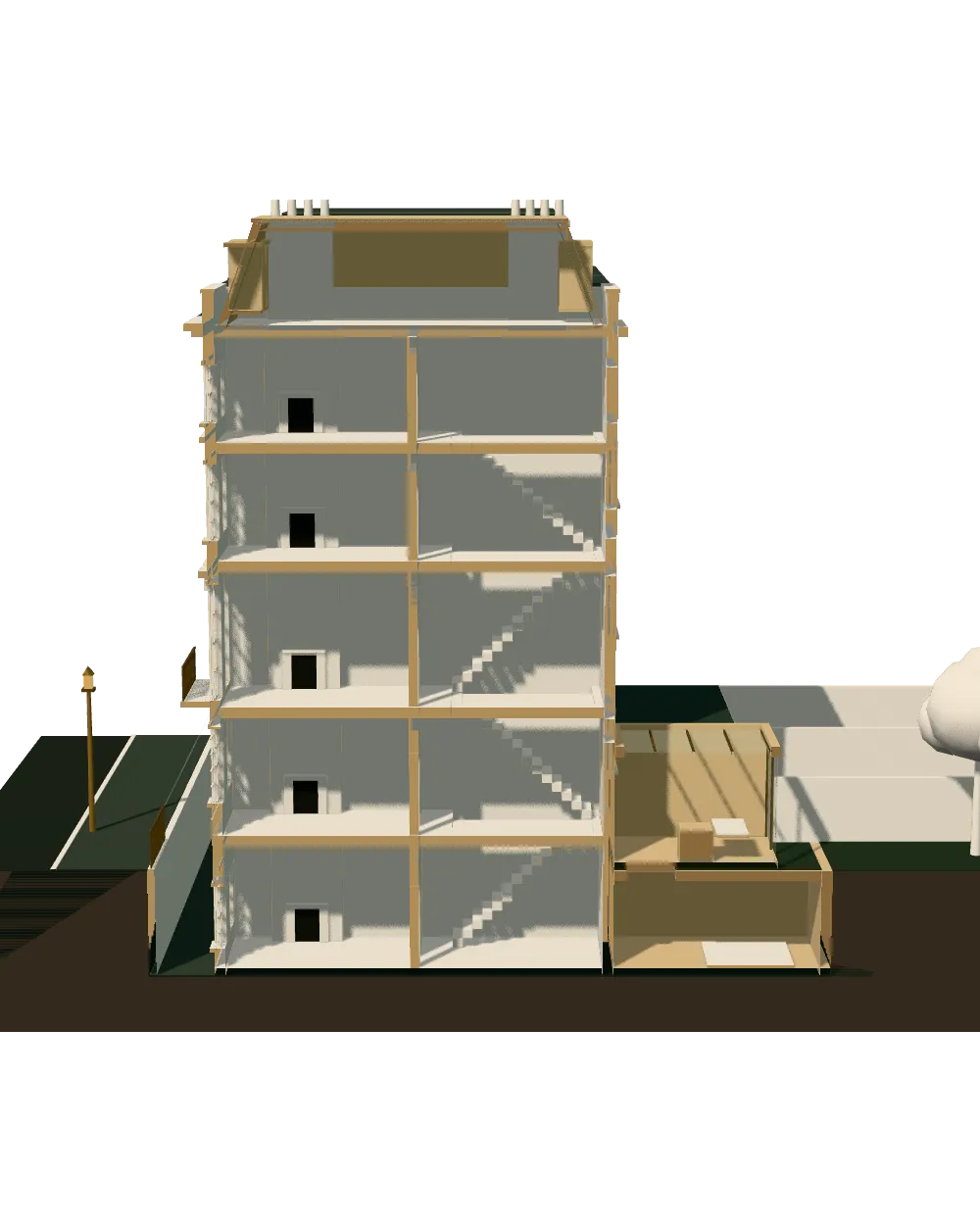
Enquiry and constraints check
We check the property against conservation areas, listed status, Article 4 directions, tree preservation orders, flood zone and planning history. We choose the right route and send a fixed quote.
Measured survey
We survey the house on one datum: rooms, levels, boundaries, drains, trees and the neighbours' windows that the 45° and 25° tests depend on.
Design options
We model the house in Revit and show you options in 3D and plan, with the planning strategy and the precedents in your street.
Design frozen
You choose an option in writing. Nothing changes after this without your say.
Independent check
A second chartered technologist checks every sheet against the council's validation checklist and the policy. A senior review signs it off before anything is submitted.
Submission
We prepare the forms, certificates, fee and documents and submit through the Planning Portal.
Officer liaison
We answer the planning officer and make any amendments within five working days, at no charge until approval.
Free redraws until approval. Every drawing set is checked independently, and the checker is never the person who drew it.
Request a fixed quote
Which Richmond policies a refusal usually leans on
We found no published council rule written specifically for appeals, which is as it should be: an appeal is a challenge to the council's reasons, not a separate procedure the borough controls. What matters is the policy those reasons cite. In Richmond that is normally the Richmond Local Plan 2024-2039, read together with the House Extensions and External Alterations SPD, a document that predates the current plan.
Older guidance does not weaken a refusal reason by itself, but it can shift the argument. An inspector weighs the current development plan first and supplementary guidance second. If the officer relied on a rule of thumb from the extensions guidance, we check whether the plan itself says the same thing, and whether your drawings genuinely break it or only look as if they do.
We also read the officer's report beside the notice, together with the consultation replies and the case officer's site notes where the council has published them. Reasons that appear on the notice but were never raised with you during the application are worth noting, because they affect how fairly the case was handled.
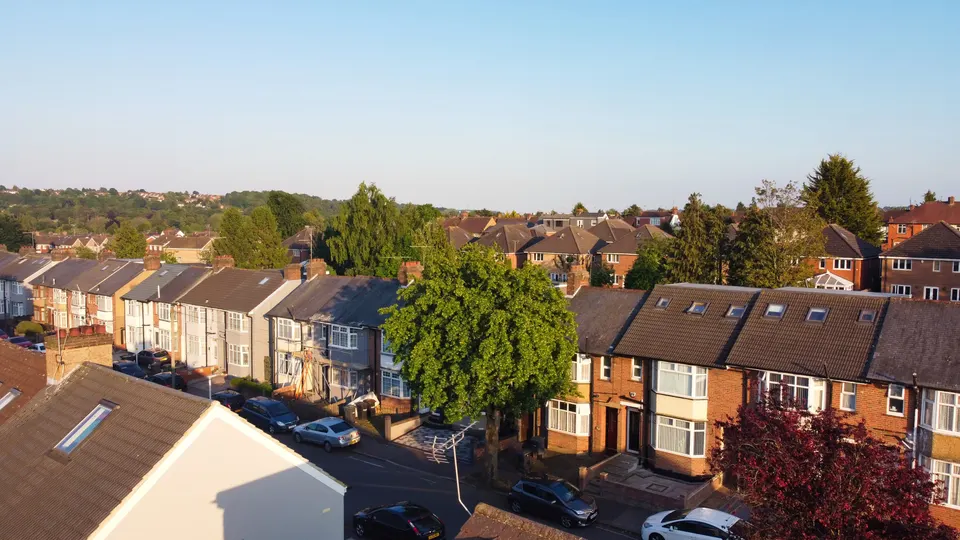
Local figures for Richmond upon Thames
| Measure | Value | Period | Source |
|---|---|---|---|
| Householder decisions | 1,302 decisions | 1 July 2025 - 30 June 2026 | assets.publishing.service.gov.uk |
| Householder applications granted | 83.3 % | 1 July 2025 - 30 June 2026 | assets.publishing.service.gov.uk |
| Householder applications decided in time | 98.3 % decided within 8 weeks or an agreed extended period | 1 July 2025 - 30 June 2026 | assets.publishing.service.gov.uk |
| Minor application decisions | 324 decisions | 1 July 2025 - 30 June 2026 | assets.publishing.service.gov.uk |
| Minor applications granted | 75.3 % | 1 July 2025 - 30 June 2026 | assets.publishing.service.gov.uk |
| Conservation areas | 85 named conservation areas published by the council | — | planning.data.gov.uk |
| Listed building entries | 819 list entries (Historic England, within the LPA boundary) | — | planning.data.gov.uk |
| DMPO 2015 art 37(2)(a): householder appeal, from the date of the decision notice | 12 weeks | — | legislation.gov.uk |
| Annex B, householder appeals (written representations), decisions in June 2026; 351 decisions | 11.6 weeks | — | gov.uk |
A blank value means the figure has not been published, not that there are none. Check your own address with the council.
Which application your project needs
The usual route for a house; flats and listed buildings follow other rules.
- A · Lawful Development Certificate decision
- 8 weeks
- B · Prior approval decision
- 42 days
- C · Householder decision
- 8 weeks
A heritage-heavy borough changes the argument
The council publishes 85 conservation areas, and Historic England records 819 listed entries inside its boundary. Many Richmond refusals therefore turn on character and appearance rather than on neighbour impact.
That shapes the appeal. A conservation area decision is argued with elevations, street views and a clear account of materials, because the inspector must be satisfied that the area's character is preserved or enhanced. Photographs taken from the street usually carry more weight than plans alone. We prepare both.
If a listed building is involved, the case may need separate consent, and an appeal against one decision does not cure the other. Tell us early which consents exist, and send any earlier decision notices for the same house, because a past approval on the site can anchor the argument.
Reading Richmond's numbers honestly
The latest year shows 1,302 householder decisions, with 83.3 per cent granted and 98.3 per cent decided in time. Minor applications fared less well: of 324 decisions, 75.3 per cent were granted.
Because a real minority of householder cases are not granted, a refusal here is not unusual enough to read as a verdict on you. Equally, these figures describe the council's record, not an inspector's. They do not tell you the chance that an appeal succeeds, and nobody can honestly promise that.
Choosing between appeal and a revised application
After a refusal there are three honest routes. If the reasons are narrow, a revised scheme through a fresh planning application is often faster than waiting for the Inspectorate, because a householder appeal by written representations has a national median of 11.6 weeks. If the reasons rest on an arguable reading of policy, appeal. If they are sound, change the design.
Where the building is already standing, as when work went beyond its approval, a different tool applies, and our page on retrospective applications in Richmond upon Thames explains it.
What we prepare for the Inspectorate
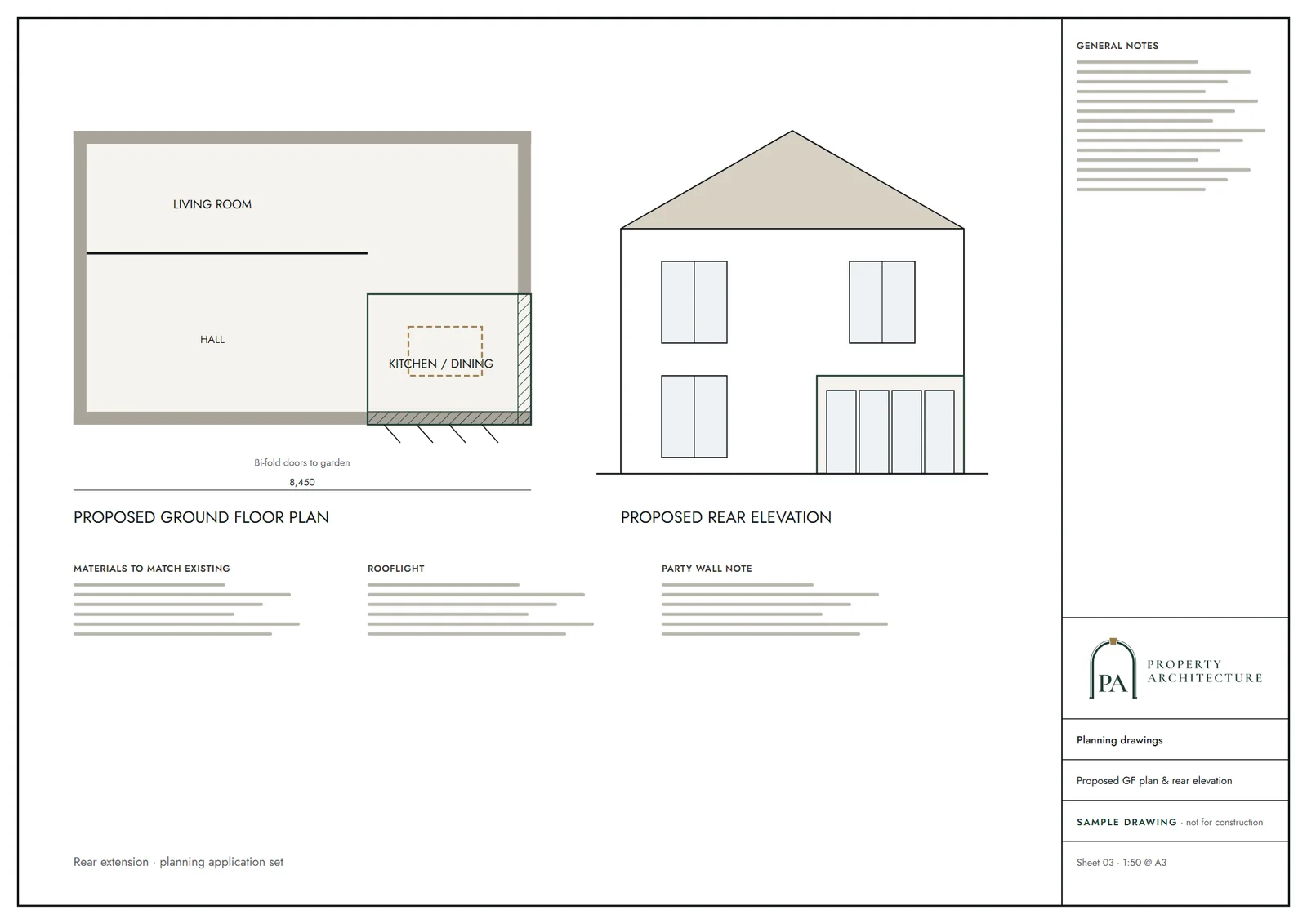
A written-representations appeal is decided on paper, so the paper must be right. We prepare corrected existing and proposed drawings, the grounds of appeal tied to each refusal reason, and a concise statement. We do not repeat the original application; we answer the reasons given.
Our price is a fixed quote once we have run the free constraints check on your address. For appeals that are not householder cases, the time limit is different: 6 months from the decision notice (or expiry of the decision period). Check which category you are in before the clock runs out.
More about the borough sits on our page for architectural drawings in Richmond upon Thames, and neighbouring boroughs are covered under planning appeals in Kingston upon Thames and planning appeals in Wandsworth.
What you receive
Related pages
Other services in Richmond upon Thames
Questions
How long do I have to appeal a refusal in Richmond upon Thames?
For a householder application, 12 weeks from the date on the decision notice. Other planning appeals have a different limit, set out in the Development Management Procedure Order 2015.
Does a conservation area make an appeal harder?
It changes what the inspector looks at: character and appearance carry more weight. It does not stop an appeal succeeding, but it does mean the street-level evidence must be strong.
Will you promise the appeal succeeds?
No. An independent inspector decides, and we do not promise results. We tell you honestly whether the refusal reasons look answerable.
Sources and dates
- assets.publishing.service.gov.uk, retrieved
- planning.data.gov.uk, retrieved
- planning.data.gov.uk, retrieved
- legislation.gov.uk, retrieved
- gov.uk, retrieved
- richmond.gov.uk, retrieved
- richmond.gov.uk, retrieved
- legislation.gov.uk, retrieved
- legislation.gov.uk, retrieved
- legislation.gov.uk, retrieved
- Contains public sector information licensed under the Open Government Licence v3.0.
- Contains OS data © Crown copyright and database right 2026.
- Contains HM Land Registry data © Crown copyright and database right 2026. This data is licensed under the Open Government Licence v3.0.
- Contains Historic England data © Historic England 2026. Contains Ordnance Survey data © Crown copyright and database right 2026.

Tell us about your property.
We check the constraints, then send a fixed fee. Messages before 3pm get a reply the same working day.