
Westminster, London
Planning appeals in Westminster
Planning appeals in Westminster start with the refusal notice. If Westminster City Council has refused your application, you have 12 weeks from the decision notice to appeal a householder case. The council granted 82 per cent of its householder applications, so a refusal here tends to rest on a specific reason, often heritage. We read the notice against the City Plan and prepare the grounds and drawings.
Fixed quote after a free constraints check
- MCIAT chartered
- £2m PI insured
- LABC Partnered
- Fixed fees, VAT included
Request a fixed quote
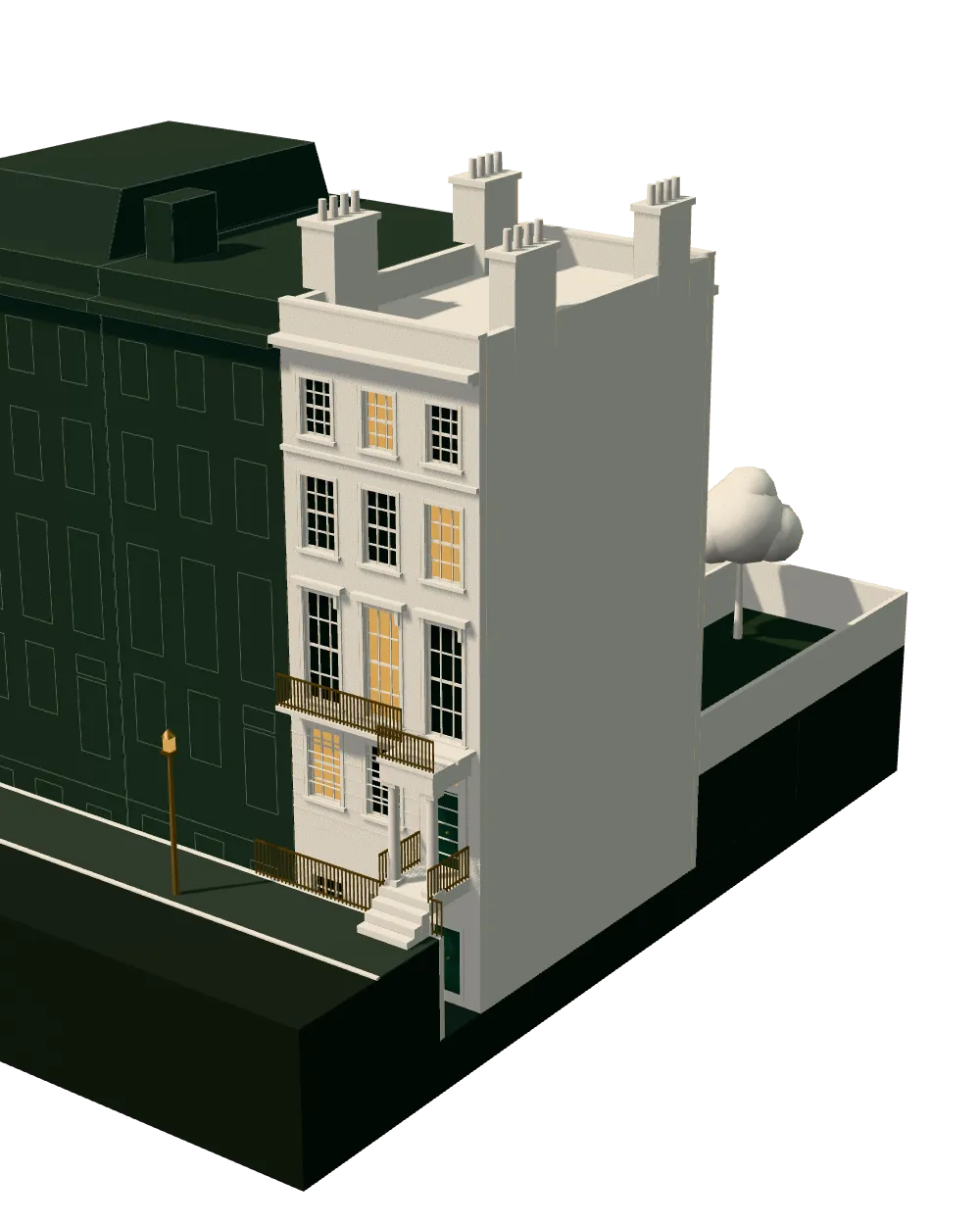
How we work on planning appeals
Seven steps from first call to approval.
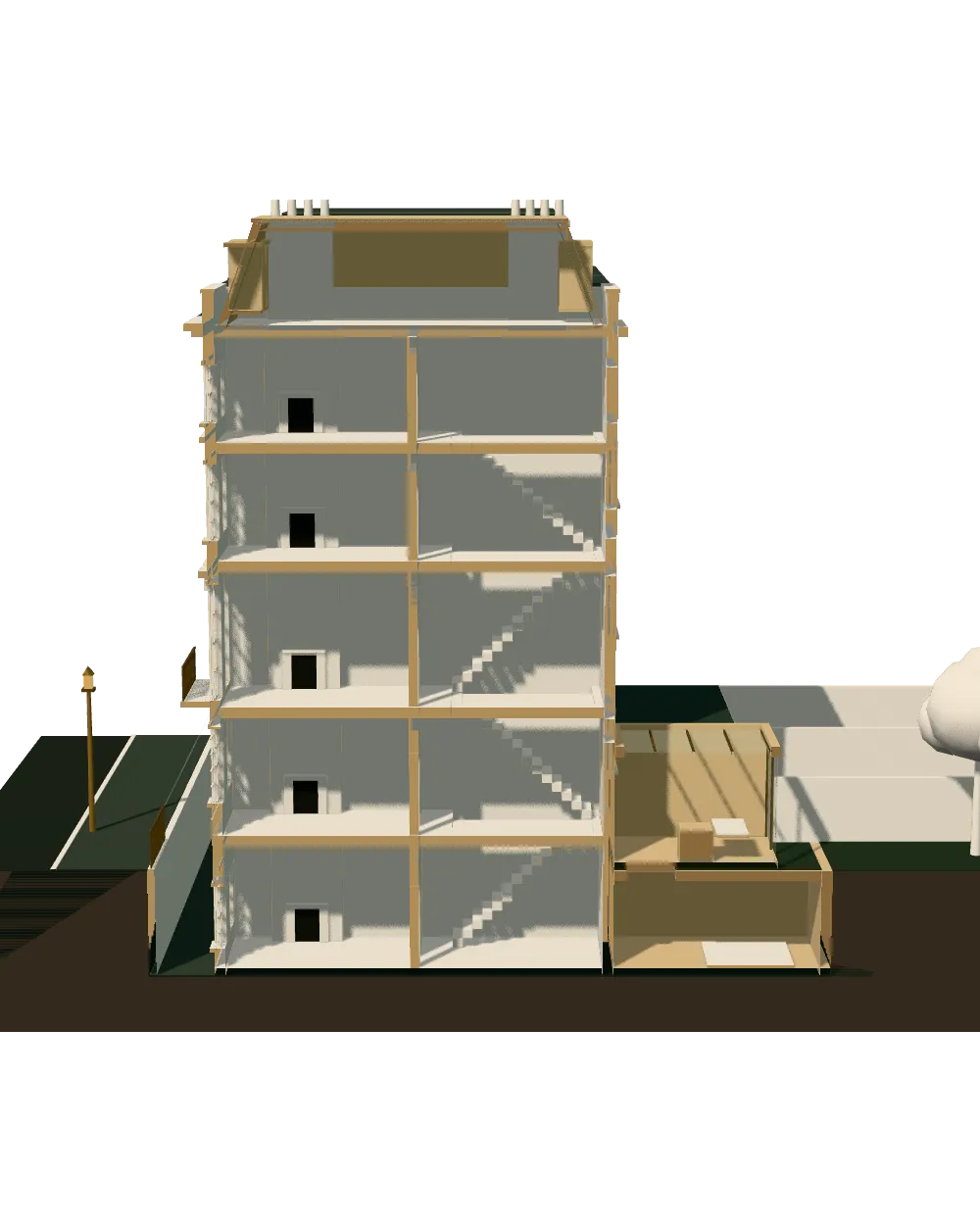
Enquiry and constraints check
We check the property against conservation areas, listed status, Article 4 directions, tree preservation orders, flood zone and planning history. We choose the right route and send a fixed quote.
Measured survey
We survey the house on one datum: rooms, levels, boundaries, drains, trees and the neighbours' windows that the 45° and 25° tests depend on.
Design options
We model the house in Revit and show you options in 3D and plan, with the planning strategy and the precedents in your street.
Design frozen
You choose an option in writing. Nothing changes after this without your say.
Independent check
A second chartered technologist checks every sheet against the council's validation checklist and the policy. A senior review signs it off before anything is submitted.
Submission
We prepare the forms, certificates, fee and documents and submit through the Planning Portal.
Officer liaison
We answer the planning officer and make any amendments within five working days, at no charge until approval.
Free redraws until approval. Every drawing set is checked independently, and the checker is never the person who drew it.
Request a fixed quote
Planning appeals in Westminster: what a Westminster refusal usually rests on
Westminster decided 366 householder applications in the period we hold figures for, and granted 82 per cent of them. Minor applications, which cover small housing and commercial schemes, ran to 1,766 decisions with 85.8 per cent granted. A refused scheme is therefore the exception, and the officer's reasons tend to be specific: harm to a conservation area, to the setting of a listed building, or to the character of a mews.
The borough's own guidance sets the yardstick. The council publishes the Roofs: a guide to alterations and extensions on domestic buildings SPG and the Mews: a guide to alterations SPG, and a refusal for a roof or mews scheme may cite them. The first thing we do is lay the refusal reasons beside those two documents and the City Plan 2019-2040 (2026) policies named in the notice. If a reason quotes a rule that the document does not contain, that is a ground of appeal. If it quotes the rule correctly, we say so and look at a revised scheme instead.
Local figures for Westminster
| Measure | Value | Period | Source |
|---|---|---|---|
| Householder decisions | 366 decisions | 1 July 2025 - 30 June 2026 | assets.publishing.service.gov.uk |
| Householder applications granted | 82 % | 1 July 2025 - 30 June 2026 | assets.publishing.service.gov.uk |
| Minor application decisions | 1,766 decisions | 1 July 2025 - 30 June 2026 | assets.publishing.service.gov.uk |
| Minor applications granted | 85.8 % | 1 July 2025 - 30 June 2026 | assets.publishing.service.gov.uk |
| Conservation areas | 56 named conservation areas published by the council | — | planning.data.gov.uk |
| Listed building entries | 4,015 list entries (Historic England, within the LPA boundary) | — | planning.data.gov.uk |
| Article 4 directions | 10 Article 4 directions published by the council | — | planning.data.gov.uk |
| Households living in a house | 10.2 % of households living in a house or bungalow (detached, semi-detached or terraced) | Census 2021 | nomisweb.co.uk |
| Owner-occupied households | 27.4 % of households owner-occupied (owned outright or with mortgage/loan) | Census 2021 | nomisweb.co.uk |
| Annex B, householder appeals (written representations), decisions in June 2026; 351 decisions | 11.6 weeks | — | gov.uk |
A blank value means the figure has not been published, not that there are none. Check your own address with the council.
Which application your project needs
The usual route for a house; flats and listed buildings follow other rules.
- A · Lawful Development Certificate decision
- 8 weeks
- B · Prior approval decision
- 42 days
- C · Householder decision
- 8 weeks
Heritage is the heavy factor in this borough
Westminster has 56 conservation areas, 4,015 list entries and 1 World Heritage Site within its boundary. Of those entries, 205 are Grade I and 373 are Grade II*. The council also publishes 10 Article 4 directions, which remove permitted development rights in defined areas.
An inspector deciding a Westminster appeal must give great weight to the conservation of heritage assets, so the appeal statement has to deal with significance before it deals with design. We describe what is significant about the building and the street, show where the proposal touches it, and use sections and photographs to show what changes and what does not. A rear closet wing that cannot be seen from any public place is a different case from a front roof alteration, and the drawings should make that obvious at a glance.
Check the heritage position of your own address on the council's planning search before you decide: https://idoxpa.westminster.gov.uk/online-applications/.
Flats, mews and roofs: the common appeal subjects
Only 10.2 per cent of Westminster households live in a house, and 27.4 per cent own their home. Most people applying here are leaseholders in flats, or own a mews house or a terrace in a conservation area, so many appeals are about roof extensions, rear infill, replacement windows or the loss of a terrace or lightwell.
Flat owners face an extra problem. Permitted development rights are far narrower for flats, so a refusal often means there is no fallback route. For a building whose roof or rear elevation has been altered before, we check the planning history for similar approvals on the same terrace, because an inspector gives real weight to what the council has already accepted next door. Our planning drawings service describes how those comparison sheets are prepared.
Appeal, reapply or use another route
A householder appeal decided on written representations took a median of 11.6 weeks nationally in the latest Planning Inspectorate figures, and the twelve-month median for written representations was 18 weeks. Those are national figures, not a forecast for a Westminster case. Where the refusal is narrow, such as one elevation or one window, a revised application can be quicker.
Sometimes the work never needed permission at all. Westminster dealt with 138 lawful development certificate applications in the latest national return, and for a legitimate case a Lawful Development Certificate gives certainty without an appeal. If the work has been built already, read about retrospective planning applications before you contact the council.
What we prepare for a Westminster appeal
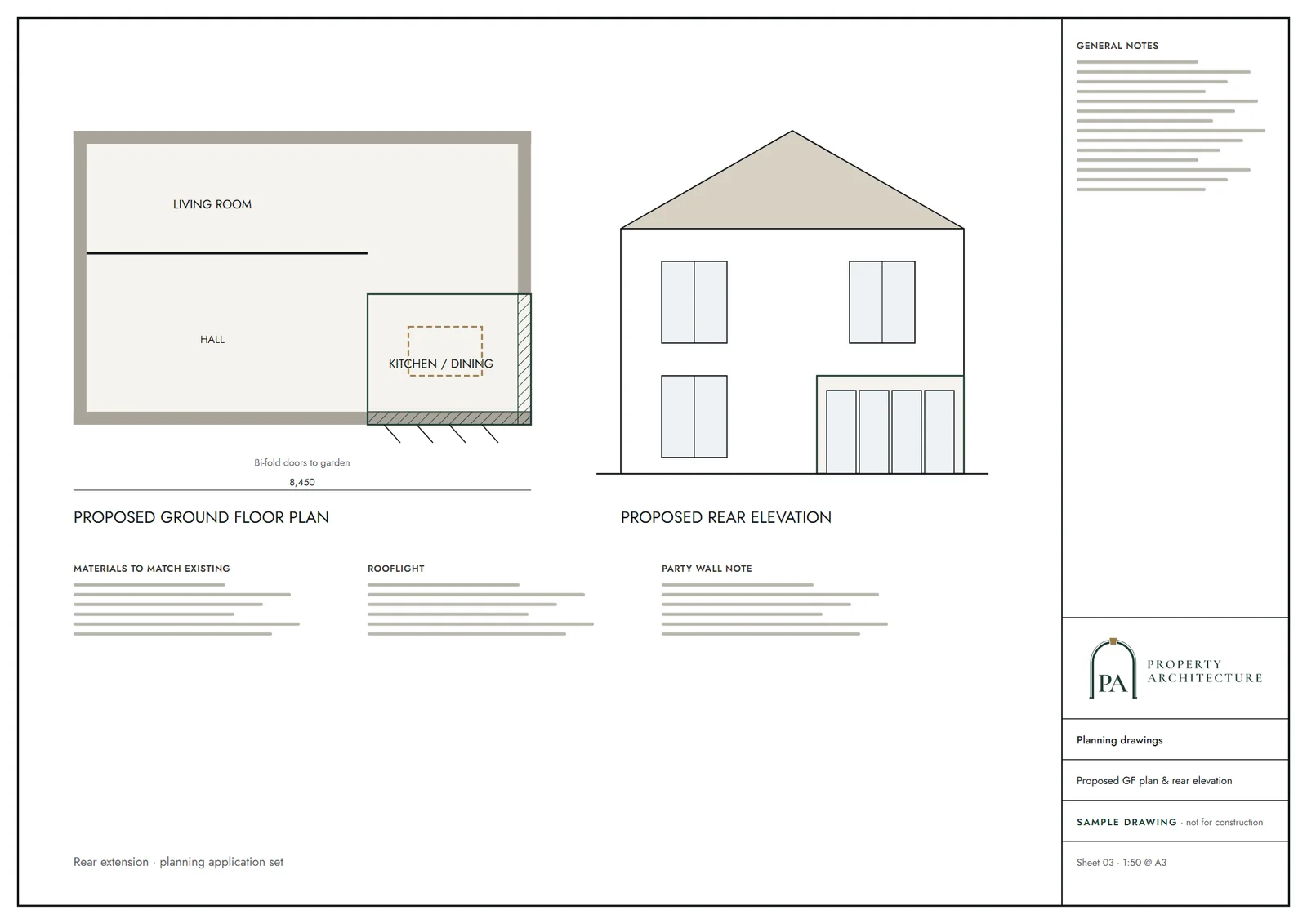
Written representations are the usual route. We prepare the statement, answering each reason for refusal in turn, with the heritage argument at the front. We prepare the plans, sections and elevations the inspector will use, drawn from one model so every sheet agrees, plus a three-dimensional view where the argument concerns height or outlook.
A second member of the team, who did not draw the set, checks it against the refusal notice before it is submitted. We do not promise a result, because the decision belongs to an independent inspector. The quote is fixed once the free constraints check is done, and you can see the wider service on our planning appeals page or the full range on architectural drawings in Westminster.
What you receive

Related pages
Other services in Westminster
Questions
How long do I have to appeal a Westminster refusal?
For a householder application it is 12 weeks from the date on the decision notice. For other applications the limit is 6 months from the decision notice (or expiry of the decision period).
Does a conservation area make an appeal harder?
It raises the standard of justification. With 56 conservation areas in the borough, the appeal statement must show how the proposal treats the area's significance.
Which Westminster documents do you check first?
The refusal notice, the officer's report, the City Plan 2019-2040 (2026) and the council's Roofs: a guide to alterations and extensions on domestic buildings SPG.
Is a flat owner's appeal different?
Often yes, because permitted development rights for flats are narrow, so the appeal may be the only route. We check the planning history of the building for precedents.
Sources and dates
- assets.publishing.service.gov.uk, retrieved
- planning.data.gov.uk, retrieved
- planning.data.gov.uk, retrieved
- planning.data.gov.uk, retrieved
- nomisweb.co.uk, retrieved
- nomisweb.co.uk, retrieved
- gov.uk, retrieved
- westminster.gov.uk, retrieved
- westminster.gov.uk, retrieved
- planning.data.gov.uk, retrieved
- westminster.gov.uk, retrieved
- assets.publishing.service.gov.uk, retrieved
- legislation.gov.uk, retrieved
- legislation.gov.uk, retrieved
- legislation.gov.uk, retrieved
- legislation.gov.uk, retrieved
- Contains public sector information licensed under the Open Government Licence v3.0.
- Contains OS data © Crown copyright and database right 2026.
- Contains HM Land Registry data © Crown copyright and database right 2026. This data is licensed under the Open Government Licence v3.0.
- Contains Historic England data © Historic England 2026. Contains Ordnance Survey data © Crown copyright and database right 2026.

Tell us about your property.
We check the constraints, then send a fixed fee. Messages before 3pm get a reply the same working day.