
Kensington and Chelsea, London
Planning appeals in Kensington and Chelsea
In Kensington and Chelsea refusals are unusual, so planning appeals in Kensington and Chelsea tend to be about something particular: a basement, a protected tree or a listed frontage. A householder appeal must be lodged within 12 weeks. We read the notice, tell you honestly whether it can be answered, and prepare the drawings and statement. Fixed quote after a free constraints check.
Fixed quote after a free constraints check
- MCIAT chartered
- £2m PI insured
- LABC Partnered
- Fixed fees, VAT included
Request a fixed quote
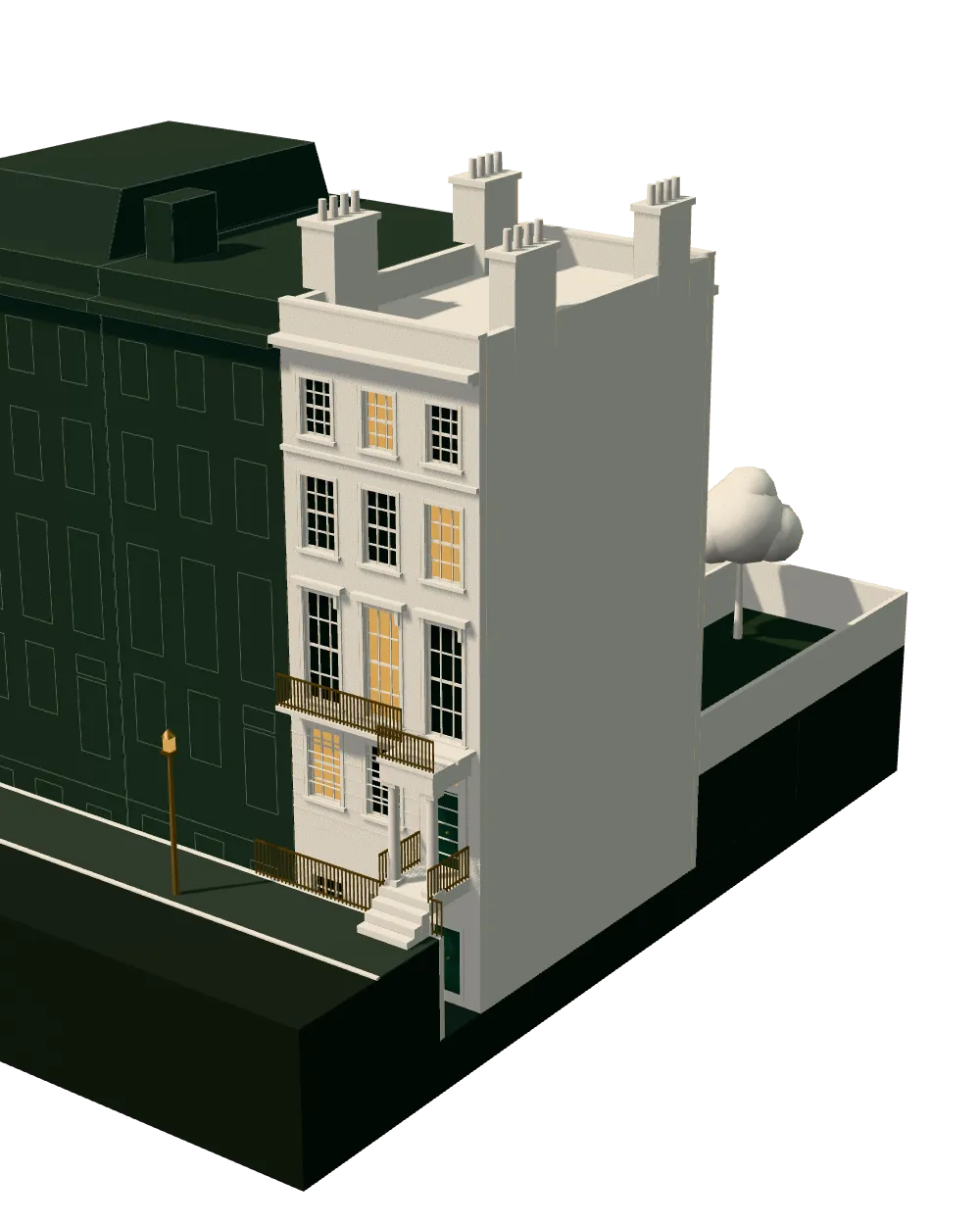
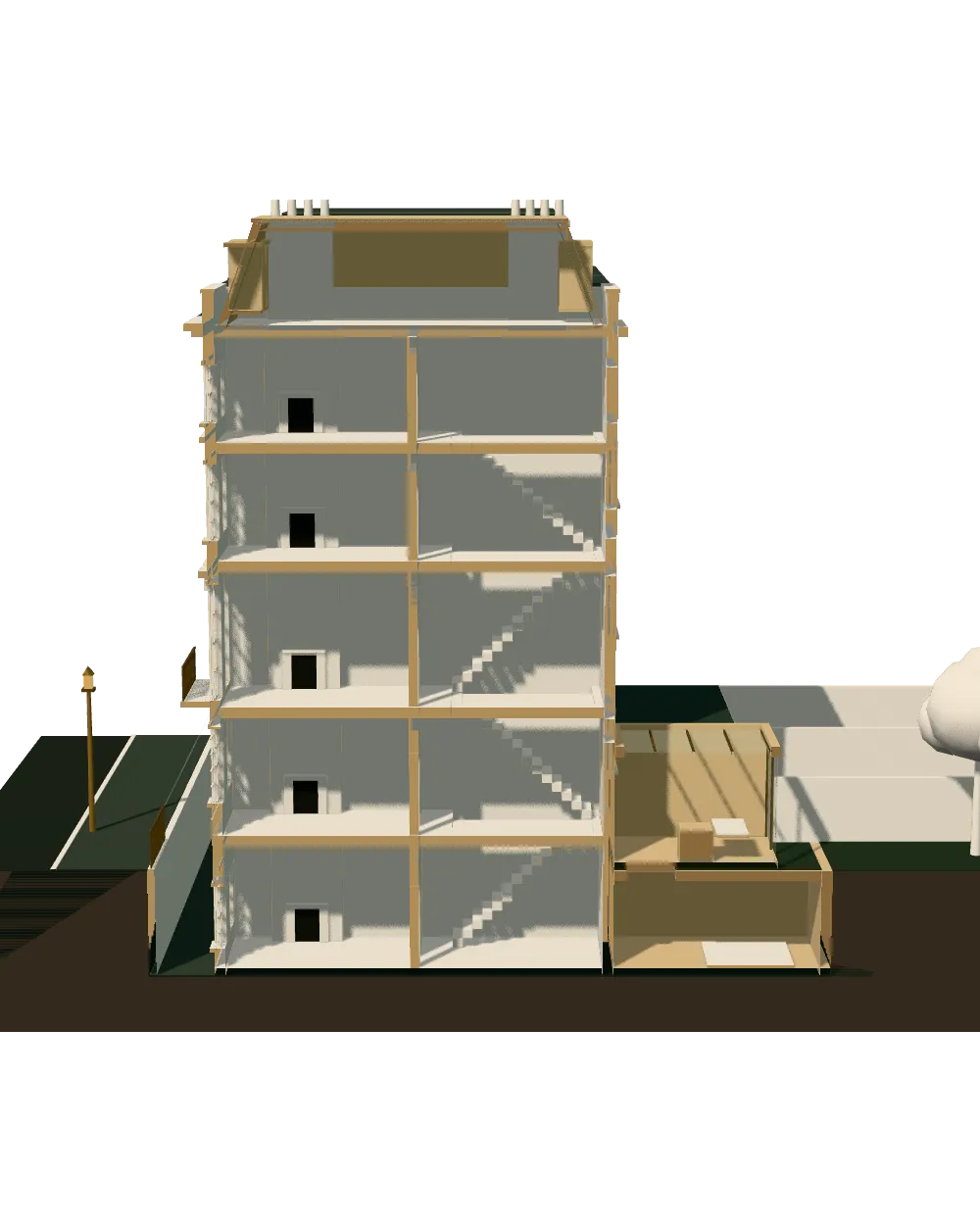
How we work on planning appeals
Seven steps from first call to approval.
Enquiry and constraints check
We check the property against conservation areas, listed status, Article 4 directions, tree preservation orders, flood zone and planning history. We choose the right route and send a fixed quote.
Measured survey
We survey the house on one datum: rooms, levels, boundaries, drains, trees and the neighbours' windows that the 45° and 25° tests depend on.
Design options
We model the house in Revit and show you options in 3D and plan, with the planning strategy and the precedents in your street.
Design frozen
You choose an option in writing. Nothing changes after this without your say.
Independent check
A second chartered technologist checks every sheet against the council's validation checklist and the policy. A senior review signs it off before anything is submitted.
Submission
We prepare the forms, certificates, fee and documents and submit through the Planning Portal.
Officer liaison
We answer the planning officer and make any amendments within five working days, at no charge until approval.
Free redraws until approval. Every drawing set is checked independently, and the checker is never the person who drew it.
Request a fixed quote
A borough that grants nearly everything, and what that implies
The council decided 664 householder applications in its latest year and granted 93.7 per cent. On 840 minor applications the figure was 93.2 per cent. A refusal against numbers like these is a statement that something about your scheme was out of the ordinary.
That works both ways. It may mean the officer found a real policy conflict that no amount of drawing will remove. It may also mean the scheme was close, and one adjustment would have changed the answer. We read the report to decide which, and we say so before you spend on an appeal.
On timing, 91.9 per cent of householder cases were decided in time, so some applicants wait. Check the notice date carefully when it finally arrives.
Local figures for Kensington and Chelsea
| Measure | Value | Period | Source |
|---|---|---|---|
| Householder decisions | 664 decisions | 1 July 2025 - 30 June 2026 | assets.publishing.service.gov.uk |
| Householder applications granted | 93.7 % | 1 July 2025 - 30 June 2026 | assets.publishing.service.gov.uk |
| Householder applications decided in time | 91.9 % decided within 8 weeks or an agreed extended period | 1 July 2025 - 30 June 2026 | assets.publishing.service.gov.uk |
| Minor application decisions | 840 decisions | 1 July 2025 - 30 June 2026 | assets.publishing.service.gov.uk |
| Minor applications granted | 93.2 % | 1 July 2025 - 30 June 2026 | assets.publishing.service.gov.uk |
| Tree preservation orders | 4,560 tree preservation orders published by the council | — | planning.data.gov.uk |
| Listed building entries | 1,350 list entries (Historic England, within the LPA boundary) | — | planning.data.gov.uk |
| Article 4 directions | 84 Article 4 directions published by the council | — | planning.data.gov.uk |
| DMPO 2015 art 37(2)(a): householder appeal, from the date of the decision notice | 12 weeks | — | legislation.gov.uk |
| Section 1.1: allowed rate for s78 planning appeals, Apr-Jun 2026 | 31 % | — | gov.uk |
A blank value means the figure has not been published, not that there are none. Check your own address with the council.
Which application your project needs
The usual route for a house; flats and listed buildings follow other rules.
- A · Lawful Development Certificate decision
- 8 weeks
- B · Prior approval decision
- 42 days
- C · Householder decision
- 8 weeks
Basements, the commonest battleground
The council's Basements SPD sets detailed tests for excavation, and a basement refusal will usually cite it. Reasons cited can include the size of the lightwell, the depth, the effect on trees, construction traffic and the way the works might affect neighbouring houses.
An appeal against a basement refusal is a technical bundle. We assemble the drawings, section details and structural statement so that the plan, the engineer's method and our statement tell one story. Where the dispute is over a lightwell or a garden proportion, a dimensioned plan with the policy limit shown beside the proposal settles it more quickly than argument.
Trees, listed buildings and Article 4 directions
The borough has 4,560 tree preservation orders, 1,350 listed entries, 39 conservation areas and 84 Article 4 directions. That is a heavy layer of control, and a refusal often rests on more than one of them.
A tree officer's objection needs a tree survey and a root protection plan on the drawings. A heritage objection needs the significance of the building set out and the harm assessed against it. An Article 4 direction may mean the work needed permission in the first place. We map all three against your plot at the start, so the appeal does not answer one objection while ignoring another.
Prior approval and certificates here
The council recorded 0 large-extension prior approvals in its latest return, and 25 Lawful Development Certificate applications. For a flat, or a house where rights have been removed, the permitted-development route is closed or limited. If you built on that assumption and were refused, we check the legal position before anything else.
Our planning drawings in Kensington and Chelsea page describes the full application route that most schemes here follow.
Reading an unusual refusal
When a council grants almost every householder application, its refusals deserve close attention. Our first step is to find the exact sentence the case turned on. Often it is a single paragraph in the officer's report, such as the effect on a neighbour's garden or the loss of a historic rear elevation.
We also search the register for the council's own earlier decisions on similar houses. In a borough with a long history of detailed policy, a precedent two streets away can be decisive, and an inconsistency in treatment is a ground an inspector takes seriously.
Where the reasons are sound, we advise against an appeal. That saves you the cost of a statement, and it leaves time to submit a revised scheme while the original design thinking is fresh.
If you believe the council treated you differently from a neighbour, say so in the first email. We pull the register entries for both addresses and compare the officer's reasoning side by side.
Costs, timing and what to expect
The cost of an appeal is in its preparation, which is why we quote a fixed fee after the free constraints check.
The national median for householder appeals was 11.6 weeks on written representations, and basement cases with technical evidence can take longer. Build that into your programme, and do not instruct builders until you have a decision.
What we send to the Inspectorate
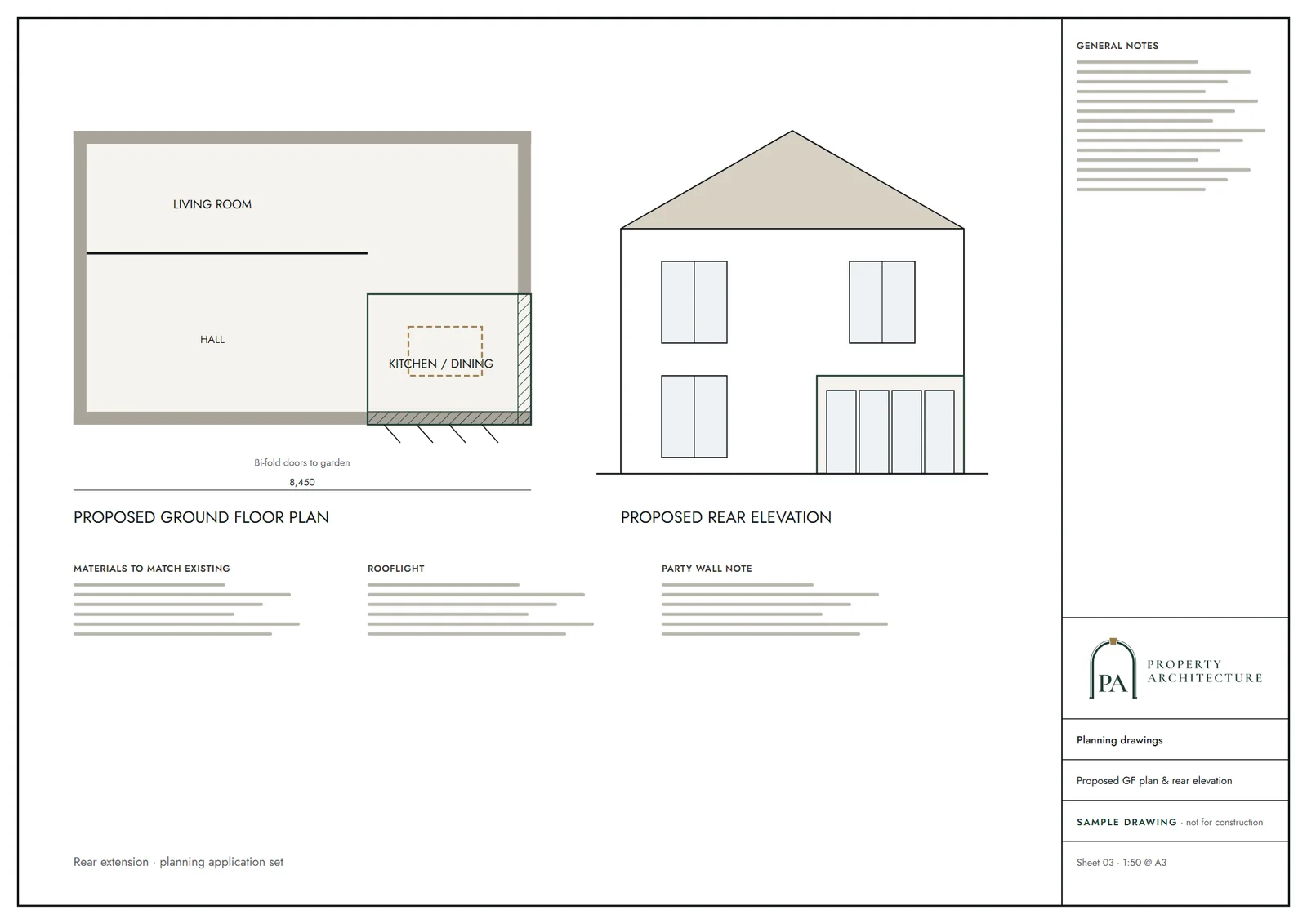
We prepare the statement, the corrected drawings and a site photograph sheet, then have a second chartered technologist check the bundle. Our architectural drawings in Kensington and Chelsea page lists the rest of our work in the borough.
What you receive
Related pages
Other services in Kensington and Chelsea
Questions
How long do I have to appeal in Kensington and Chelsea?
12 weeks for a householder refusal, counted from the date on the notice.
Why would the council refuse when it grants so many?
A refusal usually means a specific conflict, often over a basement, a tree or heritage. The borough granted 93.7 per cent of householder cases, so the reason will be in the report.
Is a basement appeal different?
It is more technical. The council expects engineering evidence, so the appeal bundle needs the structural statement as well as the plans.
What are the national odds?
The Inspectorate allowed 31 per cent of section 78 appeals in its latest quarter. That is a national average, not a forecast.
Sources and dates
- assets.publishing.service.gov.uk, retrieved
- planning.data.gov.uk, retrieved
- planning.data.gov.uk, retrieved
- planning.data.gov.uk, retrieved
- legislation.gov.uk, retrieved
- gov.uk, retrieved
- rbkc.gov.uk, retrieved
- planning.data.gov.uk, retrieved
- assets.publishing.service.gov.uk, retrieved
- legislation.gov.uk, retrieved
- legislation.gov.uk, retrieved
- legislation.gov.uk, retrieved
- Contains public sector information licensed under the Open Government Licence v3.0.
- Contains OS data © Crown copyright and database right 2026.
- Contains HM Land Registry data © Crown copyright and database right 2026. This data is licensed under the Open Government Licence v3.0.
- Contains Historic England data © Historic England 2026. Contains Ordnance Survey data © Crown copyright and database right 2026.

Tell us about your property.
We check the constraints, then send a fixed fee. Messages before 3pm get a reply the same working day.