
Kensington and Chelsea, London
Lawful Development Certificate in Kensington and Chelsea
A Lawful Development Certificate in Kensington and Chelsea is the council's written ruling that a building, use or alteration is lawful without further permission. MCIAT chartered architectural technologists prepare it from £645 including VAT. Householder rights are heavily constrained in this borough: the council logged just 25 certificate applications, and 84 Article 4 directions narrow what is left.
From £645 (VAT included)
- MCIAT chartered
- £2m PI insured
- LABC Partnered
- Fixed fees, VAT included
Request a fixed quote
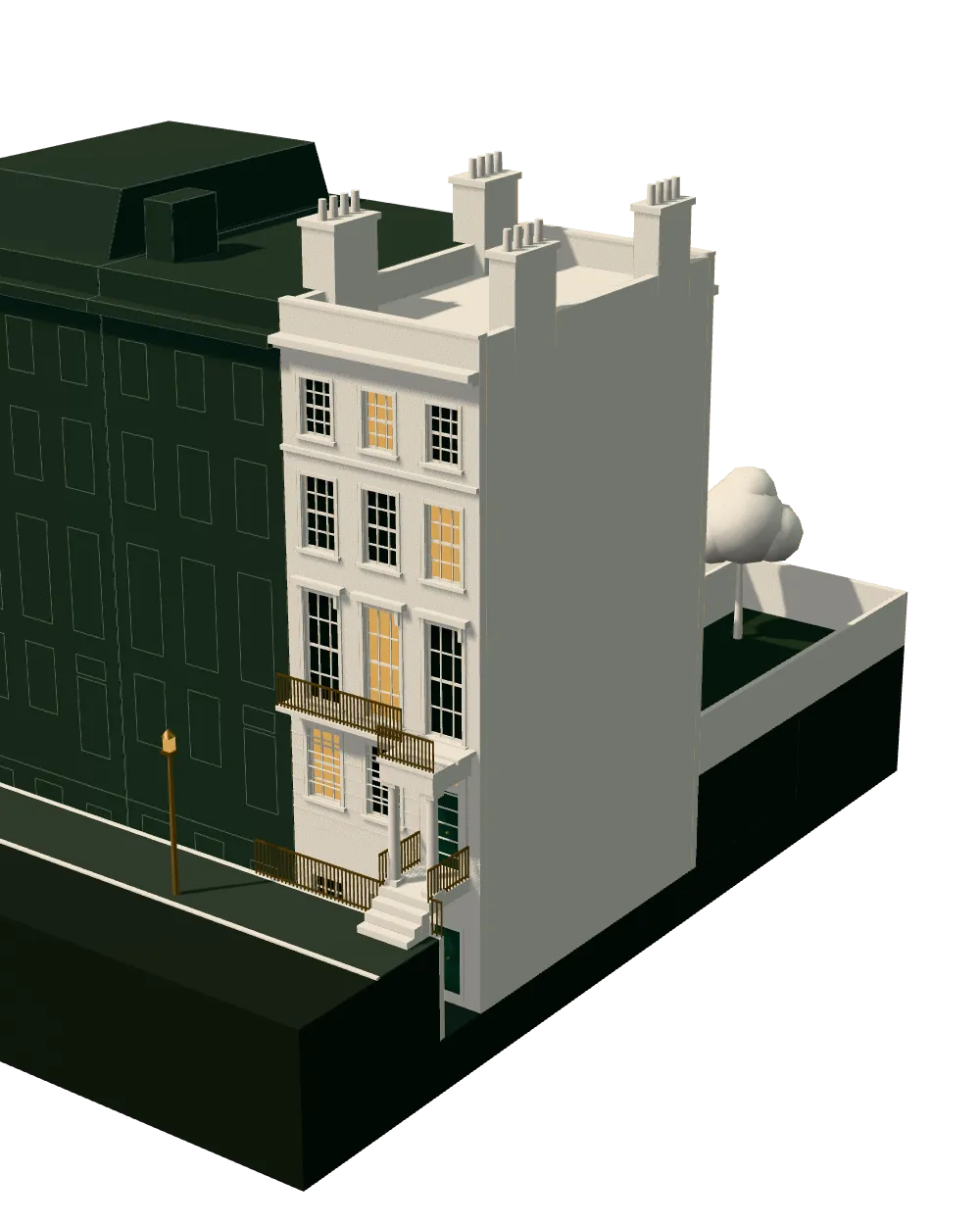
How we work on lawful development certificates
Seven steps from first call to approval.
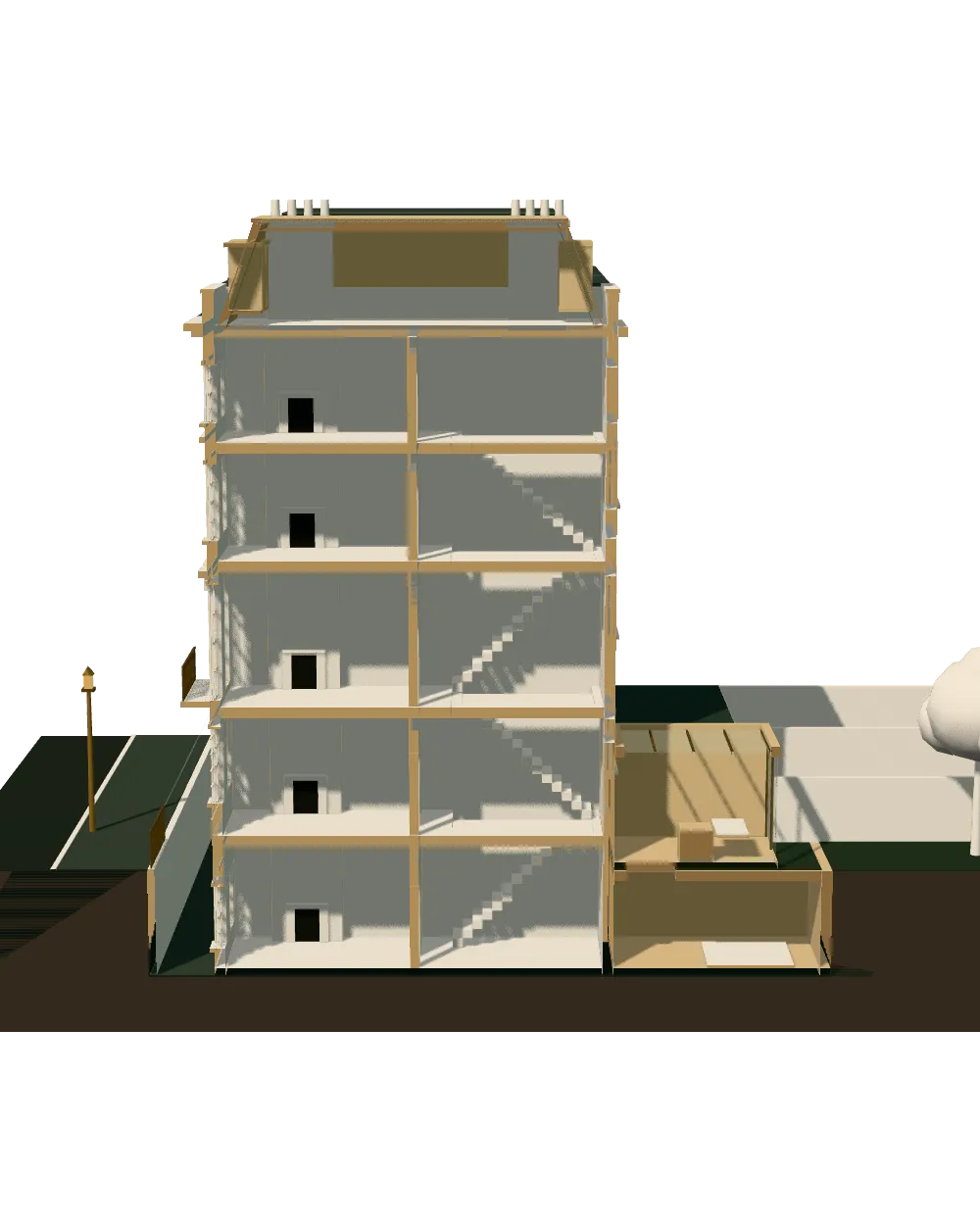
Enquiry and constraints check
We check the property against conservation areas, listed status, Article 4 directions, tree preservation orders, flood zone and planning history. We choose the right route and send a fixed quote.
Measured survey
We survey the house on one datum: rooms, levels, boundaries, drains, trees and the neighbours' windows that the 45° and 25° tests depend on.
Design options
We model the house in Revit and show you options in 3D and plan, with the planning strategy and the precedents in your street.
Design frozen
You choose an option in writing. Nothing changes after this without your say.
Independent check
A second chartered technologist checks every sheet against the council's validation checklist and the policy. A senior review signs it off before anything is submitted.
Submission
We prepare the forms, certificates, fee and documents and submit through the Planning Portal.
Officer liaison
We answer the planning officer and make any amendments within five working days, at no charge until approval.
Free redraws until approval. Every drawing set is checked independently, and the checker is never the person who drew it.
Request a fixed quote
Why Kensington and Chelsea certificates are rare
A count of 25 certificates is small for a borough this size, and the reason is structural. Only 17 per cent of households live in a house, and flats cannot use householder rights: Householder permitted development (Sch 2 Part 1) does not apply to flats or buildings containing flats. Many of the houses that remain sit inside the borough's 39 conservation areas, where the Order drops side extensions and cladding.
Then come the directions. The council publishes 84 Article 4 directions, each withdrawing named rights over a defined area, and a listed stock of 1,350 entries. A house that appears to qualify on the Order alone can fail on any one of these, which is why our check of your address comes first.
Trees are the third filter. With 4,560 tree preservation orders published, even a lawful rear extension may sit near a protected specimen in a garden square or mews, and the foundation depth then affects the design.
Local figures for Kensington and Chelsea
| Measure | Value | Period | Source |
|---|---|---|---|
| Lawful development certificate applications (PS1) | 25 certificates | 2025 Q2 to 2026 Q1 (1 Apr 2025 to 31 Mar 2026) | assets.publishing.service.gov.uk |
| Article 4 directions | 84 Article 4 directions published by the council | — | planning.data.gov.uk |
| Conservation areas | 39 named conservation areas published by the council | — | planning.data.gov.uk |
| Listed building entries | 1,350 list entries (Historic England, within the LPA boundary) | — | planning.data.gov.uk |
| Tree preservation orders | 4,560 tree preservation orders published by the council | — | planning.data.gov.uk |
| Households living in a house | 17 % of households living in a house or bungalow (detached, semi-detached or terraced) | Census 2021 | nomisweb.co.uk |
| Householder applications granted (PS2) | 94.3 % of householder decisions | 2025 Q2 to 2026 Q1 (1 Apr 2025 to 31 Mar 2026) | assets.publishing.service.gov.uk |
| Householder applications decided in time (PS2) | 95.6 % of householder decisions | 2025 Q2 to 2026 Q1 (1 Apr 2025 to 31 Mar 2026) | assets.publishing.service.gov.uk |
| Local plan adopted | 2,024 | — | rbkc.gov.uk |
| GPDO 2015 Sch 2 Pt 1 Class A, para A.1(f)(i) | 3 m (attached) / 4 m (detached) beyond the original rear wall, single storey | — | legislation.gov.uk |
| GPDO 2015 art 2(1), definition of "dwellinghouse" | Householder permitted development (Sch 2 Part 1) does not apply to flats or buildings containing flats | — | legislation.gov.uk |
| Lawful Development Certificate: proposed use or operation | Half the normal planning fee (householder: £274) | — | ribblevalley.gov.uk |
A blank value means the figure has not been published, not that there are none. Check your own address with the council.
Which application your project needs
The usual route for a house; flats and listed buildings follow other rules.
- A · Lawful Development Certificate decision
- 8 weeks
- B · Prior approval decision
- 42 days
- C · Householder decision
- 8 weeks
Where a certificate does help in the borough
It helps the owner of a whole house outside the directions, where the project is modest and the proof matters for a sale. A rear addition within the standard limits, an outbuilding in the garden or a roof alteration that stays on the right side of the Order can all be confirmed. The single-storey rear limit is: 3 m (attached) / 4 m (detached) beyond the original rear wall, single storey.
It also helps a different kind of owner: the one whose lower-ground floor, rear lightwell or subdivided flat was altered years ago without paperwork. A certificate of existing use or development records what is already there as lawful, based on dated evidence such as council tax records, utility bills and photographs. We organise that file for you.
A basement is a different subject. The borough's Basements SPD sets its own demanding tests, and that work is outside what we draw on this site.
Mews houses and garden-square properties need particular care, because plot depth is shallow and neighbours are close. We show every boundary distance on the block plan, so the eaves and height tests can be read straight from the sheet, and we photograph the party walls so the baseline cannot be disputed later.
Evidence an existing-use certificate needs
For work already built, the burden of proof sits with you. The officer wants dated, independent records: council tax and electoral entries, tenancy agreements, utility accounts, estate agent particulars, aerial imagery and photographs with a traceable date. One document rarely settles it, so we line several up on a timeline and note the gaps.
We also draw the building as it stands, with the floor areas and the layout of the part in question, so the officer can match the paperwork to a physical space. Where the evidence is thin we say so plainly, and we may suggest a retrospective planning application as the safer course, since that route does not depend on proving the passage of time.
How the borough decides
Kensington and Chelsea granted 94.3 per cent of its decided householder applications and handled 95.6 per cent in time. The adopted plan is the Local Plan 2024 (New Local Plan Review), adopted in 2,024. A certificate is not weighed against it, but when the Order does not reach your project the plan becomes the test, and a planning application in Kensington and Chelsea takes over.
Given the odds, we do not recommend a certificate where the answer is likely to be refusal. We would rather say so by the end of the first call, with the specific direction or designation that blocks it, and move straight to the application that fits.
Set, fee and period
A set contains a location plan, block plan, floor plans, elevations and a section, checked by a second technologist before you see it. The council's fee is separate: Half the normal planning fee (householder: £274). The statutory period is 8 weeks. If the answer is no we weigh a redraw, a planning route or a planning appeal with you.
Allow for the council to ask questions. Officers can seek a clarified boundary or a sharper photograph, and a fast, complete reply keeps the file moving. Once a certificate is in hand, the same survey supports your building regulations drawings without a second visit.
What you receive
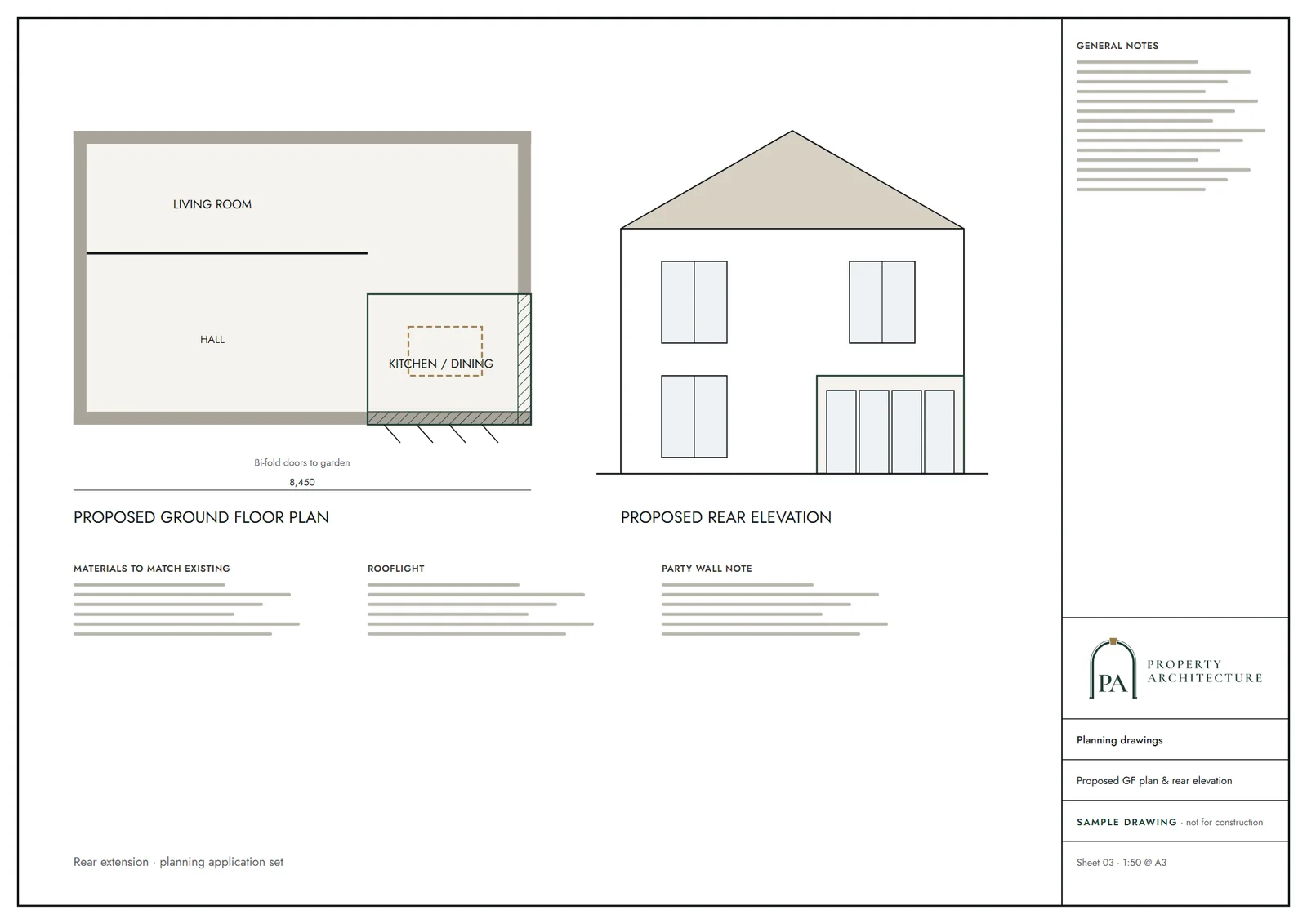
Related pages
Other services in Kensington and Chelsea
Questions
How many certificates does Kensington and Chelsea process?
The latest return shows 25, a low figure, partly because few homes keep householder rights.
Can a flat have a certificate in Kensington and Chelsea?
Not for an extension under householder rights. An existing-use certificate can suit a flat altered long ago, if the evidence is good.
Do tree preservation orders affect a certificate?
Not the certificate itself, but the borough publishes 4,560 orders, and they can change where a rear extension can be built.
Sources and dates
- assets.publishing.service.gov.uk, retrieved
- planning.data.gov.uk, retrieved
- planning.data.gov.uk, retrieved
- planning.data.gov.uk, retrieved
- planning.data.gov.uk, retrieved
- nomisweb.co.uk, retrieved
- assets.publishing.service.gov.uk, retrieved
- rbkc.gov.uk, retrieved
- legislation.gov.uk, retrieved
- legislation.gov.uk, retrieved
- ribblevalley.gov.uk, retrieved
- rbkc.gov.uk, retrieved
- legislation.gov.uk, retrieved
- legislation.gov.uk, retrieved
- Contains public sector information licensed under the Open Government Licence v3.0.
- Contains OS data © Crown copyright and database right 2026.
- Contains HM Land Registry data © Crown copyright and database right 2026. This data is licensed under the Open Government Licence v3.0.
- Contains Historic England data © Historic England 2026. Contains Ordnance Survey data © Crown copyright and database right 2026.

Tell us about your property.
We check the constraints, then send a fixed fee. Messages before 3pm get a reply the same working day.