
Islington, London
Biodiversity net gain plans in Islington
Islington asks for more than the national rule on one point: its validation list wants a biodiversity net gain assessment from small developments as well as major ones, so a modest backland house can still need paperwork. For anything that is not a householder job, we prepare the assessment, the baseline metric and the habitat plan on a fixed quote after a free constraints check, and we say first whether you are exempt.
Fixed quote after a free constraints check
- MCIAT chartered
- £2m PI insured
- LABC Partnered
- Fixed fees, VAT included
Request a fixed quote
How we work on biodiversity net gain plans
Seven steps from first call to approval.
Enquiry and constraints check
We check the property against conservation areas, listed status, Article 4 directions, tree preservation orders, flood zone and planning history. We choose the right route and send a fixed quote.
Measured survey
We survey the house on one datum: rooms, levels, boundaries, drains, trees and the neighbours' windows that the 45° and 25° tests depend on.
Design options
We model the house in Revit and show you options in 3D and plan, with the planning strategy and the precedents in your street.
Design frozen
You choose an option in writing. Nothing changes after this without your say.
Independent check
A second chartered technologist checks every sheet against the council's validation checklist and the policy. A senior review signs it off before anything is submitted.
Submission
We prepare the forms, certificates, fee and documents and submit through the Planning Portal.
Officer liaison
We answer the planning officer and make any amendments within five working days, at no charge until approval.
Free redraws until approval. Every drawing set is checked independently, and the checker is never the person who drew it.
Request a fixed quote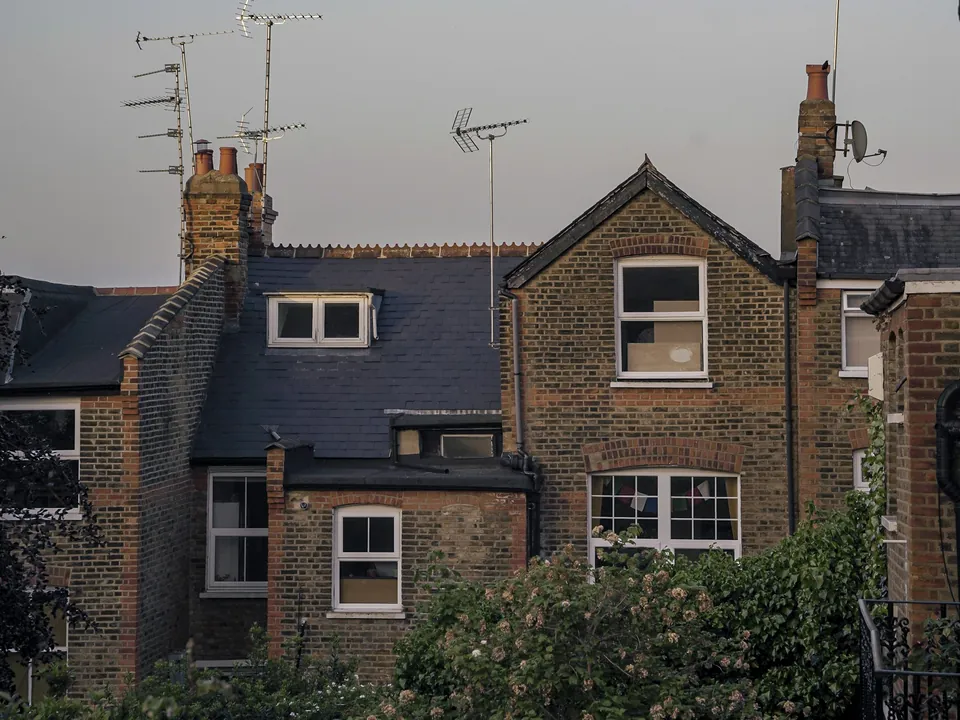
What Islington requires on a biodiversity net gain assessment
The council summarises its requirement as 10% minimum; small sites from Apr 2024. In practice an assessment must include an applicability statement, a baseline metric, a habitat baseline plan and an account of how the minimum gain will be met. The green infrastructure policy in the Local Plan adds that proposals should aim to secure a net gain in biodiversity value, with priority given to achieving it on site.
The council defines a small development as one to nine dwellings or a site under a half hectare, and a commercial small development by floor area or site area. The national small-site exemption is narrower, at 0.2 hectares, so a plot can be exempt nationally and still be asked for a statement here.
Islington has no Green Belt, which tells you something about the sites that arrive: yards, rear service strips, roof terraces and pocket gardens, where every square metre of habitat is counted by area and condition.
Our advice to owners with a garden plot is to ask the question before design starts. If Islington would treat the site as small, the metric and habitat plan are validation items, and an application sent without them can be returned unregistered, costing weeks that a prepared file would not lose.

Local figures for Islington
| Measure | Value | Period | Source |
|---|---|---|---|
| BNG Assessment required for major developments from February 2023 and small developments from April 2024 (small = 1-9 dwellings or under 0.5 ha; commercial under 1,000 sq m or 1 ha): applicability statement, baseline metric and habitat baseline plan, and how a minimum of 10% net gain will be met. Local Plan G4: proposals must aim to secure a net gain in biodiversity value, priority on site. | 10% minimum; small sites from Apr 2024 | — | islington.gov.uk, Islington Local Validation Requirements for Planning Applications (12 April 2024), Item 4.2, pp.20-21 (and footnote 1); Local Plan Policy G4, p.172 |
| Households living in a house | 16.3 % of households living in a house or bungalow (detached, semi-detached or terraced) | Census 2021 | nomisweb.co.uk |
| Domestic gardens share of land (GLUD 2005) | 19.7 % of land that is domestic garden (GLUD 2005) | 2005 | data.london.gov.uk |
| Conservation areas | 41 named conservation areas published by the council | — | planning.data.gov.uk |
| Listed building entries | 1,050 list entries (Historic England, within the LPA boundary) | — | planning.data.gov.uk |
| Minor applications granted | 86.5 % | 1 July 2025 - 30 June 2026 | assets.publishing.service.gov.uk |
| Minor application decisions | 675 decisions | 1 July 2025 - 30 June 2026 | assets.publishing.service.gov.uk |
| Minor applications decided in time | 96.7 % decided within 8 weeks or an agreed extended period | 1 July 2025 - 30 June 2026 | assets.publishing.service.gov.uk |
| Environment Act 2021 Sch 14 para 2, inserting Sch 7A TCPA 1990: 'relevant percentage' 10% | 10 % | — | legislation.gov.uk |
| Sch 7A para 9(3) as inserted: enhancement maintained for at least 30 years after completion | 30 years | — | legislation.gov.uk |
| 'Developments of 0.2 hectares or below': from 6 August 2026 BNG does not apply where the site area within the red line boundary is 0.2 ha or below | 0.2 ha | — | gov.uk |
A blank value means the figure has not been published, not that there are none. Check your own address with the council.
Which application your project needs
The usual route for a house; flats and listed buildings follow other rules.
- A · Lawful Development Certificate decision
- 8 weeks
- B · Prior approval decision
- 42 days
- C · Householder decision
- 8 weeks
Why a dense borough still has a baseline to measure
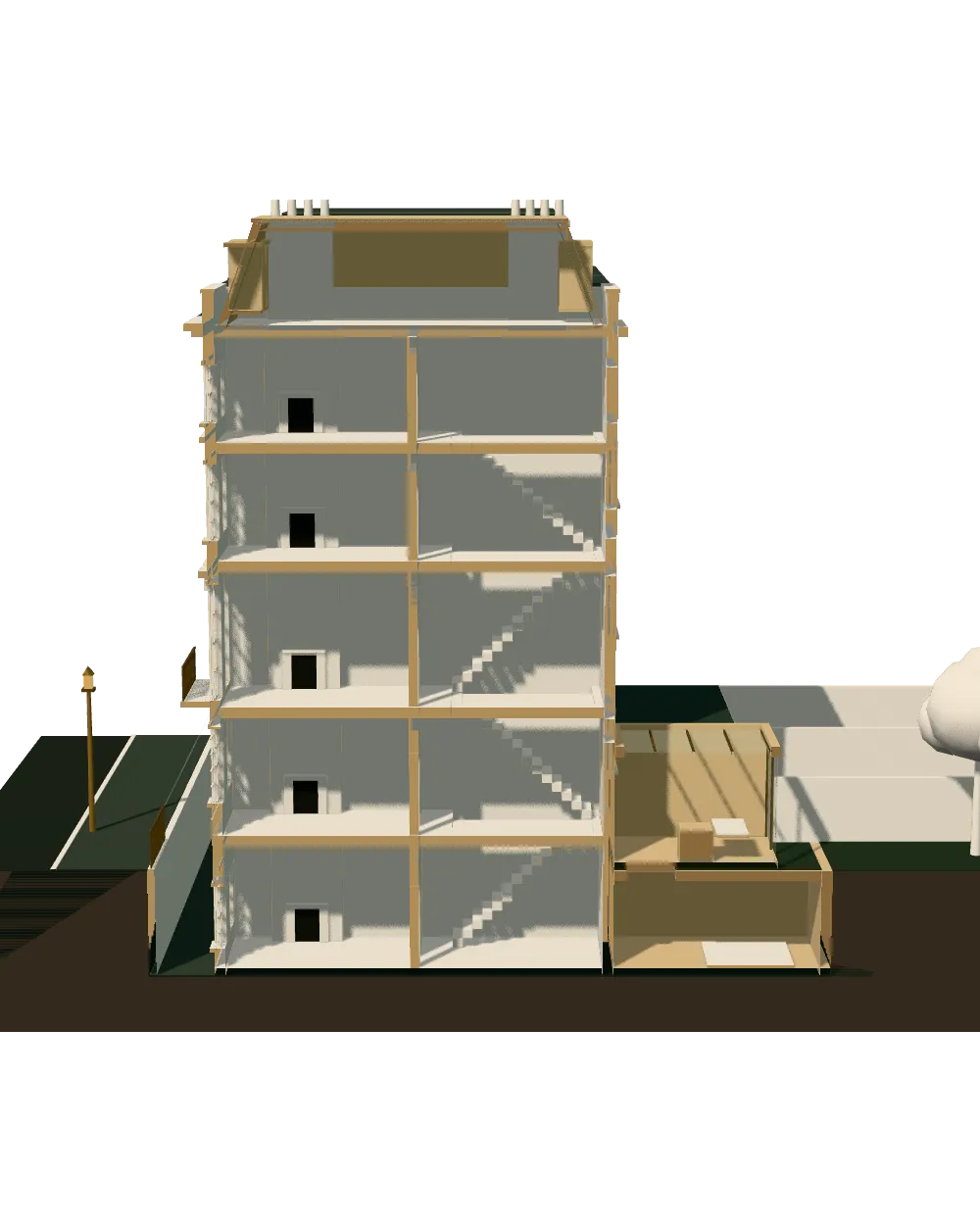
Only 16.3 per cent of households live in a house, and 96,496 households share the borough. Gardens still cover 19.7 per cent of land, so the habitat that is there is concentrated in rear gardens behind Georgian and Victorian terraces.
That means a rear extension is the usual way biodiversity comes into an Islington job. A householder extension is exempt, but a new mews house built in the garden is not, and the garden lost is measured parcel by parcel.
We also check the heritage context early. The borough has 41 conservation areas and 1,050 listed building entries, and green roofs or planting proposed for gain have to sit comfortably with the setting of a protected street.
How we build the assessment
We map each habitat on the plot, give it a condition grade and calculate the baseline using the statutory metric. Then we design the post-development layout, usually combining a biodiverse roof, trees in the remaining garden and a climbing hedge, and show that the total reaches the required 10 per cent rise.
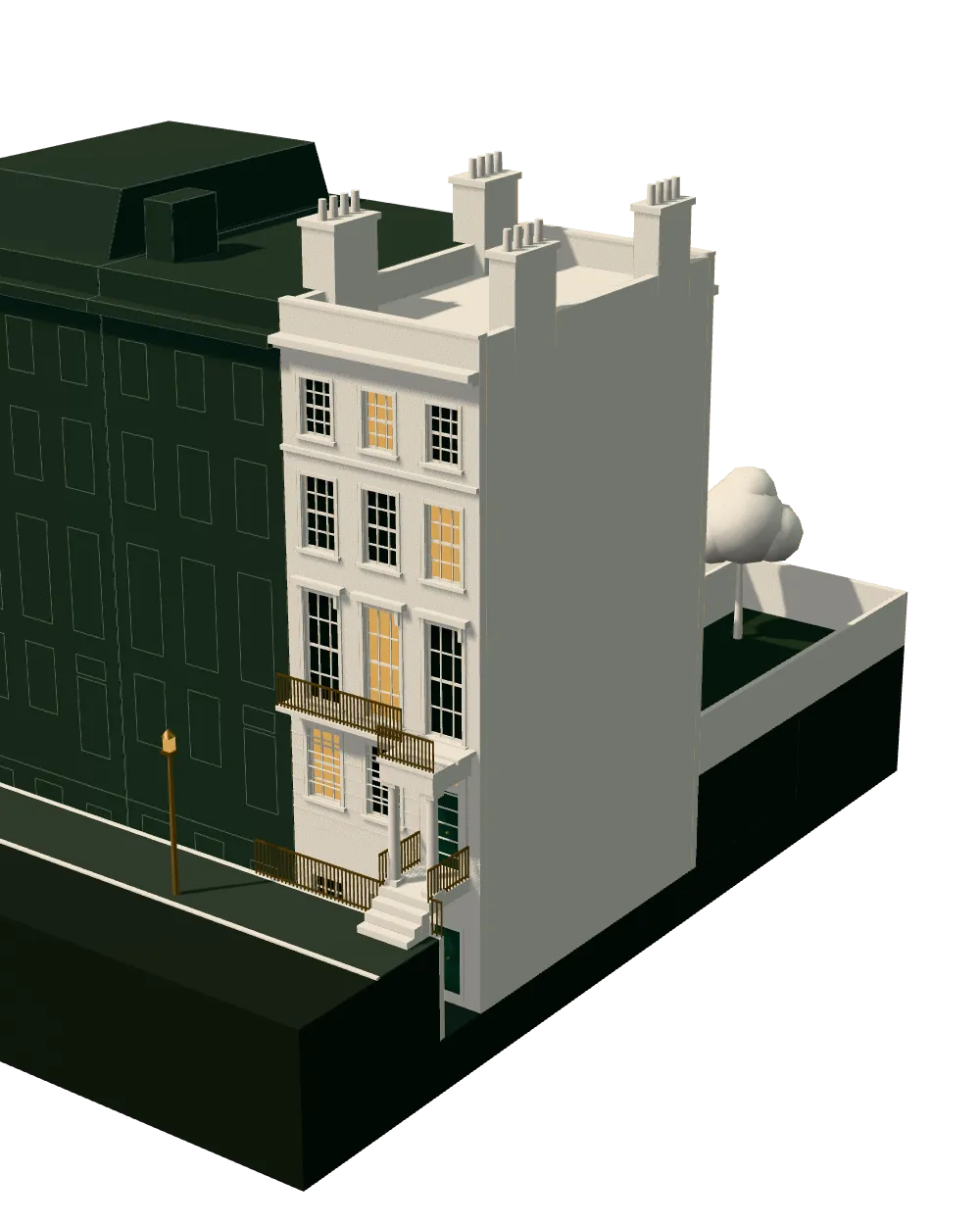
Roof space is the main lever on tight Islington sites. Our new build drawings show the roof build-up with its planting layer, so the officer sees how the units in the calculation are physically delivered.
The gain must be secured for at least 30 years, so we add maintenance notes that a managing agent or freeholder can follow.
Where a site cannot reach the gain on its own footprint, the next option is registered off-site units, and last of all statutory credits. In a borough with so little open land we expect to use that fallback more often than elsewhere, and we will tell you the likely route in the free check, before you commit to the design.
Decision speed and where this fits in the application
Minor applications here are granted 86.5 per cent of the time across 675 decisions, and 96.7 per cent are decided in time. A complete assessment at submission removes one reason for delay, since an incomplete one holds the file at validation.
If your scheme is a single flat conversion with no exterior works, an assessment may not be needed at all. See our flat conversion drawings for that route, and our planning drawings for the wider set.
Price and next step
We do not publish a price for this assessment, since the work depends on the number of habitat parcels. You receive a fixed quote after a free constraints check.
Send the address and what you want to build. We will tell you whether Islington will treat it as small or major, and what the plan has to contain.
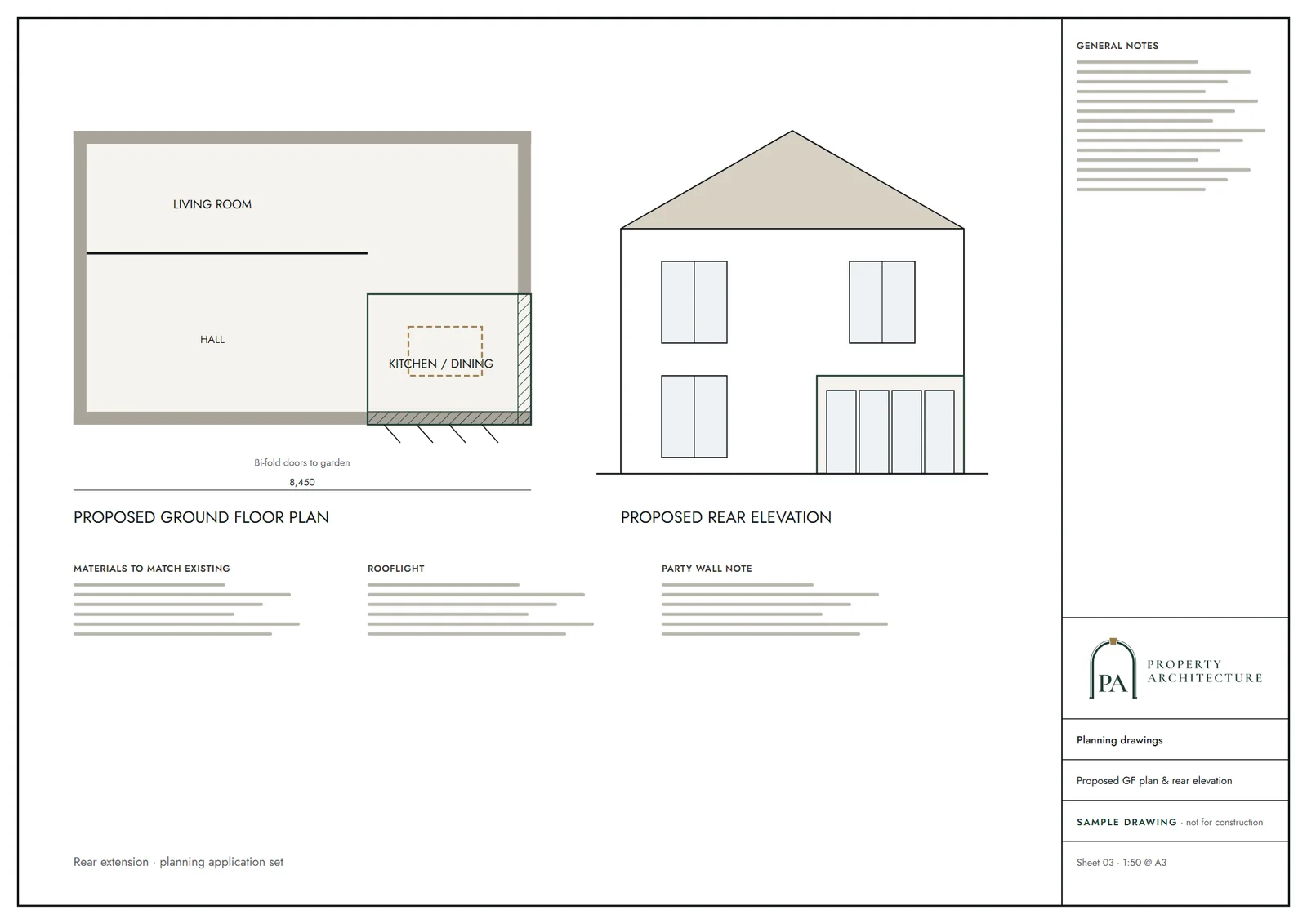
What you receive
Related pages
Other services in Islington
Biodiversity net gain plans nearby
Questions
Does Islington ask for a BNG assessment on a small development?
Yes. Its validation list requires one from small developments, which the council defines as one to nine dwellings or a site under a half hectare.
Is a rear extension in Islington exempt?
Yes, a householder extension is exempt from the national condition, though the form must still say so.
What does the assessment have to show?
An applicability statement, a baseline metric, a habitat baseline plan and how the 10 per cent gain will be met.
Can the gain be delivered on a roof?
Yes. A biodiverse roof is one of the main on-site measures in a dense borough, and local policy prefers on-site delivery.
Sources and dates
- islington.gov.uk, retrieved
- nomisweb.co.uk, retrieved
- data.london.gov.uk, retrieved
- planning.data.gov.uk, retrieved
- planning.data.gov.uk, retrieved
- assets.publishing.service.gov.uk, retrieved
- legislation.gov.uk, retrieved
- gov.uk, retrieved
- nomisweb.co.uk, retrieved
- legislation.gov.uk, retrieved
- legislation.gov.uk, retrieved
- legislation.gov.uk, retrieved
- Contains public sector information licensed under the Open Government Licence v3.0.
- Contains OS data © Crown copyright and database right 2026.
- Contains HM Land Registry data © Crown copyright and database right 2026. This data is licensed under the Open Government Licence v3.0.
- Contains Historic England data © Historic England 2026. Contains Ordnance Survey data © Crown copyright and database right 2026.

Tell us about your property.
We check the constraints, then send a fixed fee. Messages before 3pm get a reply the same working day.