
Bromley, London
Biodiversity net gain plans in Bromley
Biodiversity net gain matters a great deal in Bromley, because 51 per cent of it is Green Belt and much of the rest is leafy suburb. Householder work is exempt. A new home, a barn conversion or a scheme on open land is not, and Bromley's validation guidance asks for a statement showing at least the national gain. We quote a fixed price after a free constraints check.
Fixed quote after a free constraints check
- MCIAT chartered
- £2m PI insured
- LABC Partnered
- Fixed fees, VAT included
Request a fixed quote
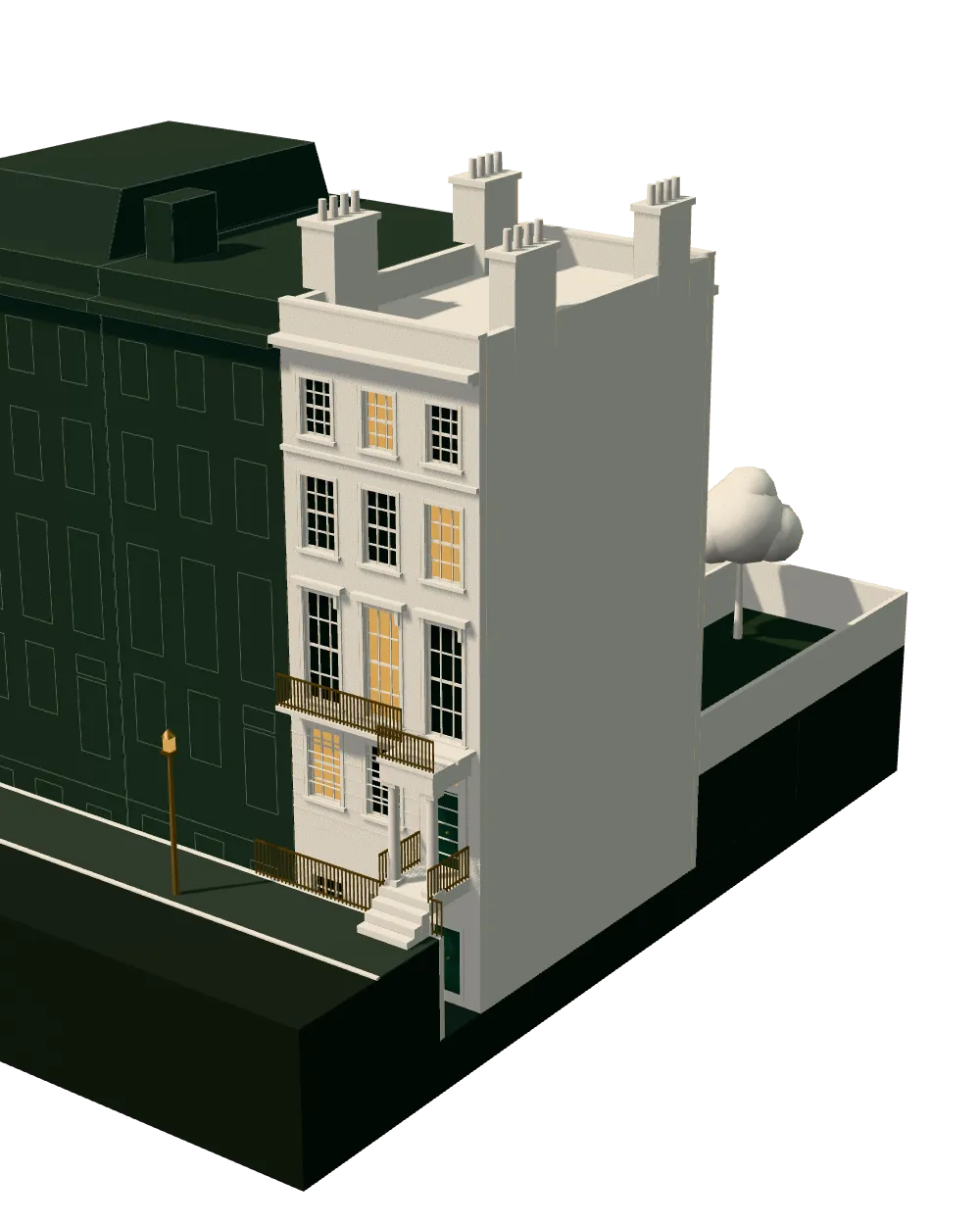
How we work on biodiversity net gain plans
Seven steps from first call to approval.
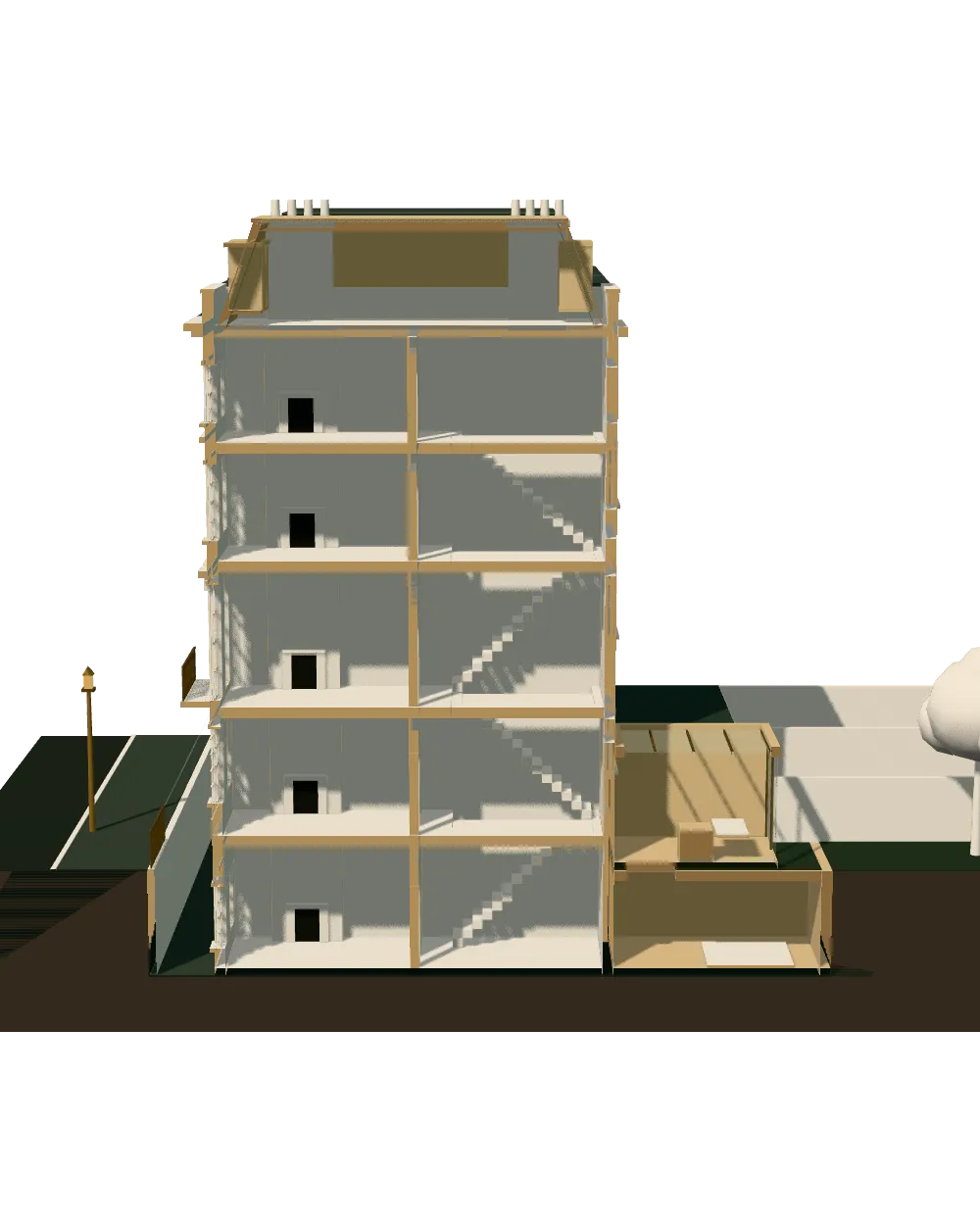
Enquiry and constraints check
We check the property against conservation areas, listed status, Article 4 directions, tree preservation orders, flood zone and planning history. We choose the right route and send a fixed quote.
Measured survey
We survey the house on one datum: rooms, levels, boundaries, drains, trees and the neighbours' windows that the 45° and 25° tests depend on.
Design options
We model the house in Revit and show you options in 3D and plan, with the planning strategy and the precedents in your street.
Design frozen
You choose an option in writing. Nothing changes after this without your say.
Independent check
A second chartered technologist checks every sheet against the council's validation checklist and the policy. A senior review signs it off before anything is submitted.
Submission
We prepare the forms, certificates, fee and documents and submit through the Planning Portal.
Officer liaison
We answer the planning officer and make any amendments within five working days, at no charge until approval.
Free redraws until approval. Every drawing set is checked independently, and the checker is never the person who drew it.
Request a fixed quote
What Bromley's validation guidance requires
Bromley's validation guidance and list of local information requirements, last agreed in December, says a net gain statement or plan is required for all major and non-major applications unless they are exempt. It must show the minimum gain, and the council's recorded value is 10% (statutory). It states no uplift beyond that.
One detail helps smaller schemes. For non-major development the guidance allows the small sites metric, a simplified spreadsheet that is quicker to complete. It cannot be used where priority habitat, a protected site or a protected species is present, and in Bromley that exclusion is a real possibility, because of the amount of open land.
The guidance is also candid about timing. The statement belongs in the submission, not in a later condition response, so an applicant who leaves it until after validation risks the application being returned. We therefore treat the survey as the first task on any Bromley scheme that is not obviously exempt, and book the ecologist before the drawings are finished.
Local figures for Bromley
| Measure | Value | Period | Source |
|---|---|---|---|
| Green Belt share of the council area | 51 % of council area covered by green-belt polygons | — | planning.data.gov.uk |
| BNG Statement/Plan required for all major and non-major applications unless exempt, demonstrating a minimum 10% net gain; non-major applications may use the Small Sites Metric. No uplift above 10% stated. | 10% (statutory) | — | bromley.gov.uk, Bromley Validation Guidance and List of Requirements - Planning Applications (agreed 12 December 2024), pp.16, 24, 'Biodiversity Net Gain' |
| Domestic gardens share of land (GLUD 2005) | 23.4 % of land that is domestic garden (GLUD 2005) | 2005 | data.london.gov.uk |
| Conservation areas | 47 named conservation areas published by the council | — | planning.data.gov.uk |
| Listed building entries | 412 list entries (Historic England, within the LPA boundary) | — | planning.data.gov.uk |
| Householder applications granted | 78.6 % | 1 July 2025 - 30 June 2026 | assets.publishing.service.gov.uk |
| Householder appeals allowed | 37.6 % of householder appeals allowed | decision dates 1 Jul 2021 to 30 Jun 2026 | assets.publishing.service.gov.uk |
| Environment Act 2021 Sch 14 para 2, inserting Sch 7A TCPA 1990: 'relevant percentage' 10% | 10 % | — | legislation.gov.uk |
| 'Developments of 0.2 hectares or below': from 6 August 2026 BNG does not apply where the site area within the red line boundary is 0.2 ha or below | 0.2 ha | — | gov.uk |
| 'Developments subject to the de minimis rule': impact on less than 25 m2 (5 m by 5 m) of on-site habitat | 25 m2 | — | gov.uk |
A blank value means the figure has not been published, not that there are none. Check your own address with the council.
Which application your project needs
The usual route for a house; flats and listed buildings follow other rules.
- A · Lawful Development Certificate decision
- 8 weeks
- B · Prior approval decision
- 42 days
- C · Householder decision
- 8 weeks
A Green Belt majority changes the survey
With 51 per cent of the borough covered by Green Belt polygons, many Bromley plots sit beside or inside land that is meadow, woodland or parkland. A site next to such land is more likely to contain, or sit near, priority habitat, and the metric treats those habitats at a far higher value than a suburban lawn.
That is why we start with a desk study of the surrounding land before we send an ecologist. If the site is clean, the small site route may open and the plan is short. If it is not, a full survey is the honest answer, and it is better to know that before you commit to a design.
A hedge, a pond, an old orchard or a patch of rough grass at the bottom of a garden can all matter. Keep the plot as it is, and keep dated photographs.
Where a scheme does touch land of higher value, there is usually a design answer. A house can often be moved or reduced so that a woodland edge or an orchard is left whole, which keeps the baseline low in the lost-habitat column and avoids the need to buy units elsewhere. Your drawings should show that choice, and we say why on the sheet.
Gardens, conservation areas and listed buildings
Domestic gardens make up 23.4 per cent of the borough's land, and 68.6 per cent of households live in a house. Bromley also has 47 conservation areas and 412 listed building entries, which limit how a plot can be changed and so decide how much habitat is left after development.
The council's Urban Design Guide SPD sits alongside a Local Plan adopted in 2,019. We read both with the metric, so the landscape and built form on the drawings agree with the figures in the spreadsheet.
If your project is a new home, our new build drawings include the landscape sheet the plan relies on.
Which Bromley projects are exempt
Householder applications and permitted development are exempt, which covers most extensions and loft conversions. Sites of 0.2 hectares or below are exempt, and the de minimis rule excludes impacts below 25 square metres of habitat.
Even where an exemption applies, the form must say so. In Bromley the council granted 78.6 per cent of householder applications in the latest returns, and it decided 89.1 per cent of them in time, so an invalid form is an avoidable delay.
When a refusal is appealed, the record is worth knowing: the Planning Inspectorate allowed 37.6 per cent of the 502 householder appeals it decided in the borough.
Price and next step
A plan has no list price, because the cost follows the habitats and the survey needed. You receive a fixed quote after a free constraints check.
Our biodiversity net gain page covers the national rules, and the Bromley area page lists everything else we offer there. If the case for permission is the bigger question, our planning consultant service can lead it.
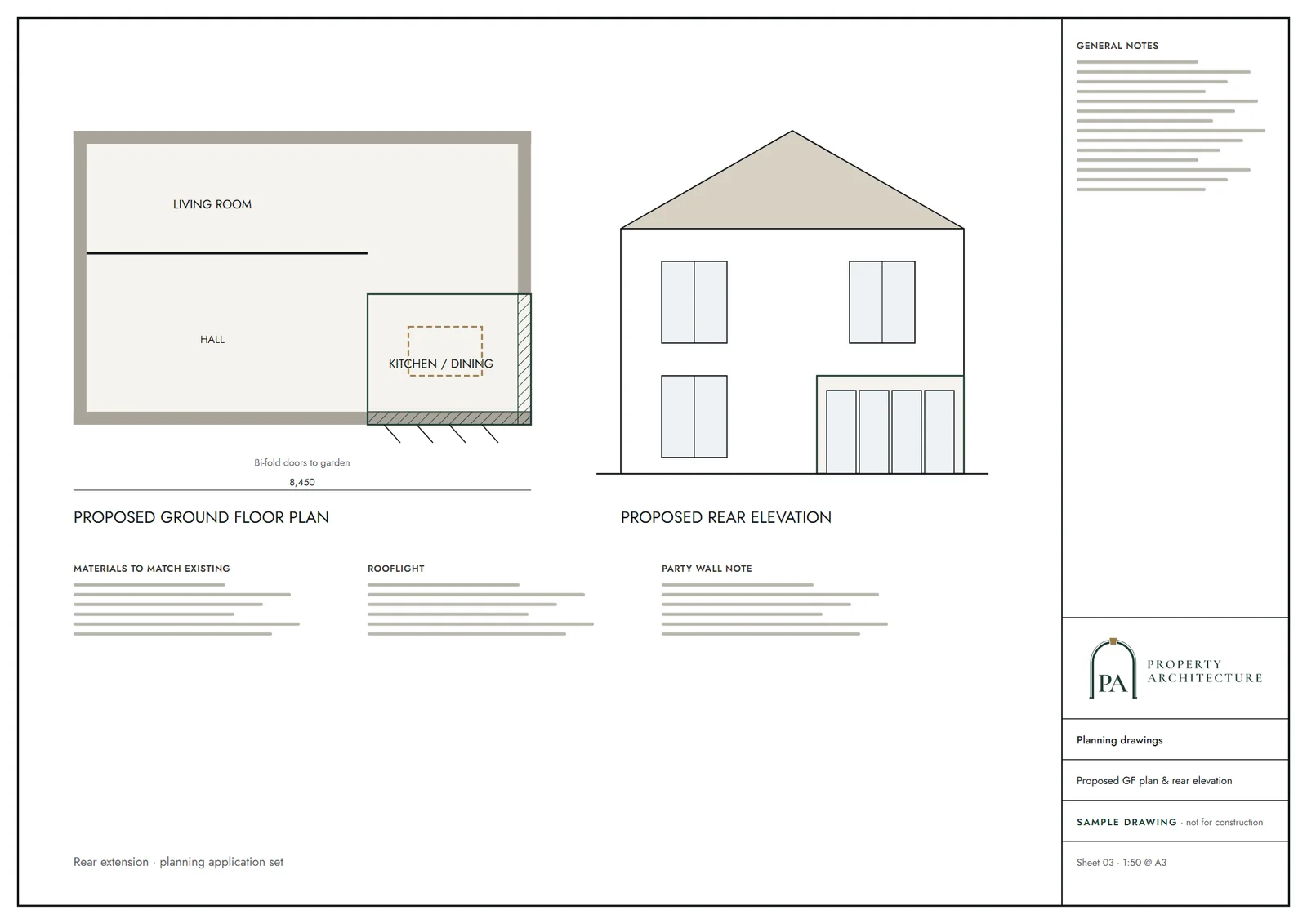
What you receive
Related pages
Other services in Bromley
Biodiversity net gain plans nearby
Questions
Can I use the small sites metric in Bromley?
Often yes for non-major schemes, but not where priority habitat, a protected site or a protected species is present.
Is Bromley's gain higher than the national figure?
No. The validation guidance records 10% (statutory) and states no uplift.
Why does Green Belt matter?
Green Belt land often borders priority habitat, which the metric values highly and which rules out the small sites metric.
How long is the gain kept?
At least 30 years after completion.
Sources and dates
- planning.data.gov.uk, retrieved
- bromley.gov.uk, retrieved
- data.london.gov.uk, retrieved
- planning.data.gov.uk, retrieved
- planning.data.gov.uk, retrieved
- assets.publishing.service.gov.uk, retrieved
- assets.publishing.service.gov.uk, retrieved
- legislation.gov.uk, retrieved
- gov.uk, retrieved
- nomisweb.co.uk, retrieved
- bromley.gov.uk, retrieved
- bromley.gov.uk, retrieved
- legislation.gov.uk, retrieved
- legislation.gov.uk, retrieved
- legislation.gov.uk, retrieved
- Contains public sector information licensed under the Open Government Licence v3.0.
- Contains OS data © Crown copyright and database right 2026.
- Contains HM Land Registry data © Crown copyright and database right 2026. This data is licensed under the Open Government Licence v3.0.
- Contains Historic England data © Historic England 2026. Contains Ordnance Survey data © Crown copyright and database right 2026.

Tell us about your property.
We check the constraints, then send a fixed fee. Messages before 3pm get a reply the same working day.