
Camden, London
Retrospective planning applications in Camden
If work in your Camden home was built without permission, the council can still grant it afterwards, judged against its own Camden Planning Guidance. Most households here live in flats, so lessees often need the freeholder as well as the council. We survey the property as it stands, draw it and make the case. Fixed quote after a free constraints check.
Fixed quote after a free constraints check
- MCIAT chartered
- £2m PI insured
- LABC Partnered
- Fixed fees, VAT included
Request a fixed quote
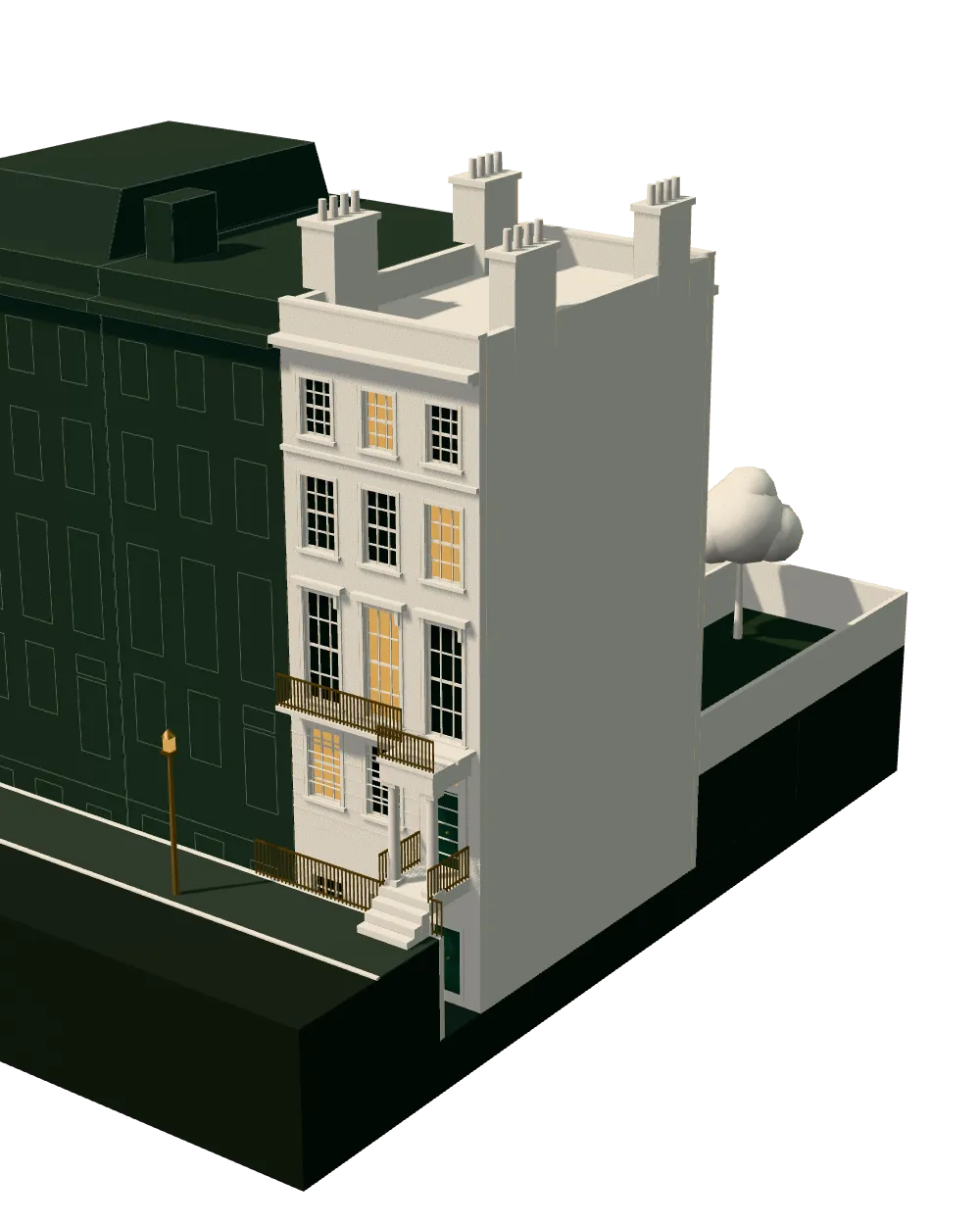
How we work on retrospective planning applications
Seven steps from first call to approval.
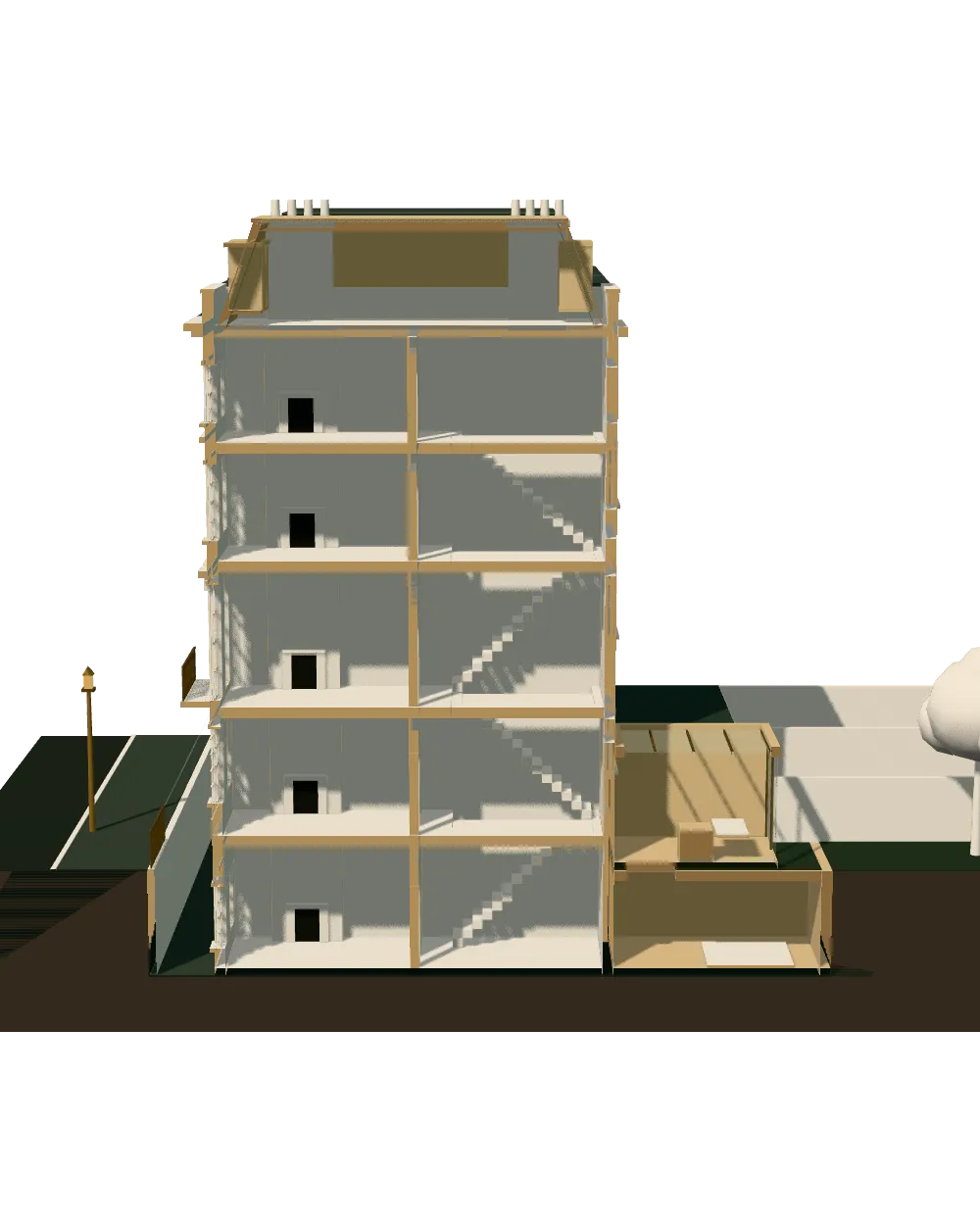
Enquiry and constraints check
We check the property against conservation areas, listed status, Article 4 directions, tree preservation orders, flood zone and planning history. We choose the right route and send a fixed quote.
Measured survey
We survey the house on one datum: rooms, levels, boundaries, drains, trees and the neighbours' windows that the 45° and 25° tests depend on.
Design options
We model the house in Revit and show you options in 3D and plan, with the planning strategy and the precedents in your street.
Design frozen
You choose an option in writing. Nothing changes after this without your say.
Independent check
A second chartered technologist checks every sheet against the council's validation checklist and the policy. A senior review signs it off before anything is submitted.
Submission
We prepare the forms, certificates, fee and documents and submit through the Planning Portal.
Officer liaison
We answer the planning officer and make any amendments within five working days, at no charge until approval.
Free redraws until approval. Every drawing set is checked independently, and the checker is never the person who drew it.
Request a fixed quote
What Camden measures as-built work against
Camden has no separate rulebook for retrospective cases that we could find. It uses the Home Improvements CPG (Camden Planning Guidance), the Design CPG (Camden Planning Guidance) and the Amenity CPG (Camden Planning Guidance), together with the Camden Local Plan adopted in 2,017. Each is applied to the building as it exists, so the question is whether your alteration would have been acceptable if you had applied first.
A basement or lightwell dug without consent is the one case where we tell owners to stop and take structural advice before anything is drawn. The drawings can only show what exists, and an officer will ask who checked the ground and the party walls.
Where the work touches a lower ground floor or excavated garden, the Basements CPG (Camden Planning Guidance) comes in as well. Basement work built without consent is the hardest category, because the council will want to see how it affects neighbours and drainage, and those details are difficult to reconstruct afterwards.
We read the guidance paragraph by paragraph against your as-built drawings and write a short design statement that cites it. An officer who can see the policy test answered on the first page spends less time hunting for reasons to refuse.
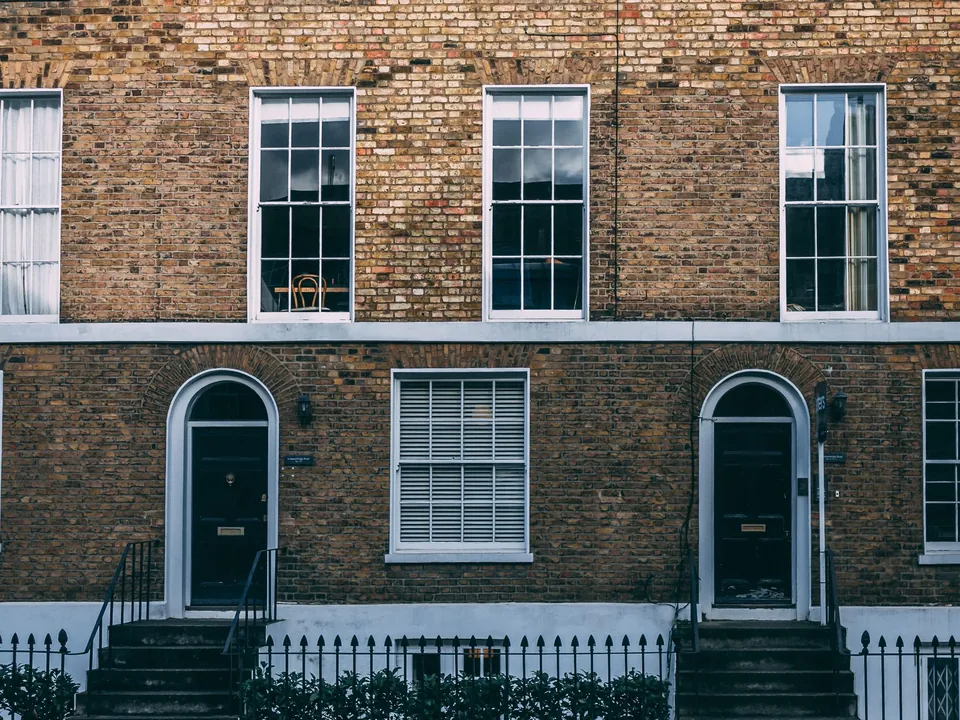
Local figures for Camden
| Measure | Value | Period | Source |
|---|---|---|---|
| Households living in a house | 13.3 % of households living in a house or bungalow (detached, semi-detached or terraced) | Census 2021 | nomisweb.co.uk |
| Owner-occupied households | 29.7 % of households owner-occupied (owned outright or with mortgage/loan) | Census 2021 | nomisweb.co.uk |
| Householder decisions | 394 decisions | 1 July 2025 - 30 June 2026 | assets.publishing.service.gov.uk |
| Householder applications granted | 89.1 % | 1 July 2025 - 30 June 2026 | assets.publishing.service.gov.uk |
| Householder applications decided in time | 77.7 % decided within 8 weeks or an agreed extended period | 1 July 2025 - 30 June 2026 | assets.publishing.service.gov.uk |
| Lawful development certificate applications (PS1) | 137 certificates | 2025 Q2 to 2026 Q1 (1 Apr 2025 to 31 Mar 2026) | assets.publishing.service.gov.uk |
| Conservation areas | 40 named conservation areas published by the council | — | planning.data.gov.uk |
| Article 4 directions | 21 Article 4 directions published by the council | — | planning.data.gov.uk |
| Listed building entries | 1,971 list entries (Historic England, within the LPA boundary) | — | planning.data.gov.uk |
| Householder: alterations/extensions to a single dwellinghouse, from 1 Apr 2026 | 548 GBP | — | ribblevalley.gov.uk |
A blank value means the figure has not been published, not that there are none. Check your own address with the council.
Which application your project needs
The usual route for a house; flats and listed buildings follow other rules.
- A · Lawful Development Certificate decision
- 8 weeks
- B · Prior approval decision
- 42 days
- C · Householder decision
- 8 weeks
A borough of flats and listed houses
Only 13.3 per cent of Camden households live in a house, and 29.7 per cent own their home. A large share of retrospective cases therefore involve a leaseholder who altered a flat, a mansard-style roof extension or a rear terrace without telling the freeholder.
Two consents matter. The council grants or refuses planning permission, and the lease usually requires the landlord to approve the alteration too. We ask for your lease early, because a planning permission does not override a lease covenant, and a buyer's solicitor will ask for both.
The borough also holds 1,971 listed building entries, including 57 at Grade I. Altering a listed house without consent is a separate matter from planning, and we treat it as one.
Council figures for householder work
Camden decided 394 householder applications in its latest year, granting 89.1 per cent, and 77.7 per cent of them were decided in time. The volume is lower than in outer boroughs because so many homes are flats, which fall outside householder rules.
Because flats dominate, we also look at how your alteration meets the flat below and above. A new bathroom, a changed layout or an opened-up wall is often a building regulations and lease issue as much as a planning one, and we point out which approvals are separate.
Flat alterations therefore often go through as full applications, and the council counted 868 minor decisions in the same period. We tell you which route your property uses before the fee is paid, since the fee differs.
Across the borough the council recorded 137 certificate of lawfulness applications in the government return, a useful comparison for owners wondering whether their work might qualify as lawful by age instead.
Conservation areas and Article 4
The council has designated 40 conservation areas and applies 21 Article 4 directions. Inside them, replacing sash windows with double glazing, rendering a brick front or removing a front boundary wall can need permission, so small changes of this kind can end up needing a retrospective application.
Photographs from before the work help a great deal. Street-view history, estate agent listings from a previous sale and old survey reports can show the original condition and help us argue that the harm is limited or reversible.
Route, fee and what we prepare
The enforcement limit for most building works is 10 years, after which a lawful development certificate in Camden may be the better answer. Inside that period, a retrospective application carries a householder fee of £548 where the house qualifies, and the council has 8 weeks to decide.
Where the work lies partly outside planning control, for example internal changes in an unlisted flat, we say so plainly and do not charge for an application the council does not need.
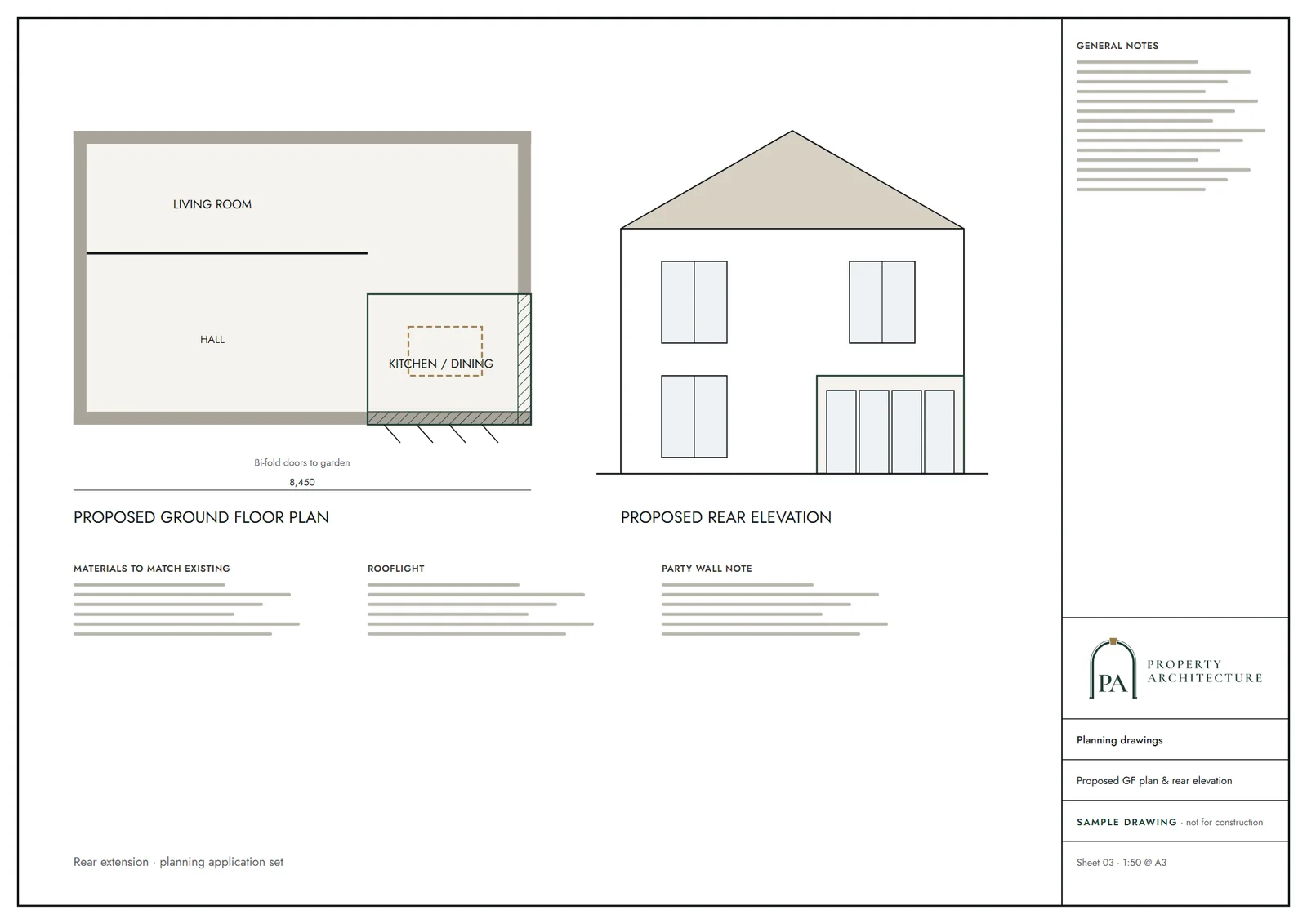
We prepare the survey, as-built drawings, a design statement and the portal submission, then check the set with a second MCIAT chartered architectural technologist. See planning consultant support in Camden for cases that need a policy argument beyond drawings, or the council hub for Camden for every service we offer there.
Send us the address, the lease and the dates of the work, and say whether the building is listed. We then confirm which applications are needed and give a fixed quote after a free constraints check.
What you receive
Related pages
Other services in Camden
Retrospective planning applications nearby
Questions
Do I need my freeholder before I apply in Camden?
The council requires you to notify an owner of the land, which may be your freeholder. Your lease may also need landlord consent for the work itself, and that is separate from planning permission.
Is my Camden flat covered by householder fees?
Usually not, since flats sit outside householder development. We check the property type and quote the correct fee. The fee for a householder case is £548.
What if Camden refuses?
You have 12 weeks to appeal. The council's planning enforcement team can act on unauthorised works within the time limit, so we advise acting before a notice arrives.
Sources and dates
- nomisweb.co.uk, retrieved
- nomisweb.co.uk, retrieved
- assets.publishing.service.gov.uk, retrieved
- assets.publishing.service.gov.uk, retrieved
- planning.data.gov.uk, retrieved
- planning.data.gov.uk, retrieved
- planning.data.gov.uk, retrieved
- ribblevalley.gov.uk, retrieved
- camden.gov.uk, retrieved
- camden.gov.uk, retrieved
- legislation.gov.uk, retrieved
- legislation.gov.uk, retrieved
- legislation.gov.uk, retrieved
- legislation.gov.uk, retrieved
- legislation.gov.uk, retrieved
- Contains public sector information licensed under the Open Government Licence v3.0.
- Contains OS data © Crown copyright and database right 2026.
- Contains HM Land Registry data © Crown copyright and database right 2026. This data is licensed under the Open Government Licence v3.0.
- Contains Historic England data © Historic England 2026. Contains Ordnance Survey data © Crown copyright and database right 2026.

Tell us about your property.
We check the constraints, then send a fixed fee. Messages before 3pm get a reply the same working day.